
Six racks of goat roast slowly over a charcoal pit at the landmark El Rey del Cabrito, a restaurant whose theatrical presentation is as memorable as the food. Many local eateries advertise “Monterrey-style” cabrito, turning the spit and basting the meat to achieve a crisp exterior and tender interior. For some diners, the aroma and sight are irresistible; for others, the flavor can be distinctly gamey, closer to lamb than the chicken I had secretly hoped for.
Monterrey is the capital of Nuevo León and proudly claims the title of the world headquarters of cabrito. The enormous El Rey del Cabrito—known locally as the “King of Cabrito”—sports a mustard-yellow façade trimmed in red neon. Inside, the restaurant’s hunting-lodge décor and taxidermy-lined dining rooms create a kitschy, old-world atmosphere in Barrio Antiguo, the city’s Old Quarter.
When a sizzling platter of goat arrives, served on a bed of onions with tortillas, salad, salsa and a cold beer, it’s a full sensory experience. The salsa and beer can temper the stronger flavors of cabrito, and for those who prefer beef, Monterrey’s excellent steaks are a satisfying alternative. On my visit I chose a steak platter and another beer, enjoying the region’s famed grilled meats.
Some visitors say Monterrey feels like an extension of the American Southwest, with its chain restaurants, large shopping centers and planned residential developments. Urban renewal has reshaped the downtown, but the city’s character still shows through its architecture, museums, culture and cuisine. My goal was to find Monterrey’s soul by exploring its historic neighborhoods, cultural institutions and natural surroundings.
Since the 1980s the city has invested in preserving and highlighting its historic core. Barrio Antiguo retains many restored colonial-era homes dating from the 18th and 19th centuries, many converted into shops and restaurants. Yet even with careful restoration, this once-vibrant neighborhood has at times felt quiet and uneasy due to security concerns. During a brief morning walk I admired the colonial façades but was struck by the visible presence of police patrols.
Founded in 1596, Monterrey has weathered floods and other setbacks to become Mexico’s third-largest city and an industrial powerhouse. Its proximity to the U.S. border—about 145 miles from Texas—has encouraged the growth of corporate headquarters and manufacturing plants. Today the city combines strong economic activity with a thriving cultural scene, quality universities and some of the highest living standards in Mexico.
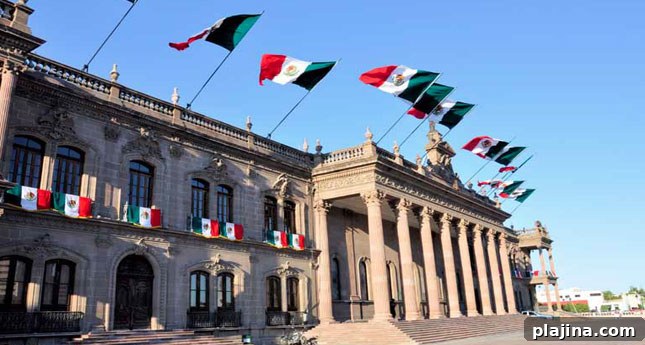
Start exploring in the city center at Macroplaza, a 100-acre public square considered one of the world’s largest. Built in the 1980s, the multilevel plaza stretches for several blocks and links gardens, fountains and important civic buildings. The Palacio de Gobierno, a Neoclassical structure completed in the early 20th century, anchors the north end and houses exhibits on regional history and indigenous artifacts.
Walking the plaza reveals museums, theaters and monuments that can easily fill a day. An old-fashioned trolley runs every 30 minutes (Tuesday through Sunday, 10 a.m.–5 p.m.), stopping at major attractions in Macroplaza and nearby shopping districts. If you prefer to wander on foot, you’ll encounter the Bosque Hundido (a sunken garden), the Central Library and La Capilla de los Dulces Nombres, among other sites.
Numerous sculptures and memorials dot the plaza, including the Explanada de los Héroes, a memorial honoring national figures, and works by renowned artists such as Fernando Botero. The three-level Neptune Fountain offers a lively scene in hot weather, where children often cool off and play around the bronze figures.
Theatre and cultural venues keep the city vibrant. The modern City Theater hosts plays, concerts and the annual Ballet of Monterrey. For museum-goers, MARCO—the Museum of Contemporary Art—sits at the south end of the Gran Plaza. Its emblematic bronze sculpture, The Dove by Juan Soriano, marks the entrance to one of the continent’s most significant collections of contemporary Mexican and Latin American art. MARCO’s design draws on the traditional Mexican home with a central courtyard and provides ample space for rotating exhibits.
Near MARCO stands the Baroque Monterrey Cathedral on Plaza Zaragoza, a 17th-century church that took generations to complete. Inside are valuable murals and sculptures, including an image of the Purísima Virgen and an 1851 bell tower. Close by, the Lighthouse of Commerce—a 250-foot orange stucco tower—sends a blue-green laser beam across the skyline at night and serves as a focal point for outdoor concerts.
Fundidora Park © Jimstyler | Dreamstime.com
Fundidora Park, built on the grounds of an old steel foundry, is a 304-acre urban park that blends industrial heritage with green spaces, plazas, trails and lakes. Visitors can bike, walk the paths, explore industrial museums or simply enjoy the park’s public art and refurbished structures.
If you have more time, nearby natural attractions and day trips are rewarding. The García Caves, about 30 miles south of Monterrey, offer a dramatic underground world with extensive chambers and formations. For a closer day trip, the Magical Town of Santiago sits just south of the city, bordered by the Sierra Madre and Cerro de la Silla. Santiago’s historic center features cobblestone streets, fountains and traditional plazas filled with local crafts, food stalls and family-run shops.
Horse Tail Waterfall, Cumbres de Monterrey National Park © Jerl71 | Dreamstime.com
On the way to Santiago, the Horse Tail Waterfall in Cumbres de Monterrey National Park is a popular stop. The 82-foot cascade is easily reached via a short trail and makes for a scenic photo opportunity, though the surrounding picnic and vendor areas can feel touristy. The national park also offers hiking, camping, horseback riding and more adventurous activities like rappelling.
Santiago’s Plaza Ocampo invites leisurely strolls among galleries, shops and vendors selling local sweets and crafts. The town’s St. James Parish Church and the historic municipal palace showcase the region’s colonial architecture, while nearby artisan workshops offer furniture, ceramics and leather goods.
Back in Monterrey, a fitting finale for many travelers is a visit to Cervecería Cuauhtémoc, Mexico’s largest brewery and the birthplace of brands like Tecate and Bohemia. The brewery complex also houses Mexico’s Baseball Hall of Fame and offers a glimpse into one of the country’s most important industries.
When I first arrived I worried Monterrey might be all commerce and little charm. Instead I found a city that balances industry with culture, history and natural beauty. From its plazas and museums to nearby parks and mountain scenery, Monterrey offers a variety of experiences for visitors who want to explore and relax.
Monterrey Info to Go
International travelers arrive at General Mariano Escobedo International Airport (MTY) in Apodaca, about 20 minutes northeast of downtown. The airport serves domestic routes and several major U.S. cities. Prepaid taxi coupons are available at the arrivals counter.
Where to Stay in Monterrey
Habita Monterrey A boutique hotel with 28 rooms and suites, notable for its black-and-white décor and a rooftop bar with two pools offering panoramic city and mountain views. Av. José Vasconcelos 150 Oriente, San Pedro Garza García.
InterContinental Presidente Monterrey A luxury option with impressive city views and a convenient location near museums and MARCO. Av. José Vasconcelos 300 Oriente, Lomas del Valle.
Quinta Real Monterrey A colonial-style luxury hotel set in an ivy-covered landmark building that feels like a private estate. Diego Rivera 500, Fraccionamiento Valle Oriente, San Pedro Garza García.
Restaurants in Monterrey
El Rey del Cabrito The city’s iconic cabrito restaurant, known for cooking kid goat slowly over mesquite coals. Av. Constitución 817, Barrio Antiguo.
Fonda San Francisco A casual bistro offering creative takes on traditional Mexican dishes, led by an English-speaking chef. Los Aldama 123, San Pedro Garza García.
El Mirador Restaurant Renowned for northern Mexican cuisine and excellent cuts of meat, with panoramic views from its bar. Hotel Chipinque, Meseta de Chipinque 1000, San Pedro Garza García.