
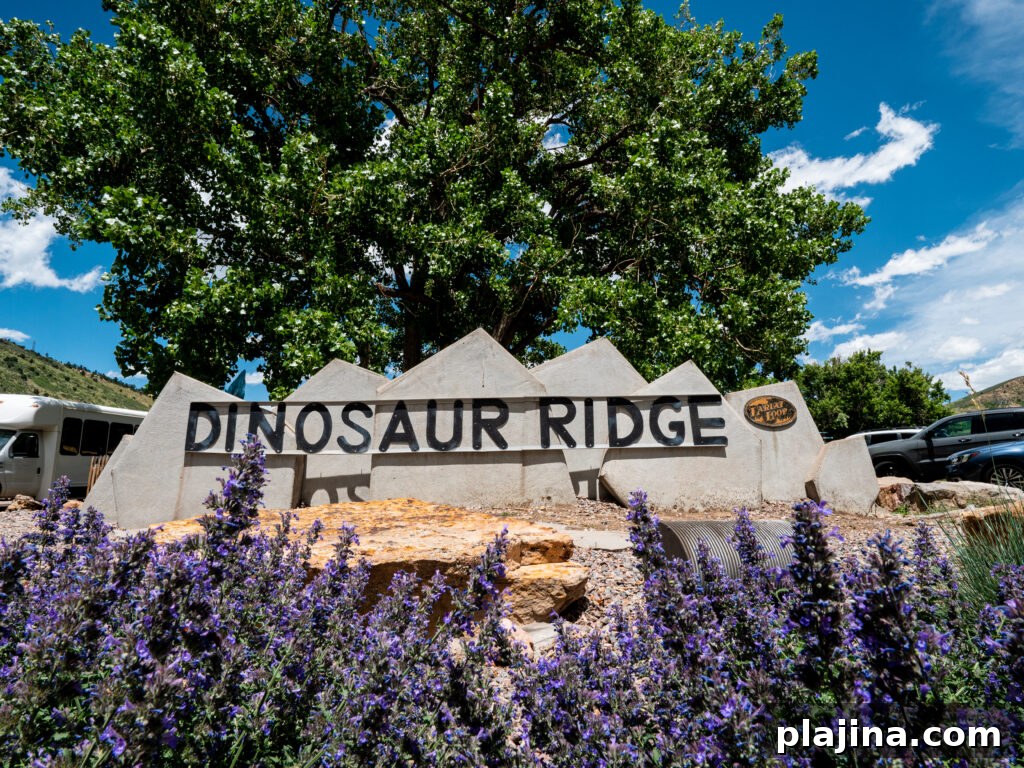
Wondering what the name Stegosaurus means? It comes from the Greek words for “roof” and “lizard,” a reference to the distinctive plate-like structures along the dinosaur’s back. To explore Stegosaurus and many other prehistoric species, visit Dinosaur Ridge, part of the Morrison-Golden Fossil Areas Natural Landmark just outside the Denver metro area in Morrison, Colorado.
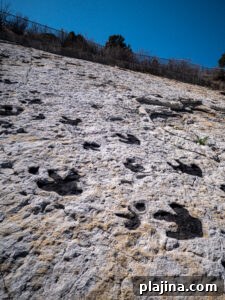
Dinosaur Ridge is widely regarded by paleontologists as one of the nation’s premier sites for preserved dinosaur tracks and fossil discoveries. The area features massive footprints preserved in the rock along the Front Range, offering a vivid reminder that this now-elevated landscape was once a shoreline of ancient lakes, rivers and marshes.
© Dinosaur Ridge
It can be hard to imagine Colorado’s Front Range as a seashore, but maps of the region show its position along the Western Interior Seaway—also called the Cretaceous Seaway—a shallow inland sea that once extended between the Rocky Mountains and the Appalachians. Evidence at Dinosaur Ridge helps paint that ancient picture: sedimentary layers, marine indicators and the trackways left by land-dwelling animals at the water’s edge.
Knowledgeable guides, including geologists such as Kermit Shields, lead tours that explain how the region’s tropical climate millions of years ago supported diverse ecosystems. Guides describe notable finds from the area, including a Tyrannosaurus tooth discovered in 1874 and the remains of the first horned dinosaur ever identified, excavated from a nearby gulch. Walking the ridge trail, visitors encounter marked sites where enormous footprints and other traces chronicle a remarkable chapter in Earth’s history—some tracks attributed to agile theropods similar to Velociraptor.
© Dinosaur Ridge
If you want a deeper experience, Dinosaur Ridge regularly hosts talks, special events and field trips. Hands-on programs include supervised digs, such as the Triceratops Gulch Project, and seasonal field trips led by researchers that visit local fossil sites, the Morrison Natural History Museum, the School of Mines Geological Trail and nearby Triceratops Trail in Golden. The Main Visitor Center, Exhibit Hall and Discovery Center are typically open daily during summer and fall from 9 a.m. to 5 p.m., with guided bus tours and weekend walking tours available. The site parking lot is located at 16831 W. Alameda Parkway in Morrison; check the visitor center for current hours, program schedules and registration details.