
Located on Ireland’s rugged west coast at the edge of the European continent, Galway holds a special place in the nation’s cultural life. With a lively calendar of festivals, museums, art galleries and historic sites, plus pubs where you can hear traditional Celtic music up close, many consider Galway Ireland’s cultural capital.
Ireland’s only truly bilingual city, Galway was designated a European Capital of Culture for 2020–2021. With a population approaching 80,000, the city reflects the broader national experience: it endured economic downturns, benefited from recent periods of strong foreign investment, and has become an important tech and cultural hub. Major multinational firms have created jobs across the city, while local entrepreneurs and startups contribute to a dynamic small-business ecosystem.
Although the pandemic affected Galway as it did cities worldwide, activity has returned. Construction cranes are once again visible on the skyline, waterfront and former industrial areas such as Nuns’ Island are seeing renewed investment, and business and leisure travel are rebounding.
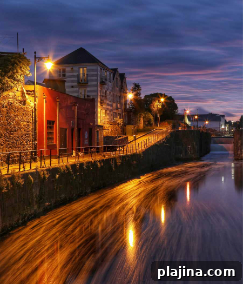
PHOTO: © GALWAY CONVENTION BUREAU
Several major projects aim to strengthen Galway’s appeal as a destination for business and visitors alike. Among them, the N6 Galway City Ring Road figures prominently. Part of a near-€1 billion National Development Plan, the ring road is intended to ease congestion and reduce air pollution while protecting the natural environment. The plan includes tunnels and a viaduct over the River Corrib on land north of the National University of Ireland, Galway campus, and is expected to take roughly three years to build.
In the city center, the Bowling Green project led by the Galway City Innovation District (GCID) will convert a restored two-story warehouse to house about 130 tech innovators and entrepreneurs. The PorterShed innovation hub is planned to relocate there, and upgrades to Irish Rail’s Ceannt Station are also under consideration. A larger redevelopment proposal called Augustine Hill envisions a new urban quarter behind Ceannt Station with streets, public spaces, residential units, shops, restaurants, a cinema, offices and a hotel, though that project has been paused pending planning appeals.
GCID has been instrumental in growing Galway’s tech scene, helping to create hundreds of jobs and attracting millions in investment. The city is home to numerous multinational technology employers as well as local startups. In a 2019 study the World Bank recognized Galway as one of the EU’s stronger cities for launching a business and navigating construction permits.
Comparisons between Galway and cities like Boston highlight the city’s high quality of life, strong education sector, vibrant cultural scene and long maritime history. These ties are reflected in the strong Irish-American connections within the Boston area and beyond.
CHECKING IN WITH ROSE FINN
General Manager, Galway Convention Bureau
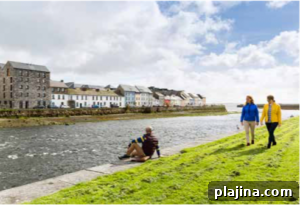
PHOTO: © PROF CHAOSHENG ZHANG FOR GALWAY CONVENTION BUREAU
What attractions and experiences should international visitors not miss?
Start in Galway city with a guided food tour to discover local producers and specialties. Take a boat trip on Lough Corrib aboard the Corrib Princess, visit Galway City Museum, or join a lobster safari with Galway Bay Boat Tours. On land, explore the Claddagh Ring Museum and browse for traditional Aran sweaters in historic shops. Outside the city, the Connemara region offers Kylemore Abbey and its walled gardens, Connemara National Park and Diamond Hill for walkers, along with pristine beaches. The restored hill village of Cnoc Suain provides insights into Irish culture and rural life, while day trips to the Aran Islands offer a glimpse of a slower, traditional way of life accessible by ferry or plane.
What benefits does the Galway City Innovation District offer startups?
The GCID offers a supportive, collaborative environment in the city center where startups, entrepreneurs and established firms can network, share resources and scale. It attracts innovators who want to work alongside like-minded creators and provides access to local talent, mentoring, and a community geared toward growth and tech-driven opportunity.
How did the Capital of Culture designation fare during the pandemic?
Many Galway 2020/21 projects were adapted for online and outdoor formats so the original artistic vision could be preserved and shared. Cultural partners worked to reimagine events, films and installations, which attracted substantial global audiences online even when travel was restricted. The program extended into 2021 to accommodate changes imposed by the pandemic.
DIVERSIONS
Galway’s medieval heritage and contemporary culture make it one of Ireland’s most vibrant cities. Known as the City of the Tribes for the 14 merchant families that shaped it from the 13th century onward, Galway offers historic Eyre Square with its pubs and restaurants, the Spanish Arch overlooking the River Corrib, and a lively pedestrian-friendly Shop Street. The Latin Quarter blends eclectic shops, traditional pubs and fine dining.
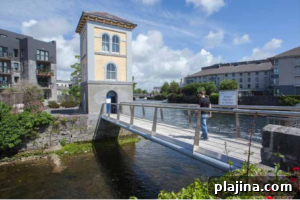
PHOTOS: © FÁILTE IRELAND,
Must-visit cultural sites include the Galway City Museum, the Fisheries Watchtower Museum, the Computer and Communications Museum of Ireland, and several nearby medieval castles. The region has also been recognized for its culinary strengths, with chefs and restaurants highlighting local seafood, dairy and farm produce. Spend several days exploring the west of Ireland—counties such as Mayo, Roscommon and Clare along with the Aran Islands offer rural pubs, bakeries and restaurants where local ingredients and traditional recipes feature prominently.
One of the most memorable Irish experiences is a pub session, where local musicians gather to play folk music. Whether in a coastal village, a city pub or on the Aran Islands, these sessions are a highlight for visitors and often become lasting memories.
LODGING
Ashford Castle
This 800-year-old former Guinness family residence sits on 350 acres of gardens, woodlands and a lake about 26 miles from Galway. The 83-room, five-star property offers multiple restaurants, bars and a spa with pool and treatment facilities.
Village of Cong, County Mayo
$$$$$
The Galmont Hotel & Spa
A large hotel overlooking Galway Bay and just a short walk from Eyre Square. Amenities include spa facilities, an indoor pool and a waterfront terrace with all-day dining.
Lough Atalia Road
$$$
Glenlo Abbey Hotel & Estate
A converted 1740 estate with views of Lough Corrib, a lakeside golf course and restored Pullman dining carriages for a unique dining experience.
Glenlo Abbey, Bushypark, County Galway
$$$$$
DINING
Ard Bia at Nimmos
A harbor-side bistro with seasonal dishes that highlight local seafood and produce in a colorful, relaxed setting.
Spanish Arch, The Long Walk
$$$
Loam
An award-winning restaurant focused on locally sourced tasting menus and creative, seasonal cuisine with a nose-to-tail and leaf-to-root approach.
Geata na Cathrach, Fairgreen Road
$$$$$
Moran’s Oyster Cottage
A picturesque thatched-roof pub near Kilcolgan known for fresh seafood and oysters sourced from nearby beds. Closed Mondays.
The Weir, Roymore, Kilcolgan, County Galway
$$$$
INFO TO GO
The closest airports to Galway are Shannon Airport (about 58 miles south) and Ireland West Airport Knock (about 54 miles north), both serving mainly European routes. Dublin Airport (about 133 miles east) is a major international gateway. Express buses and rail connections link these airports and Dublin to Galway; the scenic train runs between Dublin Heuston and Galway Ceannt Station. Car rentals are available at the airports (note that driving in Ireland is on the left).
JUST THE FACTS
Time zone: GMT
Phone code: Country code 353, City code 091
Currency: Euro
Key industries: Agriculture, information and communications technology, medical technologies, pharmaceuticals and chemicals, tourism
COMING & GOING
U.S. citizens require a valid passport to enter Ireland; no visa is needed for tourism or business stays up to 90 days. Entry requirements related to COVID-19 have varied, so travelers should check current guidance before departure.
OFFICIAL LANGUAGE
Irish (Gaeilge) is recognized as the first official language of the Republic of Ireland. English is widely used throughout Galway in hotels, businesses and shops, while many residents in County Galway also speak Irish, reflecting the region’s strong Gaelic heritage.