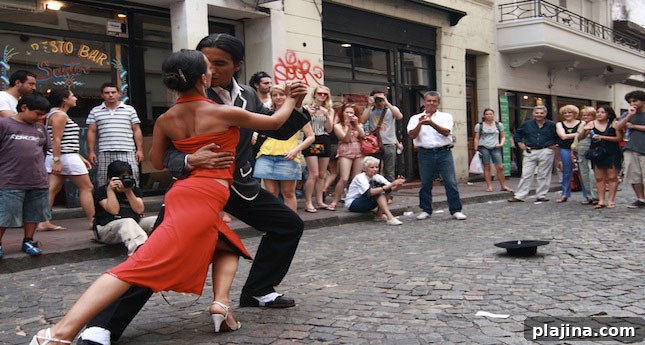
It may take two to tango, but in Buenos Aires it feels as though the whole city is dancing. On sidewalks in elegant Recoleta, you’ll spot young buskers executing polished steps; in the atmospheric streets of old San Telmo, nimble octogenarian couples glide across the pavement. Whatever the barrio, someone is likely to be dancing.
The tango originated in San Telmo in the 1870s and soon spread to the neighboring working-class district of La Boca. Born as the music and dance of lower-class porteños, it remained a local expression for decades before sweeping the world during the roaring 1920s.
Sensual, sultry and deeply expressive, tango is an essential part of the Buenos Aires experience. There are several ways to encounter it: a staged, choreographed performance known as tango de salón—often accompanied by a live orchestra—or the more spontaneous, social form called tango milonguero, enjoyed at milongas (neighborhood dance halls) or during informal gatherings such as Sunday afternoons in San Telmo’s Plaza Dorrego.
Many milongas, like El Beso run by La Academia del Tango Milonguero, offer lessons for newcomers. If you already dance, you are welcome to join the floor, but the right footwear makes a difference. Local shops specialize in tango shoes; one option near the Museo Casa Carlos Gardel sells handmade styles suited for the dance. The museum itself celebrates Carlos Gardel, the city’s most iconic tango figure, whose gravesite at Cementerio de la Chacarita is still adorned with fresh flowers from admirers.