The vibrant city of Buenos Aires continues to captivate travelers despite Argentina’s turbulent economic history. Known for its rich culture, historic architecture and lively street life, the capital has adapted to changing conditions while remaining a compelling destination.
In recent years, Argentina developed a reputation as a budget-friendly option for international travelers, driven in part by access to U.S. dollars and frequent fluctuations in the peso. Tourists were able to benefit from favorable exchange arrangements—either by using international bank cards at preferential tourist rates or exchanging dollars in informal markets—making dining, lodging and entertainment more affordable than in many other capitals.
That dynamic fueled a tourism boom, with visitors enjoying top-quality steak, wine and high-end services at relatively low prices. More recently, however, the gap between official and tourist exchange rates has narrowed, and some costs for visitors have risen. Still, for travelers from higher-income countries the city often remains a good value.
Data show a notable drop in trips from neighboring South American nations, while visits from the United States have been more resilient. For example, U.S. arrivals declined by 11.5 percent in November 2024 compared with November 2023, a smaller decrease than seen from some regional markets. This suggests Buenos Aires can still attract tourists from countries with stronger currencies and higher spending power.
Economic and political changes under President Javier Milei, who took office in December 2023, help explain some recent trends. Milei launched an aggressive austerity agenda and broad economic reforms aimed at stabilizing public finances and encouraging private investment. These measures have stirred debate—while they reduce public spending and may create short-term hardships for vulnerable groups, they also open opportunities for international investors.
The administration has prioritized expanding energy and mining output, targeting the Vaca Muerta shale formation and the country’s significant reserves of lithium and copper. Incentives for large-scale mining investments have already attracted major players; in December a multinational announced a $2.5 billion commitment to explore and develop local resources.
Cooperation with the United States is another focus. In August 2024 the Argentine government signed a memorandum of understanding with Washington aimed at boosting bilateral investment, and officials have discussed deeper trade and economic ties. The potential for increased U.S.-Argentina collaboration could bring new trade and tourism flows, particularly if business and aviation agreements make travel simpler and more affordable.
Milei is also negotiating with international lenders to secure fresh financing, a step that could enhance investor confidence if a deal is reached. He has expressed interest in pursuing broader trade arrangements with the United States that, if realized, would create additional export opportunities and potentially stimulate inbound leisure and business travel.
Political volatility and the risk of social unrest remain important considerations, given Argentina’s history. Yet Milei’s support has proven more durable than some anticipated, making it likely he will continue to implement his reforms through at least the current term, which runs until 2027. He is eligible for a second four-year term.

PHOTO: © JULIAN MESSANO
CHECKING IN WITH JULIAN MESSANO
Managing Director, OneWay Argentina DMC
Describe the current tourism landscape in Buenos Aires.
Tourism in Buenos Aires has shown a strong recovery following the pandemic, with visitor numbers moving back toward pre-pandemic levels. In the first 11 months of 2023 the city welcomed roughly 2.56 million international visitors, nearly matching the 2019 figure of 2.63 million. Forecasts for 2025 project continued growth, with estimates around 3.1 million international tourists, indicating a healthy rebound.
How has the number of U.S. visitors changed in recent years?
U.S. arrivals surged in 2023, with 664,809 visitors entering Argentina between January and May—a record figure. Through October 2024, U.S. trips totaled about 400,000, a reduction of roughly 5 percent compared with the previous year, reflecting shifting travel patterns but still demonstrating solid interest from American travelers.
Do you project this will change in the coming years?
If negotiations toward a free trade agreement with the United States progress, the measure could boost leisure and business travel between the countries. In addition, Argentina’s shift toward an open-skies approach aims to increase competition on domestic and regional routes, which should help lower airfares and improve connectivity. Greater airline competition is likely to benefit inbound tourism from the U.S. and other markets by making travel more affordable and flexible.
How do government policy and infrastructure investment affect tourism?
Government policy has a direct impact on travel demand and industry dynamics. The Pre-Viaje program, introduced during the pandemic to stimulate domestic tourism, relied on monetary issuance and raised concerns about inflation. The current administration discontinued that program, moving toward private-led investment in tourism infrastructure. As a result, new projects are being developed through public-private partnerships and private capital, shifting the sector toward commercially driven growth.
What do you see as key trends in the tourism industry?
Competition now centers on delivering highly personalized, value-added experiences. With most travelers able to plan trips online, travel agencies and operators must differentiate themselves through curated itineraries, deep local knowledge and bespoke services. Technology and skilled teams that combine online tools with on-the-ground expertise will be essential to compete in the modern travel market.
DIVERSIONS
Buenos Aires is celebrated for its elegant, sometimes faded architecture, exceptional restaurants and dynamic nightlife. Locals enjoy late dinners and social evenings, so expect restaurants and bars to be lively well past midnight. Don’t miss an authentic asado barbecue to experience Argentina’s culinary traditions.
Beyond casual bars, seek out milongas—traditional tango clubs where you can watch professional performances, observe passionate amateurs, or even join a social dance if you want to try Argentina’s iconic dance.
Soccer is integral to local culture, and stadiums are woven into the fabric of many neighborhoods. A visit to La Bombonera, the compact and legendary home of Club Atlético Boca Juniors, offers a visceral sense of the city’s sporting passion.
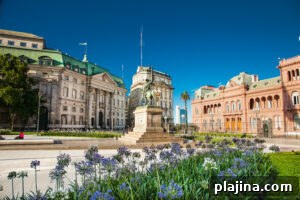
PHOTO: © ALEKSANDAR TODOROVIC | DREAMSTIME
Key landmarks include the Casa Rosada presidential palace, Plaza de Mayo and the famous Recoleta Cemetery. For a quieter escape, the Tigre Delta to the north offers riverside dining and leisurely boat trips through peaceful waterways.
LODGING
ALVEAR PALACE HOTEL
The city’s first luxury hotel remains a benchmark of elegant, traditional hospitality in the heart of Buenos Aires.
Av. Alvear 1891, Buenos Aires
$$$$$
BE JARDÍN ESCONDIDO BY COPPOLA
Located in the lively Palermo neighborhood, this boutique hotel offers stylish rooms, terraces and a pool—an attractive choice for exploring the area’s restaurants and nightlife.
Gorriti 4746, Buenos Aires
$$$$
FOUR SEASONS HOTEL BUENOS AIRES
A luxury property in Recoleta with an acclaimed pool area and popular dining and bar options, well suited for travelers seeking upscale amenities.
Posadas 1086 88, Buenos Aires
$$$$$
DINING
ARAMBURU
A two-Michelin-starred restaurant in Recoleta led by chef Gonzalo Aramburu, offering an 18-course tasting menu that highlights premium Argentine ingredients.
Pasaje del Correo, Vicente López 1661, Buenos Aires
$$$$$
CHORI
A casual spot specializing in choripán, Argentina’s beloved sausage sandwich. Try a classic ahumado or one of the chef’s creative variations like pork with kimchi.
Thames 1653, Buenos Aires
$$
PIZZERÍA GUERRÍN
A popular choice for quick, satisfying pizza in the local style—thicker crust, modest sauce and generous cheese.
Av. Corrientes 1368, Buenos Aires
$$
COMING AND GOING
U.S. citizens need a passport valid for at least six months beyond their planned entry date and at least one blank page for an entry stamp. No tourist visa is required for stays up to 90 days.
OFFICIAL LANGUAGE
Spanish
JUST THE FACTS
Time zone: GMT -3
Country code: 54
City code: 11
Currency: Argentine peso; U.S. dollar widely accepted
Key Industries: Agriculture, food processing, metalworking, chemical manufacturing, financial services
INFO TO GO
Buenos Aires is served by two main airports. The larger Ministro Pistarini International Airport (Ezeiza) handles most long-haul international flights and sits about 20 miles from the city center. Public transit can take around two hours to reach downtown; taxis typically halve that time but can be affected by rush-hour congestion.
Jorge Newbery Airport (Aeroparque) manages domestic flights and regional services to nearby countries. Located just over a mile from downtown, it is easily accessible by car and by several bus lines, making it a convenient option for short-haul travel.