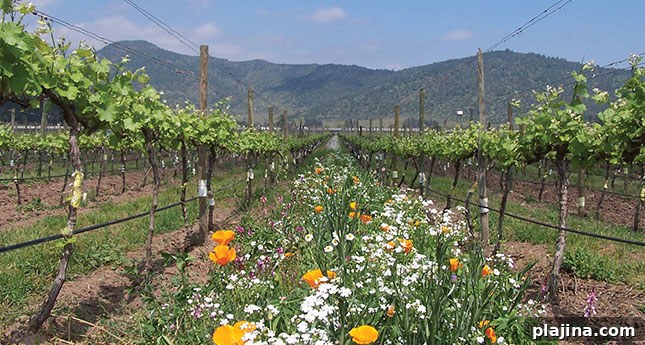
The sign in the shop reads “Organic Wines” — but what does that really mean? Definitions of “organic” vary by country and even by state, but the core requirements are similar: certified organic vineyards must cultivate grapes without synthetic pesticides, herbicides, fertilizers or genetic modification. For wines to earn full organic certification, production must also avoid external additives. That means a wine made from organically grown grapes can lose organic status if the winemaker adds sulfites, which most producers use to prevent bacterial spoilage. Such bottles may be labeled “made from organically grown grapes,” but not “organic wine.” Biodynamic farming takes the natural approach further, relying on organic inputs, homeopathic preparations and planting and harvesting guided by lunar cycles.
Antonio Bravo, head winemaker at Viñedos Emiliana in Chile, is a strong advocate for these natural growing systems. Emiliana manages 1,470 acres of certified organic and biodynamic vineyards and an additional 1,342 acres in transition — a process that can take several years before certification is granted. Because Emiliana produces wine exclusively from its certified estate vineyards, it is one of the world’s largest producers of estate-grown organic and biodynamic grapes.
How do wines from these vineyards perform in the glass? Emiliana’s Natura Sauvignon Blanc opens with aromas of clover and freshly mown grass, and delivers a crisp, mineral-driven palate with a long, clean finish. The Natura Carmenère shows spicy, dark berry aromas and a round, full-bodied mouthfeel. Both wines are attractively priced at $11.
Within Emiliana’s Nova range, the Carmenère–Cabernet Sauvignon Limited Selection shows greater complexity. It presents deep dark-fruit and spice aromas, a sturdy, rounded palate and a persistent finish. This wine is priced at $17.
Coyam, one of Emiliana’s signature blends, combines Syrah, Merlot, Carmenère and other varieties. Deep and ink-dark in color, it offers a spicy, full-bodied profile with pronounced character and structure — a generous and satisfying wine at $30.
At the top end, Emiliana’s G is notable as Chile’s first 100-percent biodynamic wine. Composed of Carmenère, Syrah, Cabernet Sauvignon and Merlot, G is richly colored and textural, with layered, complex aromas and flavors and a long, lasting finish. This premium wine is priced at $90.
These wines showcase a philosophy that emphasizes purity in the vineyard and restraint in the cellar — wines that reflect natural growing methods and the character of their terroir.