
Guangzhou has been a center of commerce since its origins as the major southern port on the Silk Route and later as a principal harbor for European trade from the 17th to 19th centuries. The foreign quarter on Shamian Island survives today mainly as a historic district of parks and colonial buildings. Modern business in China’s third-largest city has shifted to three main areas: the expansive exposition grounds that host the biannual Canton Fair; the long-established midtown Tianhe business district; and the recently developed riverside Zhujiang New Town, built to accommodate high-rise offices for multinational corporations.
Although Guangzhou’s focus is commerce, visitors and expatriates should adapt to local business culture. Rather than rushing straight into transactions, Western professionals benefit from observing Chinese guanxi—building personal networks and relationships first. Many venues across the city support this approach, offering refined settings for meetings, private meals and receptions designed to cultivate trust and impress clients.
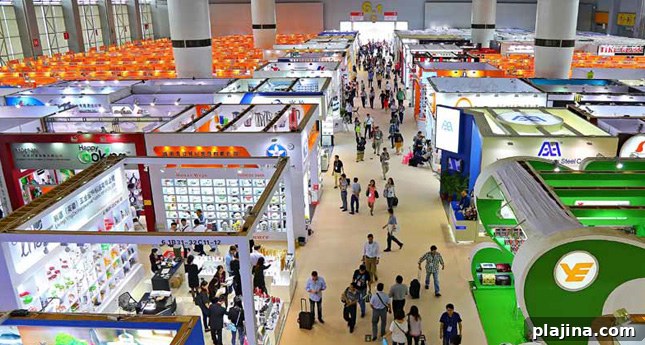
Since 1957 Guangzhou has hosted the China Import and Export Trade Fair. Held twice yearly, the Canton Fair brings together the largest range of products and the highest attendance of any trade show in China. For fair attendees, the Shangri-La Guangzhou is convenient and practical. Located next to the vast Guangzhou Baiyun International Convention Center, the hotel blends business amenities with urban-resort comforts. Within walking distance of the convention halls, it eliminates long taxi waits and traffic delays. During the fair seasons the lobby fills with visitors and executives, and staff often perform multiple roles to keep service efficient.
The Shangri-La’s dining options suit business entertaining: the Summer Palace restaurant provides an elegant setting for clients, while the RIBS café offers casual, international comfort food that some visitors enjoy. The hotel’s riverfront park and poolside deck, accessible from the Lobby Bar, serve as attractive locations for cocktail receptions and private buffets—a welcome respite from the bustle of the convention.
After Shamian’s decline as a commercial center, Tianhe emerged as Guangzhou’s central business and retail district. Today it teems with shopping, dining and entertainment venues, including international brands and local chains. The Hilton Guangzhou Tianhe is a distinguished option in this busy area. Beyond its outdoor fountain and cool marble lobby, the hotel offers flexible meeting spaces and several restaurants suited to business dining: Sui Xuan specializes in Cantonese cuisine across multiple private dining rooms, while Il Ponte provides Italian fare and private suites for meetings. The nearby Guangzhou East Railway station and metro stop place the airport on Metro Line 3 approximately a half-hour away at low cost, making travel convenient for attendees and guests.
Zhujiang New Town, a short ride along Metro Line 3, concentrates office towers, shops and cafes beneath landmark high-rises. Designed as the city’s modern Central Business District, the area spans roughly two and a half square miles and includes a long central plaza stretching toward the Pearl River. Major civic buildings—such as the Guangzhou Library, Guangdong Museum and the striking Guangzhou Opera House designed by Zaha Hadid—anchor the district and attract international visitors and events.
Around these cultural landmarks, several international five-star hotels provide premium accommodation and meeting facilities. The Ritz-Carlton, located beside the library, features a classically styled interior with refined dining options like Lai Heen, known for high-quality Cantonese cuisine served in semi-private settings suitable for client meetings. The Four Seasons occupies the upper floors of the Guangzhou International Finance Center and offers elevated perspectives, elegant contemporary design, and private dining rooms with panoramic views when skies are clear.
The nearby Grand Hyatt is noted for its food and event capabilities. The Market Café buffet, with multiple live cooking stations, is popular with locals and visiting executives alike; booking in advance is advisable for large parties. The Penthouse and its private dining rooms provide intimate spaces with residential touches, while the hotel’s outside catering arm frequently collaborates with major brands to deliver bespoke events at venues such as the Opera House.
Companies planning to attend the Canton Fair should reserve accommodation early—often immediately after a fair concludes—as hotels sell out quickly during show periods. Early booking can yield discounts, sometimes up to 35 percent. For regular business travel, scheduling meetings between fairs is often better: hotels and venues are less crowded and premium spaces are easier to secure.