
Superlatives define Dubai: biggest, highest, newest, most expensive. During the city’s construction boom, half the world’s cranes seemed to be here, and skyline views were dominated by ongoing projects. The global economic slowdown has tempered growth somewhat, but “slow” in Dubai’s context still looks fast compared with most places.
Already this year, the first phase of the above-ground Metro has opened, and ambitious projects remain in the pipeline. Among them is the 3 million-square-foot Dubailand, planned to include theme parks, cultural attractions and sports venues such as Universal City, Six Flags, Sports City, City of Arabia and Motor City. There are also residential and resort developments like The Tiger Woods Dubai Al Ruwaya, a golf community whose name means “serenity.”
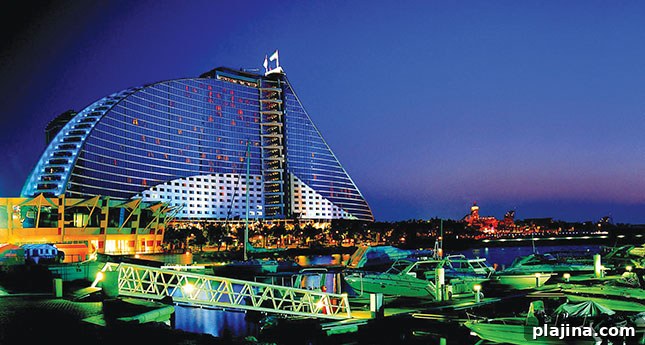
Dubai, one of the seven emirates that make up the United Arab Emirates, has become a luxury global destination in roughly five decades. Positioned on the southern shore of the Persian Gulf at the eastern edge of the Arabian Peninsula—between Saudi Arabia and Oman and across the gulf from Iran—Dubai owns several world records and signature attractions. The city contains three of the world’s largest manmade islands, including the iconic Palm Jumeirah, home to the newest Atlantis resort. It boasts the world’s tallest tower, the Burj Dubai, and a massive shopping complex with roughly 600 stores. Dubai also introduced the region’s first indoor ski resort and is home to the sail-shaped Burj Al Arab, a property often described as the world’s first seven-star hotel, set on its own island with a helicopter pad. The 72-story Rose Tower has overtaken the Burj Al Arab as the tallest hotel in the city. Despite its flash and extravagance, Dubai remains an international, welcoming city where many North Americans feel comfortable.
We spoke with American expat Grady Walker, who moved to Dubai a few years ago to serve as vice president for an energy solutions company. Walker represents the majority of residents: about 85 percent of Dubai’s population are expatriates.
“Businesses want to be here,” Walker said as we enjoyed the view of Dubai Creek from the Park Hyatt Dubai. The emirate’s main revenue drivers are tourism, real estate and financial services. Historically, the region was known for pearl exporting prior to World War I.
“This is a really easy place to adjust to,” Walker added. “It can be over-the-top, but it’s livable. I feel safe. It’s energetic and captivating. What they’ve accomplished here is quite innovative and special.”
Walker noted that while the Emirates have close ties with Saudi Arabia, Dubai’s economy is no longer centered on oil and gas alone. Instead, regional services, shipping and tourism drive activity, with Dubai positioning itself as an especially aggressive and tourism-focused emirate.
Last year, Dubai welcomed 7 million visitors; projections aimed for 10 million in 2010 and an ambitious 15 million by 2015—more than double the figure from the prior year. Many hotels report high occupancy despite the global economic climate, and Dubai’s average room rates are among the highest in the world. In October, the average nightly rate was $226, a level comparable to New York City.
Industry reporting pointed out that 2009 was challenging for hospitality: demand fell amid a 17 percent increase in room inventory, which drove occupancy down and reduced revenue per available room compared with 2008. Still, hoteliers remain optimistic about long-term prospects.
Neil Rumbaoa, head of communications at Shangri-La Hotel, Dubai, described the city as “a 21st-century city” intent on impressing visitors with luxury and innovation. He observed growing American-business interest, while noting U.S. consumers and travelers were not yet the dominant market.
Distance and culture may partly explain the relatively modest number of American tourists—direct flights from New York take roughly 14 hours, and the local customs and traditions can feel very different to some visitors.
To help bridge cultural gaps, we visited the Sheikh Mohammed Centre for Cultural Understanding at Jumeirah Mosque and spoke with Nasif Kayed, who leads programs that explain Islamic practices and traditions to non-Muslims. The mosque is one of some 1,200 across a city approaching 1.5 million residents. Kayed, who was born in Palestine, raised in Kuwait and lived in the United States before moving to Dubai, volunteers to welcome visitors and explain rituals such as pre-prayer washing, the five daily prayers and the pilgrimage tradition to Mecca. His work reflects a personal commitment to counter misunderstandings he experienced in the U.S. after 9/11.
During the center’s programs, visitors wear traditional Islamic attire and often participate in demonstrations of the washing ritual before entering the mosque for prayer. Kayed’s presentations aim to reduce misconceptions and foster mutual respect.
Dubai combines towering high-rises, luxury malls, designer fashion and exotic cars with a legal framework influenced by conservative Islamic law, which prohibits gambling and restricts public displays of affection. Within this landscape of contrasts, residents and visitors work, shop and play.
Info To Go
Dubai International Airport (DXB) is located about 2.5 miles southeast of downtown Dubai. A metro link to the airport was expected to be operational by mid-2010. Metered taxis operate 24 hours outside Terminals 1, 2 and 3, an airport shuttle connects terminals, and city buses serve the airport as well.
Just the Facts
Time Zone: GMT+4
Phone Code: 971 (U.A.E.), 4 (Dubai)
Currency: Dirham
Entry Requirements: U.S. citizens must have a valid passport; a visa is not required for many short stays.
Official Language: Arabic; English is widely used in business and daily life.
Key Industries: Tourism, real estate, financial services.
Diversions
Shopping is a national pastime in Dubai, with major seasonal sales during Summer Surprises in August and the Shopping Festival in January, often featuring discounts of 50–70 percent. The Dubai Gold Souk is a dense cluster of gold and jewelry shops where bargaining can lead to substantial savings.
The Sheikh Mohammed Centre for Cultural Understanding at Jumeirah Mosque offers hour-long discussions on select days to explore Islamic culture. For a sense of old Dubai, visit Al Bastakiya, known for its wind towers, narrow lanes, galleries and boutiques, and the nearby Dubai Museum at Al Fahidi Fort, which showcases the region’s maritime and pearl-diving heritage.
For indoor snow and winter sports, Ski Dubai inside the Mall of the Emirates provides skiing, snowboarding and a children’s snow park. Wild Wadi Waterpark near Jumeirah Beach features rides and wave pools, and many luxury hotels offer complimentary access for guests.
Adventure options include desert safaris in 4×4 vehicles that end with dinner in a recreated Bedouin camp, complete with entertainment, camel rides, henna artists and traditional hospitality. River cruises on wooden dhows provide a scenic way to experience Dubai Creek and the city at dusk.
Lodging
Burj Al Arab
The iconic, sail-shaped property offers ultra-luxury duplex suites and a reputation for prestige. Jumeirah Beach Road.
One&Only Royal Mirage
Palatial beachfront accommodations with Arabian decor and a signature spa experience. Jumeirah Beach Road.
Park Hyatt Dubai
Popular with international visitors, this riverside resort features a marina, yacht club, golf course and spa at Dubai Creek Golf and Yacht Club.
Dining
Al Mahara
A contemporary seafood restaurant with a dramatic table-side aquarium at Burj Al Arab.
Traiteur
A French brasserie-style restaurant at Park Hyatt Dubai with a refreshed menu and new chef.
Verre
Modern European cuisine from celebrity chef Gordon Ramsay at Hilton Dubai Creek.
Checking in with John Peling
General Manager, Raffles Dubai
What is the latest news at Raffles Dubai?
Raffles Dubai is re-launching two signature, award-winning restaurants—Fire & Ice and The Noble House—updating and enhancing their concepts.
What are your main markets?
Raffles Dubai attracts a balanced mix of corporate and leisure travelers. The Gulf Cooperation Council region is a strong source market, along with Europe (notably the U.K., Germany and Switzerland) and Southeast Asia. The Raffles brand’s global presence also supports business from familiar Asian markets.
Do you foresee any expansion in markets?
Despite economic challenges, U.S. visitors contributed significantly to UAE tourism revenue in recent years, and there is potential for growth from North America supported by sales efforts. China and India are emerging and expanding markets, with China often providing stopover traffic to Europe and resort destinations.
What is the outlook for Dubai for the coming year?
Occupancy levels in 2009 remained encouraging. The outlook for luxury hotels is positive: travelers continue to demand quality but also seek value. Many properties add value rather than drastically discounting, and consistent service and product quality remain critical. Since 1999, Dubai’s development and success have made it a benchmark for many other destinations.