
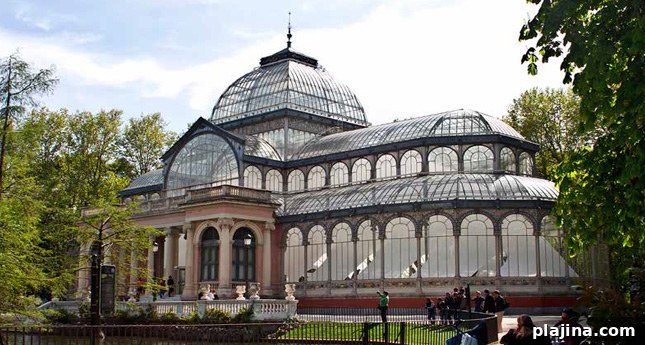
In Spain’s geographic center, Madrid serves as both the nation’s capital and its largest city, with a population exceeding three million. The metropolitan area is among the largest in the European Union and stands as Southern Europe’s principal financial hub. Many leading Spanish companies — including Telefónica, Iberia, Urbaser, Dragados and Prosegur — maintain headquarters here, and the city is a major venue for trade fairs supported by the Trade Fair Institution of Madrid. Despite its commercial importance, Madrid remains elegant and visually appealing. Its compact central district stretches from the expansive Buen Retiro Park, through the Golden Triangle museum district, along historic streets surrounding Plaza Mayor, and culminates at the Royal Palace.
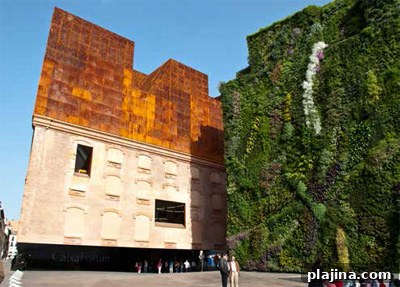
The Caixa Forum Museum and the Vertical Garden © STILLMAN ROGERS PHOTOGRAPHY
The broad Paseo de la Castellana runs north toward the modern AZCA business district and the Palacio de Congresos y Exposiciones convention center. AZCA is identifiable by the Torre Picasso office tower and the Bernabéu Stadium, home of Real Madrid. Further north, the Cuatro Torres Business Area’s four prominent skyscrapers rise above the Chamartín neighborhood. Within its historic core, Madrid pairs Baroque plazas and narrow, picturesque streets with a modern infrastructure and an efficient public transit network. The Metro is fast and frequent and often faster than a taxi for reaching central destinations; it extends to Madrid-Barajas Airport with stops at terminals T2 and T4. Line 8 connects the airport to AZCA in roughly 12 minutes, while RENFE trains from Terminal T4 serve the central Atocha station. Taxis from the airport to the city center typically cost about $30 — use the licensed taxi ranks outside the terminals. Official taxis are white with a red stripe; confirm the meter is running. For private transfers, English-speaking chauffeur services are available and can meet passengers inside arrivals.
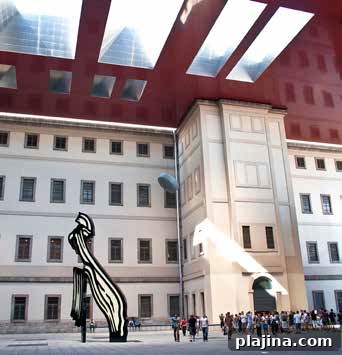
The Atrium, the Museo Reina Sofia © STILLMAN ROGERS PHOTOGRAPHY
Business culture in Madrid follows a different rhythm than in Northern Europe or North America. Although modern business practices and air-conditioning have influenced local schedules, the day remains more flexible. Meals play a significant role in building relationships, but business is rarely concluded over the table; meals are intended for relaxation, getting to know one another and assessing fit. If you need to discuss business during a meal, mention that in advance. Breakfast meetings can be challenging since many locals prefer a later schedule, and dinner in Madrid often begins around 10 p.m. Still, clients appreciate invitations to refined venues like La Rotonda at The Westin Palace, set beneath a stained-glass dome. Its linen-covered tables and plush seating create an elegant setting; offerings include croissants, chocolate pastries, smoked salmon and Spanish ham, with freshly squeezed orange juice.
Hotel Wellington’s La Llave de Oro serves breakfast from 8 a.m., featuring house-baked pastries; in pleasant weather, the terrace on Velázquez Street is a good option for business lunches as well. For a private, à la carte breakfast, La Biblioteca in the former palace of the Duke of Santo Mauro provides intimate dining rooms for up to ten guests or a more relaxed option in the Santo Mauro Gardens. For a traditional café experience, Café de Oriente opposite the Royal Palace offers classic red-velvet seating and light breakfast sandwiches with local cheeses and Spanish ham, often accompanied by thick hot chocolate. Spanish lunches begin late — typically after 1:30 p.m. — and many restaurants open only then. Goizeko Wellington, for example, opens in the early afternoon and serves seasonal Basque-inspired dishes such as asparagus with truffle oil or lobster ceviche. Santceloni, a Michelin-starred option, begins service at 2 p.m. and presents refined dishes like veal terrine with pistachio and fig purée or sea bass with candied tomato and hazelnuts. Equally prestigious, Zalacain offers a polished dining experience with a distinguished wine list and inventive preparations featuring truffles and foie gras. For dramatic skyline views, Volvoreta atop one of the Cuatro Torres Business Area skyscrapers serves a seasonal Mediterranean menu on its 30th-floor dining room, with dishes such as tuna tartare, venison loin and slow-cooked Castilian lamb, all complemented by panoramic vistas of the surrounding landscape.