
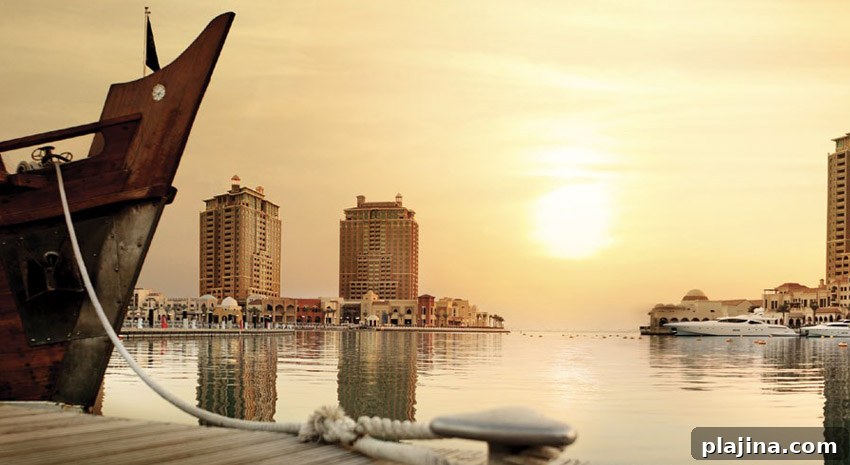
THE MASSIVE, TECHNICOLOR LIGHT POLES lining the access road from Hamad International Airport to Doha’s city center—changing color as you progress—are an apt symbol for Qatar’s capital. Despite its small size (about half the size of New Jersey), Doha is unapologetically flashy and opulent. When it comes to style, subtlety often gives way to spectacle.
Set on Doha Bay along the Persian Gulf, the city is defined by dramatic skyscrapers, many illuminated at night, and a seven-mile waterfront promenade called The Corniche. The Corniche is flanked by parks and public spaces, and the city blends traditional Arabic souks with expanding suburbs and carefully planned communities.
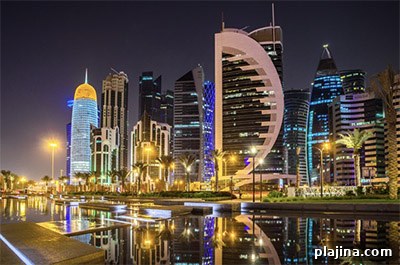
Modern Doha © FITRIA RAMLI | DREAMSTIME
Once a British protectorate, Qatar became independent in 1971. Today its citizens enjoy one of the highest per capita incomes in the world. Before the discovery of oil, the pearling industry sustained the local economy; pearling boats were common until the trade collapsed during the Great Depression and with the rise of cultured pearls. The oil era, however, brought rapid population growth and transformation—Doha’s metropolitan population now exceeds two million people.
Beyond wealth, Qatar’s leadership has prioritized economic diversification. Under the rule of Sheikh Tamim bin Hamad Al Thani, Doha invested in business, tourism, education and media to reduce reliance on hydrocarbons. International engineering, energy and financial firms maintain regional offices here, and Al Jazeera’s Doha headquarters has amplified the city’s influence across the Arab world.
Doha has faced political challenges, such as the diplomatic and economic blockade imposed by neighboring countries in recent years. The dispute affected regional relations and travel, but visitors to the city typically encounter a modern, active metropolis focused on development and hospitality.
Doha’s international profile has grown through culture and sport. In 2015 the city was named one of the New7Wonders cities, and Doha regularly hosts major sports events—an intentional strategy to raise the city’s global visibility. Recent and upcoming investments include stadium construction for international tournaments, a new airport terminal that handled more than 37 million passengers in 2016, a modern metro system under phased rollout, an expanded container port, and the National Museum of Qatar on The Corniche.
Education and research are central to Doha’s long-term strategy. Education City, established in 2003 on the city outskirts, spans more than eight square miles and hosts branch campuses of prominent international universities, including Carnegie Mellon, Georgetown’s School of Foreign Service, Virginia Commonwealth University and Weill Cornell Medical College. Qatar Science & Technology Park supports tech companies, startups and research initiatives, furthering the country’s knowledge-based ambitions.
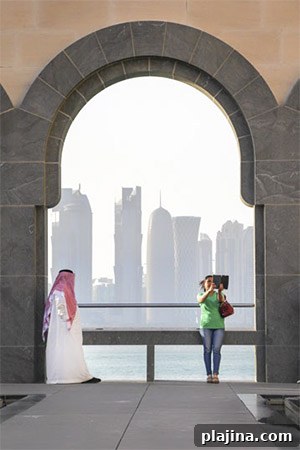
Different cultures in Doha © TIJANAA | DREAMSTIME
Tourism is a priority, with government planning projecting a near-even split between business and leisure travel. Doha’s hotel scene skews upscale, featuring 4- and 5-star properties that cater to business and leisure travelers with conference facilities, spas, fitness centers, pools and varied dining options. Alcohol availability is typically limited to licensed hotel restaurants and bars.
Visitors should respect local customs: women are not required to cover their hair, though many local women do. Western dress is broadly acceptable when modest and not provocative. Doha’s climate is desert-like—mild winters and extremely hot summers—so plan activities and attire accordingly. Average temperatures range from around 62°F in winter to near or above 96°F in summer, with rain infrequent and usually limited to brief winter showers.
Expatriates and non-Qataris form a significant portion of the population and may be eligible to buy property in designated areas, enabling them to live and work in the country.
CHECKING IN WITH BELAL AL-KADRY
Hotel Manager, Sharq Village & Spa, A Ritz-Carlton Hotel
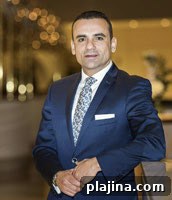
Belal Al-Kadry © SHARQ VILLAGE & SPA, A RITZ-CARLTON HOTEL
What was the design goal for the Sharq property?
Sharq Village & Spa blends local architectural traditions with modern comforts. The property guides guests through courtyards and shaded alleyways that evoke Arabian heritage while offering contemporary amenities, upscale service and the latest facilities.
What activities are offered for families?
The Ritz Kids program and a full recreational schedule provide family-friendly options such as beach volleyball, non-motorized water sports, outdoor movies and cupcake decorating. Programs rotate daily and weekly, including environmental activities and wellness sessions that engage children while emphasizing healthy living.
What are popular leisure activities for children in Doha?
During cooler months, families enjoy desert excursions—including dune bashing, sand play and traditional Arabian evenings—camel racing at Al Shahaniya, fishing in the Arabian Gulf, and time at city parks and The Corniche. In summer, pools and beaches offer water sports and resort-based children’s programs. Local attractions for families include Aqua Park Qatar, Snow Dune, Juniverse and Angry Birds World, each combining entertainment and educational elements.
Things to Do in Doha
Doha positions itself as a cultural capital anchored by world-class institutions. The I.M. Pei–designed Museum of Islamic Art opened on The Corniche in 2008 and houses a permanent collection spanning 14 centuries. Admission to the permanent galleries is typically free, making it an accessible cultural highlight.
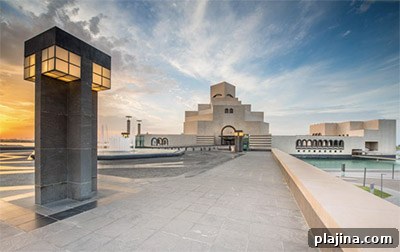
The Museum of Islamic Art © QATAR TOURISM
AUTHORITY
The Sheikh Faisal Museum at Al Samriya displays a private collection of more than 15,000 items, from vintage cars to traditional boats and historic costumes. The National Museum of Qatar, inspired by the desert rose and designed by Jean Nouvel, opened on The Corniche and integrates the original palace of Sheikh Abdullah bin Jassim Al Thani into its layout.
Other cultural sites include Katara Cultural Village, which stages outdoor performances and exhibitions, and Al Zubarah Fort, a UNESCO World Heritage site celebrating Qatar’s historic trading and coastal heritage.
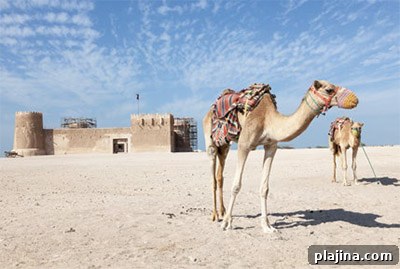
Al Zubarah Fort © TYPHOONSKI | DREAMSTIME
Active visitors can play golf, dive, fish or take part in other water sports. Aspire Park provides green space with a lake, playgrounds and picnic areas. Families are well served by play areas in major malls, parks and beaches.
Shopping options range from modern, upscale malls to traditional souks. Souq Waqif is the best-known market, offering spices, traditional clothing, crafts and even a falcon hospital. Popular experiences include camel rides, desert barbecues, dhow dinner cruises and adrenaline-filled dune bashing in Khor Al Adaid’s massive sand dunes.
Doha Info to Go
Hamad International Airport, a modern hub in its own right, is roughly a 20-minute drive from the city center. Qatar Airways operates direct flights from multiple U.S. gateways, and other international carriers also serve Doha. Travelers should verify airline schedules and any travel advisories given regional conditions. Qatar Airways frequently offers complimentary short tours of the city for passengers with lengthy layovers.
City transport includes taxis (metered fares start around $7), private limousine services, and a state-run bus network connecting the airport to urban destinations. Bus fares paid by smartcard generally range from about $3 to $8.
Doha: Just the Facts
Time zone: GMT +3
Phone code: Country code: 974
Currency: Qatari riyal
Key industries: Oil and gas, construction, tourism, sports events, education and transport
COMING AND GOING
U.S. citizens need a passport valid for at least six months with two blank pages. Qatar offers free visa waivers on arrival for U.S. passport holders, typically valid for 30 days.
OFFICIAL LANGUAGE
Arabic is the official language, but English is widely used in business, tourism and on road signs.
Where to Stay in Doha
MARSA MALAZ KEMPINSKI, THE PEARL – DOHA A 281-room, five-star hotel featuring a Clarins spa, fitness center and multiple restaurants. Costa Malaz Bay $$$$
SHANGRI-LA HOTEL DOHA Located near the Doha Exhibition and Convention Centre, with panoramic city views, Asian dining and lively public spaces. Conference Centre Street, West Bay $$$
SHARQ VILLAGE & SPA A 174-room Ritz-Carlton resort on the Gulf with almost 1,000 feet of private beach, nine restaurants and a Six Senses Spa. Ras Abu Abboud Street $$$
Restaurants in Doha
AL ENNA RESTAURANT Casual outdoor dining in Souq Waqif serving traditional Qatari dishes—yogurt-based chicken, seafood and generous portions served with warm hospitality. $$$
NOBU DOHA Located in the Four Seasons, this upscale Japanese restaurant is one of the largest Nobu venues and offers a stylish dining and bar atmosphere. The Corniche $$$$
SPICE MARKET Jean-Georges Vongerichten’s take on Southeast Asian street food at the W Doha Hotel, serving Thai- and Vietnamese-inspired dishes in a casual setting. West Bay $$$$