
The shopkeeper, handsome and outgoing, stood at his doorway and declared with a grin, “I can turn you into an Egyptian woman in two minutes.” He meant it. A bright, loose-fitting sheath was drawn over my head, and with a few swift twists and twirls a multi-colored shayla — a long rectangle of soft fabric — became a head-and-shoulder covering. Precise swoops of cloth left only my wide eyes visible, transforming me into a mysterious figure.
“Now run away with me,” my attendant teased, offering his hand as if to whisk me a few stalls over to view the transformation in a full-length mirror.
He won my affection easily, standing out from the many vendors in the Old Market in Sharm el Sheikh. Delighted by the playful attention and eager to reward his charm, I bought a souvenir. Companions shared similar encounters; it had been a cheerful day in this popular resort area, where the Red Sea shimmers at the tip of the Sinai Peninsula.
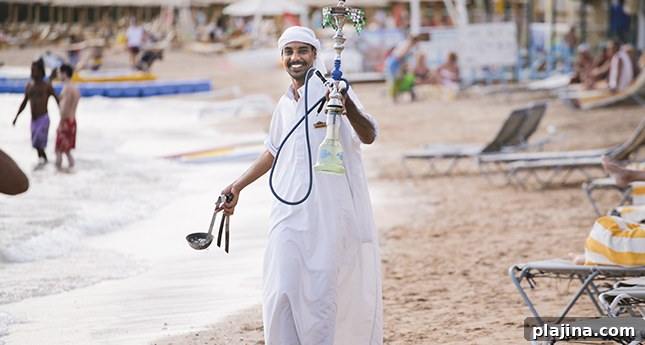
Had we stayed after dusk, we would have felt the pulse of lively nightclubs, inhaled flavored hookah smoke and savored the scent of meats grilling outdoors. The Old Market is often described as Egypt’s largest modern bazaar, rebuilt after 2005 following terror attacks that claimed 88 lives in this area and nearby Na’ama Bay.
Those attacks briefly fractured life here, but Sharm el Sheikh has worked to regain its reputation as a haven of calm and natural beauty. In 2002 UNESCO named Sharm a City of Peace. The region’s history includes periods of armed conflict between Egypt and Israel, but today its sunny climate, ruby-hued mountains and clear aqua waters draw more than a million visitors each year to a community whose year-round population is about 35,000.
Tourism has mushroomed: from three resorts in 1982 to more than 90 today. Located roughly six hours south of Cairo, Sharm el Sheikh and nearby Na’ama and Shark bays sit within a landscape that is both desert wilderness and a paradise for water lovers. The three bays lie within a few miles of one another, and continued development could eventually link them into a contiguous resort zone.
We visited in late January, when daytime highs were in the low 80s but felt cooler because of the dry air and constant desert breezes. Not everything felt idyllic; discreetly armed security accompanied our group on outings, guards controlled access to resorts, and barriers complicated travel along some roads. When I mentioned feeling uneasy, a local offered a different perspective: “You should feel safe because of it,” she said. “You have very good protection.”
International visitors, particularly Europeans, flock here to swim, snorkel and scuba dive. The Red Sea’s vivid coral reefs rank among the world’s best, and some resort floating docks offer excellent snorkeling right off the shore. Popular day trips include short cruises to Tiran Island with stops to explore underwater life.
Tiran Island lies within Ras Mohammed National Park, established in 1983 as Egypt’s first national park. The park protects unique ecosystems across roughly 118,000 acres of land and sea and features vertical reefs that plunge nearly 300 feet. Ras Mohammed teems with marine life — parrotfish, threadfins, coral grouper and prickly scorpionfish among them — and Hidden Bay’s mangroves are a magnet for birdwatchers.
Religious travelers can visit Mount Moses (Jabal Musa), a 7,500-foot peak under three hours from Sharm el Sheikh that draws Christians, Muslims and Jews as a site of pilgrimage. Many climb before dawn to watch the sunrise from the summit. Nearby Mount St. Catherine, at 8,600 feet, is Egypt’s highest peak. Tradition links this region to Moses and the Exodus; at the mountain base stand an 11th-century mosque and St. Catherine’s Monastery, one of the world’s oldest continuously operating monasteries, built between 527 and 565. The monastery houses a vast collection of religious manuscripts and priceless icons and mosaics.
A common stop on the return from the mountains is Dahab, a lively seaside village about 60 miles up the Gulf of Aqaba. Its name means “gold,” a nod to its fine sands. Visitors can ride glass-bottom boats, watch windsurfers who favor Dahab’s reliable winds, or visit the famed Blue Hole a few miles away, a top diving site.
The Sinai Peninsula’s mountains and deserts offer dramatic geological variety: shifting dunes, red granite peaks and broad vistas. Explore the terrain by Jeep, camel or on foot, but hire a guide — it’s easy to become disoriented alone. Our escorted Bedouin visit began in five Jeeps and one security vehicle a couple of hours before sundown. After a police checkpoint we left the highway for desert tracks that seemed to shift with the wind.
“Time for a massage,” our driver joked as we followed sandy ruts, briefly separating from and rejoining the caravan. We passed roaming flocks, small tent settlements with satellite dishes and even a makeshift internet café. The excursion, billed as a desert safari, included a tranquil camel ride led by nomads who guided two camels apiece. We dismounted to climb a scree slope and take in the sweeping landscape.
At dusk we arrived at a Bedouin camp for hot minty habak tea and warm flatbread, kneaded thin and cooked on cast-iron skillets over open fire. Colorful blankets displayed beaded necklaces, carved wooden camels and silky scarves. Among curious local remedies for sale were small jars of camel urine, touted by some locals as a hair tonic.
Your enjoyment of Sharm depends in part on trust and openness to local warmth. The Jeep rides across empty desert were thrilling and a bit unnerving, making the experience memorable. Wherever you travel in Egypt, carry baksheesh — small bills, not coins — to thank drivers, guides, bellmen, waiters, maids, camel handlers and photographers. Tipping is a cultural norm and a valued courtesy.
Merchants offer spices by the gram, hand-painted papyrus sheets, wooden carvings and cashmere scarves. Some vendors are eager and persistent; others prefer a slow, charming approach. Bargaining here is a leisurely ritual: a $10–$20 souvenir purchase can take half an hour or more. The process is part of the experience — savor the interaction, keep bargaining light and friendly, and appreciate the human connection.
One Old Market vendor asked with genuine mischief, “How many camels for your beautiful wife?” My colleague replied instantly, “Four.”
“Four? FOUR? You can’t mean just four,” the vendor exclaimed, feigning shock, prompting my friend to add, “Okay. Plus a hundred chickens.” The exchange ended with handshakes, grins and goodwill that seemed, for a moment, worth more than money.
Info To Go
Sharm el Sheikh International Airport (SSH) is the country’s second-busiest airport. Flights from Cairo take roughly one hour; connections from major European hubs vary in duration. Organized tours and local operators offer day trips and escorted excursions. Check with reputable tour providers or your lodging for current options and schedules.
Lodging
Baron Palms Resort
Thick tropical gardens and Andalusian-inspired architecture define this all-inclusive property, which offers nearly 2,000 feet of private beach along Ras Nasrani Bay. Tel: 20 69 367 0170.
Continental Garden Reef Resort
Enjoy panoramic seaside and mountain views and diverse dining options at this resort, which features multiple restaurants and live cooking stations. Garden Reef Bay, tel: 20 69 360 0006.
Hilton Sharm Dreams Resort
A family-friendly resort with multiple lagoon pools and children’s activities, located in Na’ama Bay. Tel: 20 69 360 2828.
Dining
Il Frantoio
An intimate restaurant focused on regional Italian cuisine; request a terrace table for sea and fountain views. Four Seasons Resort, tel: 20 69 360 3555.
Les Palmes
Award-winning chefs create a fusion of flavors emphasizing fresh local seafood. Located at Sinai Grand Casino in Na’ama Bay, tel: 20 69 360 1050.
Mahony
Atmospheric, cave-like decor and friendly service make this a popular spot; try the seafood soup or mixed grill. Na’ama Bay, tel: 20 10 398 3896.