

© DNDAVIS | DREAMSTIME.COM
As your flight approaches Ninoy Aquino International Airport, one corner of Manila stands out as distinctly American. On the right side of the approach, amid crowded rooftops, busy highways and a skyline of modern towers, lies a 152-acre expanse of manicured lawn threaded with concentric paths and rows of white crosses. This is the Manila American Cemetery, the largest U.S. military cemetery overseas and a calm, solemn contrast to the surrounding urban bustle.
The cemetery also reflects the intertwined histories of the United States and the Philippines. The area once housed Fort William McKinley, a major U.S. military base established during the Philippine–American War (1899–1902) that remained strategically important through two world wars. After Philippine independence in 1949 the base became Fort Bonifacio and later, in the 1990s, much of its land was sold and redeveloped as Bonifacio Global City (BGC). Yet the cemetery, with nearly 17,000 graves, endures as a quiet reminder of the past.
Metro Manila—the metropolitan region centered on the capital—spreads across the west coast of Luzon, the Philippines’ largest island. Composed of 16 cities, the conurbation covers roughly 239 square miles between Manila Bay and a range of hills and a large lake. Each city has its own character, but together they form a vast, continuous urban sprawl that visitors must learn to navigate.
© MICHAEL EDWARDS | DREAMSTIME.COM
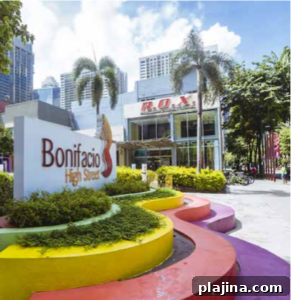
Bonifacio Global City, often shortened to BGC, is part of Taguig City and represents the polished, newly developed face of Metro Manila. Centered on Bonifacio High Street, an open-air shopping and dining precinct shaded by trees, BGC is home to international retailers and restaurants, clean streets and carefully planned public spaces—at times it evokes comparisons to Singapore.
Neighboring Makati has been Manila’s financial hub since the 1970s. With a skyline of towers and a mix of older streets and modern developments, Makati feels more lived-in than newer districts and often conveys a distinctly Filipino urban character. Many business travelers base themselves in either Makati or BGC for easy access to corporate offices and amenities.
Quezon City, the largest municipality in the region and in the country, was planned as a new capital and remains home to the Filipino film and television industries, earning it the nickname “City of the Stars.” Its original grid-like vision has been overtaken by dense residential growth, resulting in busy, crowded neighborhoods and tangled overhead wiring that reflect the city’s dynamic, sometimes chaotic energy.
The City of Manila itself sits at the mouth of the Pasig River and is the historic heart of the metropolis. Human settlements in the area date back tens of thousands of years, and the Spanish established a fortified settlement in the 16th century. Today Manila retains its administrative, economic and judicial roles, even as planning discussions continue about relocating some national institutions to other parts of the country.
Reading Metro Manila as a whole, it becomes clear that the region’s sprawling form is the result of ambitious planning colliding with practical realities. Numerous development initiatives have reshaped the area, but Manila’s gravity as the historic and economic core has consistently influenced outcomes. New projects continue to evolve the region’s footprint.
One major effort is New Clark City, a planned urban area about 68 miles north of Manila intended to accommodate up to 1.2 million residents and relieve some pressure on the capital. Within Metro Manila, large-scale transport projects aim to untangle daily congestion. The Metro Manila Subway, billed as a transformative mass-transit link, is being built in phases with the first segment expected to open in the mid-2020s and full operation planned later in the decade. Complementary upgrades to bus networks and modernized jeepneys will help knit together a more efficient public transit system.
On the bayfront, construction began on a new international airport designed to handle dramatically larger passenger volumes. The new airport complex, intended to become a hub for both travel and surrounding development, is part of broader plans to expand the region’s infrastructure and economic capacity.
When the new airport opens, incoming travelers may no longer see the Manila American Cemetery from the same approach, but the cemetery will remain—one of the constant places of remembrance amid a rapidly changing metropolitan landscape.
CHECKING IN WITH RICHMOND JIMENEZ
Tourism Attaché and Director, U.S. Southwestern States and Latin America, Philippine Department of Tourism
What opportunities does Manila offer American investors? The United States is a major investor in the Philippines, among the top contributors of foreign direct investment. As the country recovers and stabilizes after the pandemic, the investment climate has improved, attracting interest across sectors. Recent legislative changes permit up to 100 percent foreign ownership in certain public services, opening the door for investment in airports, railways, telecommunications and other infrastructure.
Opportunities exist for both large and small investors in tourism, hospitality, food and beverage, real estate, technology, and health and wellness. The Philippines’ business environment is welcoming, and partnerships with local firms can be especially productive. As a former tourism secretary observed, successful investment often depends on the partners you choose.
Are there cultural differences American visitors should be aware of?
The Philippines blends Southeast Asian, Chinese, Spanish and American influences, creating a culture that is both diverse and hospitable. Filipinos are known for their warmth and adaptability, which makes visitors feel welcome. The country is linguistically varied, but English is one of the official languages and is widely used in education, law and business, so American visitors generally find communication straightforward.
What developments in and around the city should visitors note?
Look for expanding airport capacity, new lifestyle destinations such as malls and public parks, and improvements to highways, bridges and bypasses. These projects aim to enhance accessibility and quality of life across Greater Manila.
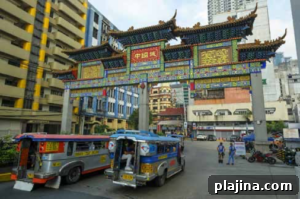
PHOTO: © OSCAR ESPINOSA VILLEGAS | DREAMSTIME .COM
Which local attractions in Manila do you recommend?
Intramuros, the historic walled city, provides a window into Manila’s Spanish colonial past. Manila’s dining scene is lively and varied, with globally influenced restaurants and neighborhood eateries. Other highlights include the world’s oldest Chinatown, the National Museum, the shopping and entertainment offerings in Makati and BGC, and cultural events across the city. For business visitors, Manila can also serve as a base for short leisure trips.
If visitors have time, where else should they go in the Philippines?
The Philippines is an archipelago of thousands of islands offering countless options: beaches and diving sites, cultural and culinary experiences, nature treks, wellness retreats and island-hopping adventures. Domestic flights and land travel make it easy to explore destinations that suit leisure, adventure or family travel interests.
© SAIKO3P | DREAMSTIME.COM
DIVERSIONS
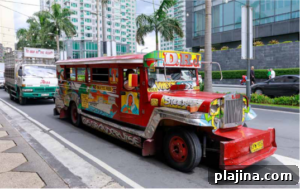
Getting around Metro Manila can be an adventure. The jeepney, a colorful symbol of local transport adapted from U.S. military vehicles, remains an iconic sight, though many are being replaced by modern minibuses. Jeepneys follow fixed routes and typically depart when full. Motorized tricycles offer short-distance flexibility and can weave through traffic, though riders should remain vigilant about petty theft in crowded areas.
The natural starting point for sightseeing is Old Manila—Intramuros—the reconstructed Spanish walled city where key sites such as Manila Cathedral, parts of Fort Santiago and colonial-era plazas have been restored. Guided options include bicycle tours through the district, and the Manila American Cemetery and Memorial, open daily, offers a visitor center and museum; admission is free, but a valid photo ID is required.
LODGING
I’M Hotel
Located in Makati, this hotel is known for its distinctive glass-bottomed pool that hangs above the entrance.
7862 Makati Ave., Makati
$$$
Okada Manila Resort & Casino
An expansive resort and entertainment complex on Manila Bay, offering luxury accommodations and large-scale amenities.
New Seaside Drive, Entertainment City, Parañaque
$$$$
Shangri‑La The Fort, Manila
A flagship property in the BGC district, this high-end hotel offers extensive facilities and easy access to the neighborhood’s dining and nightlife.
30th Street, Corner 5th Avenue, BGC
$$$$
DINING
Friends & Family
A contemporary restaurant that celebrates Manila’s neighborhood eateries with dishes served in portions labeled “friends” and “family.”
Bonifacio High Street, BGC
$$
L’Opera Ristorante
A long-standing Italian restaurant popular for business dinners and special occasions.
26th Street, corner 7th Avenue, BGC
$$$$
Purple Yam Malate
A homely yet refined restaurant focused on elevating traditional Filipino dishes.
603 Nakpil, corner Bocobo Street, Malate
$$$$
JUST THE FACTS
Time zone: GMT +8
Phone code: Country code: 63, City code: 2
Currency: Philippine peso
Key industries: Manufacturing, shipbuilding, tourism, retail
COMING AND GOING
U.S. citizens need a passport valid for at least six months beyond their arrival date and an onward ticket. All arrivals must complete registration via the Philippines government eTravel system and present proof of registration at check-in. Health and travel requirements can change, so verify regulations before travel.
OFFICIAL LANGUAGE Filipino and English
INFO TO GO
International flights arrive at Ninoy Aquino International Airport, about 4 miles from central Manila. Transfers include bus, rail, jeepney and taxi options. The Metro Manila Subway, under construction, will include a station serving the airport’s Terminal 3 when completed.