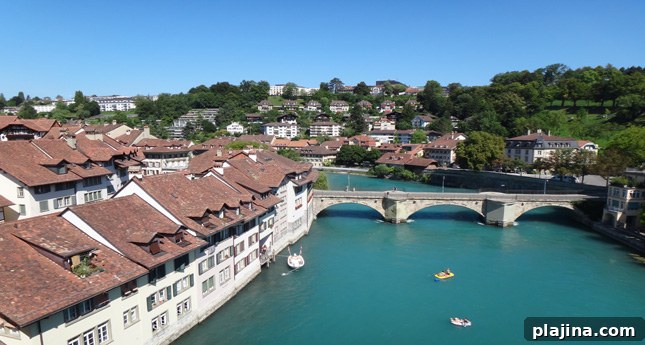
With its strong banking and commercial reputation, Zürich can be easy to overlook as a tourist destination — yet it offers plenty to captivate visitors. The Old Town perches above the broad Limmat River as it flows from Lake Zürich, while views of the city’s sleek skyline are framed by snow-capped Alps in the distance.
Contemporary concrete and glass structures sit comfortably alongside medieval half-timbered houses and gilded Renaissance façades. Narrow, winding lanes lead to broad boulevards, creating a city of striking contrasts between old and new at every turn.
Those snow-covered peaks that punctuate the skyline lie less than a two-hour train ride away in the Bernese Oberland. In that region jagged summits tower above charming alpine villages, green meadows dotted with grazing cows, deep valleys and crystal-clear lakes fed by melting glaciers — the classic Swiss landscape brought to life.
Zürich is compact and easy to explore on foot, with many major sights close together and scenic routes that link them. For a sweeping view of the Old Town, visit the tree-shaded Lindenhof terrace, the site of a Roman fortified settlement. Across the river, narrow streets climb the hillside where Renaissance mansions, guild houses and medieval towers stand. Haus zum Napt on Napfgasse houses a museum with interiors furnished in Renaissance style. After browsing antique shops and boutiques, pause at Spiegelgasse for coffee at Cabaret Voltaire, an atmospheric spot where the Dada art movement emerged a century ago.
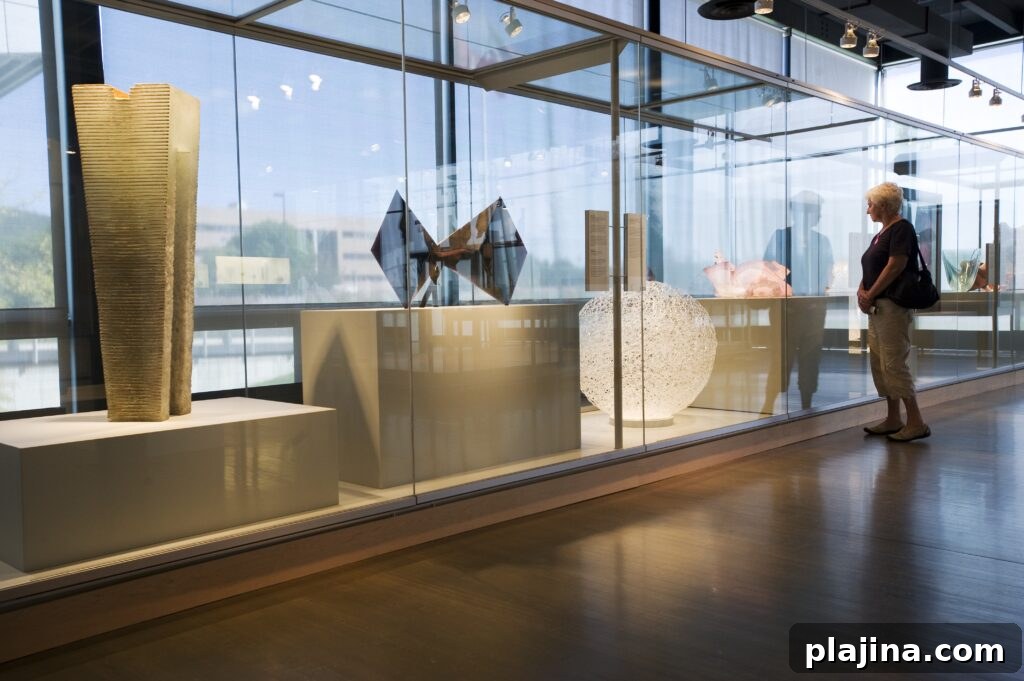
Liberal thinking and innovative art are woven into Zürich’s identity, reflected in world-class museums. Kunsthaus Zürich holds especially strong collections of Impressionist, Post-Impressionist and Modern art, with major works by Surrealists such as Salvador Dalí and René Magritte, pieces by Joan Miró and Max Ernst, notable Dada works, and an impressive array by Henri Matisse. The museum’s Monet holdings are exceptional outside Paris, and an entire room is dedicated to Marc Chagall.
Luxury Swiss watches at a Tissot store © Hai Huy Ton That | Dreamstime.com
Art spills beyond museum walls in Zürich. At Kronenhalle you can admire original paintings by Braque, Matisse, Picasso, Chagall, Klee and Miró while enjoying a meal. In the Fraumünster church, five monumental stained-glass windows by Marc Chagall enrich the chancel with vibrant color.
From the Fraumünster it’s a short walk to Bahnhofstrasse, one of Europe’s most elegant shopping avenues, lined with public art and striking early-20th-century architecture. High fashion, fine jewelry and Swiss watches fill the shop windows. Near the lower end of Bahnhofstrasse, Paradeplatz hosts the legendary Savoy Baur en Ville, whose restaurants Orsini and Baur serve Italian and French cuisine respectively.
Set in its own park close to the landing where lake tour boats embark, the Baur au Lac is regarded as one of Europe’s finest hotels and is home to the Michelin-starred restaurant Pavillon. Chef Laurent Eperon offers a modern interpretation of classic haute cuisine. In summer, enjoy Champagne on the airy Rive Gauche Terrasse; in winter, retreat to the comforts of tea time in the newly renovated Le Hall.
Ice tunnel at Jungfraujoch © Ciolca | Dreamstime.com
Southwest of Zürich, the Bernese massif rises to heights above 13,000 feet and includes the Jungfrau and the resort town of Interlaken. Named for its location between two long alpine lakes, Interlaken is a long-established summer resort and an excellent base for exploring the region. From there you can visit lakeside towns by boat or take rack railways and gondolas to high-altitude viewpoints. The Victoria-Jungfrau Grand Hotel & Spa offers guestrooms with direct views of the Jungfrau.
Traveling from Zürich to the Bernese Oberland is straightforward by car or train and takes roughly two hours. A car gives flexibility, but Switzerland’s fast and efficient integrated train, boat and bus network makes it easy to get around without driving. Many services are included or discounted by regional and national passes, including some cable cars and mountain railways.
Seen from valley floors or mountaintop vantage points, the region delivers spectacular scenery and abundant outdoor pursuits. Interlaken and its surroundings cater to skiers and hikers, but also to visitors seeking shopping, dramatic waterfalls, mountaintop dining, cozy chalets, grand hotels, long ski runs, sleigh rides, Europe’s highest railways and extensive trails for a range of abilities.
A highlight is the train ride to the “Top of Europe” at Jungfraujoch, emerging from Europe’s highest railway station beneath the peak. There visitors find restaurants, ski access, an elevator to an elevated viewpoint and an Ice Palace carved into the glacier. The Schilthornbahn cable car climbs to the Schilthorn, around 10,000 feet, offering wide-ranging views and ski routes down to Lauterbrunnen; its revolving restaurant Piz Gloria gained fame as a James Bond film location. At Les Diablerets in Gstaad, Glacier 3000 features the Peak Walk, the world’s first suspension bridge linking two mountain peaks.
Lauterbrunnen, with a waterfall in the background © Swisshippo | Dreamstime.com
While Interlaken is a convenient hub, many visitors prefer staying in mountain villages where hiking trails or ski slopes begin at the door. These villages offer convenience and picture-postcard scenery in every direction.
Lauterbrunnen sits within steep rock walls with long ribbon waterfalls and provides access to Grütschalp, Mürren, Wengen and Kleine Scheidegg by cable car and train, with PostBus connections to the Schilthornbahn. Mürren, reached only by cable car, funicular or narrow-gauge railway, remains largely unchanged since the 1800s and offers superb Jungfrau views. Wengen, another car-free village above the Lauterbrunnen Valley, is reachable on foot or by the historic rack railway from Lauterbrunnen and connects to the Wengernalp, home to the century-and-a-half-old Hotel Jungfrau Wengernalp with sweeping valley vistas.
Beneath the dramatic north face of the Eiger, Grindelwald’s rustic chalets lie within walking distance of two glaciers, one of which contains an ice cave. The Bergsteigerzentrum Mountaineering Center organizes tours and courses for climbers and hikers of varying experience levels.
Switzerland Info to Go
Zürich Airport, the hub for Swiss International Air Lines, offers direct flights to cities including New York, Boston, Chicago and Miami. Taxis waiting outside Arrivals 1 and 2 take about 25 minutes to reach the city center. From the railway station beneath the terminals, trains depart every 10–15 minutes for the 11-minute ride to the Hauptbahnhof (central station).