
There’s much to admire about Denver. In a recent Pew Research Center poll, the Mile High City ranked as the top destination people most want to move to in the United States. For the past five years Denver has appeared on Fortune Magazine’s “Best Cities for Business,” and since 2001 it has consistently been listed among Dun & Bradstreet’s “Top 10 Cities for Small Business.” Time Magazine also recognized Mayor John Hickenlooper as one of the nation’s top five mayors.
Beyond the accolades, Denver truly lives up to its Mile High nickname. The city sits at 5,280 feet above sea level, a point locals proudly mention. But the real draw is Denver’s long list of achievements: a diversifying economy, expanding civic infrastructure, major development projects and a celebrated Colorado lifestyle that have attracted a growing population of professionals.
Metro Denver’s population is about 2.9 million, and the region has grown faster than the national average. During the 1990s the metro area expanded by roughly 30 percent, averaging around 1,000 new residents each week for a decade, many of them highly educated. More than 38 percent of the region’s workforce holds a bachelor’s degree or higher, making Colorado the third-most educated state in the nation. The median household income in the region is $58,875, about 16 percent above the national average.
Starting in the late 1980s, local leaders intentionally attracted industries beyond energy by promoting the region’s strategic advantages. Metro Denver lies roughly 346 miles west of the geographic center of the continental United States, a location that offers logistical benefits for companies doing business across North America.
Denver is also the largest U.S. city offering one-bounce satellite uplinks. Positioned on the 105-degree meridian, the city provides broadcasting and telecom providers with quick connections to most of the globe in a single business day. That capability helped the Denver Tech Center become a hub of cable television and drew major investments from companies like Starz, Encore, Dish Network, DirecTV and Comcast. It’s estimated that a large portion of national programming is routed through the DTC.
The biosciences sector is another strong growth area, with nearly 15,000 workers at more than 500 companies. The Fitzsimmons Life Science District, valued at $4.3 billion, along with ten higher education institutions, has created a cluster of academic, research and corporate biotech activity. The University of Colorado Hospital ranks among the top hospitals in the country in multiple specialties, and the University of Colorado is known for significant space research and collaborations with NASA and aerospace contractors. CU’s record includes numerous astronaut alumni, helping attract research dollars that support high-technology ventures.
Business travel and tourism have been major strengths for Denver. In 2008 the city recorded a then-high of 12.2 million overnight visitors, boosted by hosting the 2008 Democratic National Convention. The city’s competitive edge included the 600,000-square-foot Colorado Convention Center, large nearby venues such as the 20,000-seat Pepsi Center, roughly 8,000 downtown hotel rooms within walking distance of the convention center and about 300 restaurants nearby. Across greater Denver, visitors can choose from some 2,000 restaurants and 42,000 first-class hotel rooms.
Since the mid-1990s, Denver International Airport (DEN) has been a major driver of growth. The airport’s distinctive terminal, featuring white peaks inspired by the Rocky Mountains, handles about 1,600 flights per day across 30 airlines and provides non-stop service to more than 150 destinations, including numerous international cities.
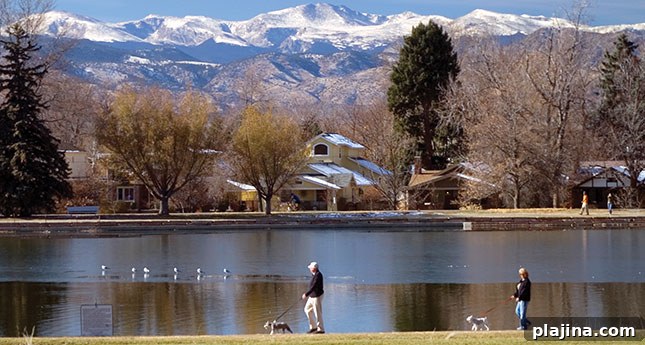
Colorado’s outdoor lifestyle draws people to visit and stay. With more than 300 days of annual sunshine, ten ski resorts within a two-hour drive, and abundant hiking, biking and outdoor recreation, it’s common for convention attendees to extend their trips. While Denver sits at the foot of the Rockies rather than within them, the city embraces outdoor living: more than 200 city parks and 850 miles of bike trails make Denver home to one of the largest urban park systems in the country. Bicycling Magazine named Denver among the top bike cities for its size.
There’s a persistent sense of optimism in Denver—energy and confidence that the city’s future is bright. As Mayor Hickenlooper put it, “Denver is a city that will be far more defined by its future than its past.”
At Home With Richard Scharf
President and CEO, Visit Denver, The Convention & Visitors Bureau
How is Denver unique compared to other metro areas?
As the largest city within a roughly 600-mile radius, Denver serves as the region’s hub for entertainment, sports, shopping and culture. The city boasts one of the largest performing arts centers and the largest metro park and trail system in the United States. Denver hosts multiple professional sports teams across several stadiums and offers major shopping districts such as Park Meadows and Cherry Creek with hundreds of shops and galleries. All of this is situated against the backdrop of the Rocky Mountains, giving easy access to mountain parks, ski resorts and outdoor recreation.
What significant changes have occurred in the past dozen or so years?
The region has invested roughly $5 billion in development projects. Denver International Airport has grown into one of the busiest airports in the country, with non-stop service to many cities. Cultural investments include expansions to the Denver Art Museum and Contemporary Art Museum, and the Center for the Performing Arts regularly hosts Broadway productions. Downtown attractions such as Elitch Gardens and major sports venues—Coors Field, the Pepsi Center and Invesco Field at Mile High—offer year-round entertainment. LoDo, the revitalized warehouse district, now supports dozens of bars and restaurants. The Colorado Convention Center has doubled in size to about 600,000 square feet, and nearly 8,000 hotel rooms are now within walking distance of the center, with thousands more accessible via the RTD Light Rail.
What makes Denver a hub for business and convention travelers?
Denver International Airport and the city’s convenient transit options make travel easy. The airport is about 30 minutes from downtown and has sustained growth among major U.S. airports. Once in the city, visitors benefit from a walkable downtown and an extensive Light Rail system. The 16th Street Mall, a highly trafficked pedestrian corridor adjacent to the convention center, offers dining, shopping and entertainment options that appeal to business travelers.
What projects are on the drawing board?
Plans include completing an expanded Light Rail network covering roughly 120 miles and connecting to the airport. The airport area will gain a new Westin Hotel with extensive meeting space, restaurants and fitness amenities. Local voters have approved funding for arts and culture initiatives, including enhancements to Symphony Hall, the Clyfford Still Museum and new exhibits at the Denver Zoo and the Museum of Nature & Science.
Info To Go
Denver International Airport (DEN), the primary gateway for travelers across the Rocky Mountain region, is about a half-hour drive from downtown Denver. Multiple ground-transportation options connect the airport to the city. The Ground Transportation Information Counter is located on Level 5 of Jeppesen Terminal.
Diversions
The Mile High City offers activities and attractions for a wide range of interests. Several pedestrian-friendly downtown districts invite exploration. Historic Larimer Square offers boutiques, restaurants, sidewalk cafés and nightlife. Lower Downtown (LoDo) features renovated warehouses that now house numerous brewpubs, restaurants and coffeehouses. The 16th Street Mall serves as a bustling pedestrian corridor with shops, cafés, bookstores and theaters. A few miles away, Cherry Creek North presents boutique shopping, spas, galleries and tree-lined streets ideal for strolling.
Sports fans can enjoy year-round professional events: the Pepsi Center hosts basketball and hockey, Coors Field is home to Major League Baseball’s Colorado Rockies, and Invesco Field at Mile High hosts NFL action.
Arts and cultural attractions include the Denver Art Museum, which showcases rotating world-class exhibits, and the Denver Center for the Performing Arts, where top touring productions appear. The Denver Museum of Nature & Science offers notable paleontology displays and interactive exhibits focused on health and space science.
Lodging
The Brown Palace Hotel
This historic landmark blends Victorian style with modern amenities and fine dining. 321 17th St., tel 303 297 3111, $$$–$$$$
Hotel Monaco Denver
Located steps from the convention center, this upscale hotel offers full amenities and is frequently recognized as one of the city’s best business hotels. 1717 Champa St., tel 800 990 1303, $$$
JW Marriott at Cherry Creek
Situated in Denver’s upscale shopping district, the JW Marriott combines modern Western elegance with views of the Rocky Mountain skyline. 150 Clayton Lane, tel 866 706 7814, $$$–$$$$
Dining
Denver Chop House & Brewery
House-brewed beers complement menu items like pepper-crusted New York strip and Maine lobster. 1735 19th St., tel 303 296 0800, $$$
The Oceanaire Seafood Room
An oyster bar and seafood-focused menu highlight daily-fresh offerings in a refined setting. 1400 Arapahoe St., tel 303 991 2277, $$$
Tamayo
A modern take on Mexican cuisine featuring inventive dishes such as chili poblano–potato gratin, tequila-flambéed shrimp and seared beef tenderloin carpaccio. 1400 Larimer St., tel 720 946 1433.