
Long before English settlers arrived, the Lowcountry region of what is now South Carolina was home to Native American peoples such as the Wando and Etiwan. In 1670, 150 English colonists landed in Charleston Harbor aboard the ship Carolina and established a settlement named Charles Town in honor of King Charles II; the name was shortened to Charleston in 1783.
Charleston’s maritime legacy is still visible today: the city’s cruise terminal regularly receives visiting ships, and the downtown historic district lies close by. The terminal is within walking distance of many attractions and is served by the city’s complimentary DASH shuttle, making it easy for cruise passengers to explore before or after their voyages.
While the pastel facades of Rainbow Row and the waterfront Battery are iconic sights, Charleston offers a wide variety of cultural and historic experiences. The International African American Museum, which opened recently, centers the stories of African American life in Charleston, across the United States and within the Atlantic world. The Gibbes Museum of Art, founded in 1858 and one of the country’s oldest arts organizations, preserves more than 10,000 works of American art in its permanent collection.
Charleston’s calendar is full of festivals that draw national attention. Spoleto Festival USA is a 17-day late-spring celebration of performing and visual arts. The Charleston Jazz Festival highlights the city’s musical traditions, while The Charleston Festival offers rare opportunities to tour private homes and gardens each April. Food lovers flock to Charleston Wine + Food every March, and the Charleston Farmers Market at Marion Square, running Saturdays from April through November, showcases local producers and regional flavors.
© Zimmytws | Dreamstime.com
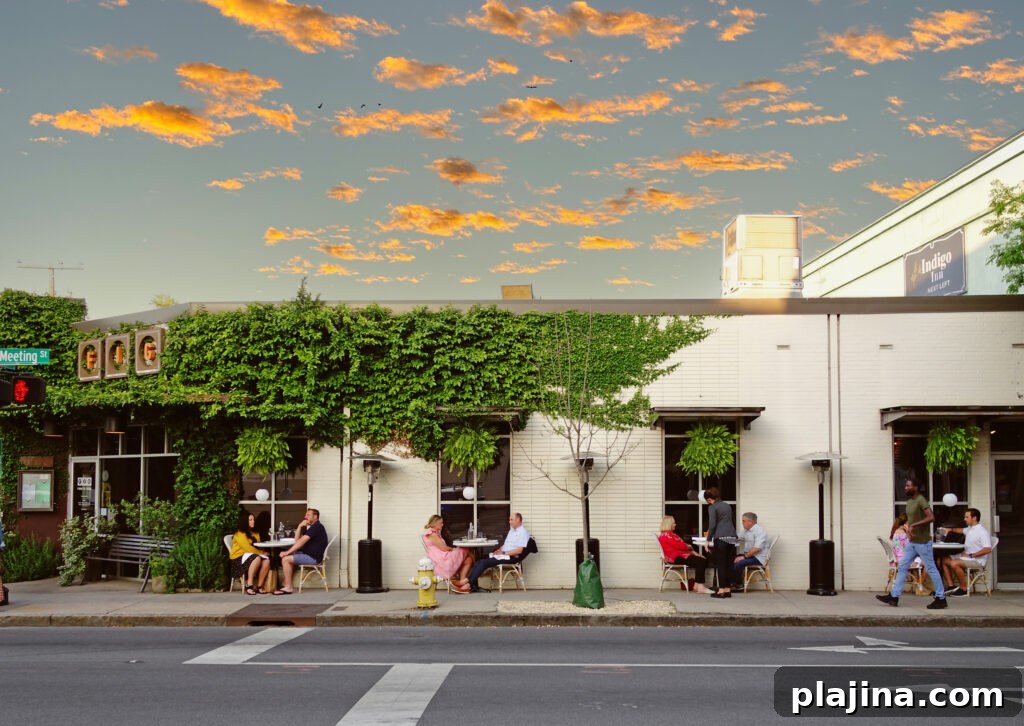
Food is central to Charleston’s identity, and the historic district is packed with celebrated restaurants. Magnolias, on East Bay Street for nearly 35 years, is known for classic Lowcountry dishes such as shellfish over grits and Lowcountry bouillabaisse, alongside inventive items like its signature Down South Egg Roll. Other notable eateries include Husk, Edmund’s Oast, FIG and The Grocery, each offering distinctive approaches to Southern and contemporary cooking, with thoughtful vegetarian options among their menus.
Whether strolling historic streets, visiting museums, attending a festival or sampling local cuisine, visitors to Charleston consistently encounter the city’s renowned Southern hospitality and a deep sense of place rooted in its history and culture.