
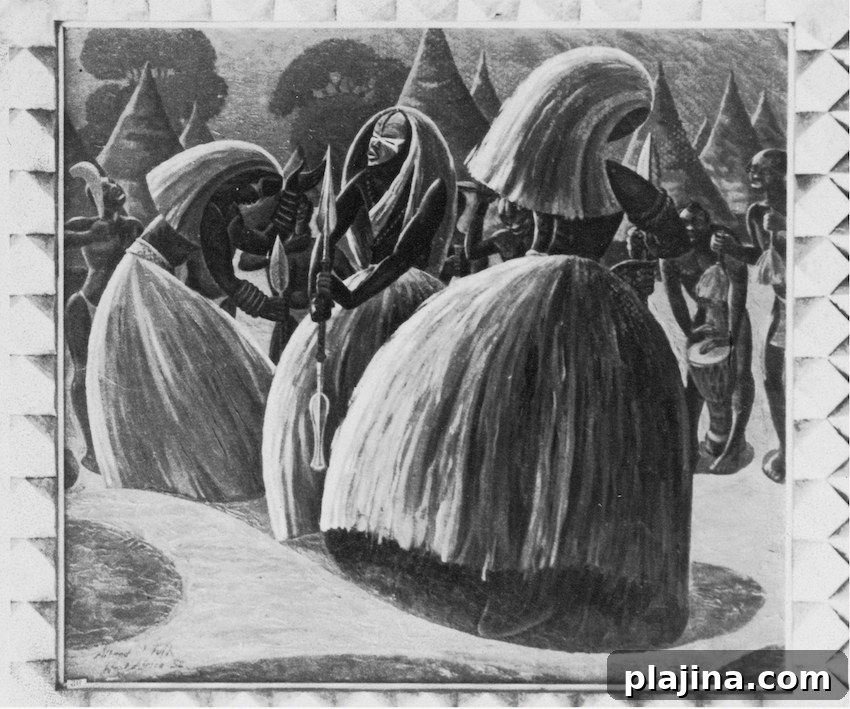
Visitors to Fairfield University Art Museum in Fairfield, Connecticut can explore an important collection of authentic African art gathered by local artist Alfred James Tulk in the early 1930s. The exhibition, titled “Liberia, 1931–33,” runs through Dec. 14 and represents the first focused display of African art held at Fairfield University.
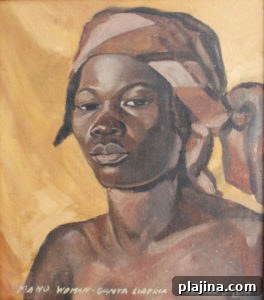
Alfred J. Tulk. Mano Woman, Ganta, Liberia, 1932-33. Oil on Masonite. 12 x 14 inches. Private collection.
The exhibit brings together more than 40 artifacts and ceremonial objects from Tulk’s former private collection, including textiles, jewelry, masks and domestic furnishings. These pieces offer visitors a direct encounter with Liberian material culture as collected in the 1930s, and are complemented by Tulk’s original paintings, drawings and watercolors that document scenes and people he observed during his time in West Africa.
In addition to traditional figurative work, the exhibition features a large-scale oil painting that signals Tulk’s early engagement with Abstract Expressionism, illustrating the artist’s evolving style and the broader artistic influences he absorbed after returning from his travels.
Complementing the artifacts and artworks, the show includes a selection of photographs, personal correspondence and original field notes from Tulk’s Liberia expedition, providing historical context and insight into the artist’s methods and experiences in the field.
The museum has organized related events to deepen public engagement with Liberian and West African arts. Scheduled programs include a lecture titled “The Representation of Africa in Western Art” by Dr. Scotty Lacy, associate professor of sociology and anthropology (Oct. 17); Family Day: Arts of Liberia (Oct. 20); a screening of the documentary film Pray the Devil Back to Hell (Oct. 30); and a gallery talk on collecting and fieldwork in West Africa led by Dr. Lacy.
“Liberia, 1931–33” offers a rare opportunity to see a cohesive collection formed during a pivotal period of cultural exchange. The exhibition invites visitors to consider the artistic, historical and ethnographic dimensions of Tulk’s collection, while highlighting the enduring cultural expressions of Liberia preserved through textiles, ceremonial objects and visual art.
Fairfield University Art Museum’s presentation of Tulk’s collection enhances regional access to African art and encourages conversations about collecting practices, representation, and the ethical responsibilities of museums and collectors when presenting material from other cultures. The exhibition runs through Dec. 14; check the museum’s schedule for event times and details.