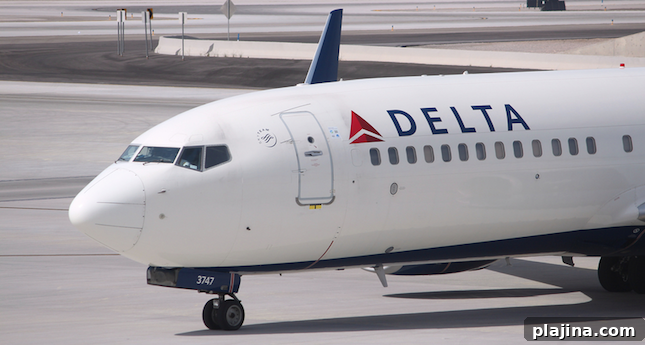
Delta Air Lines has issued a bold challenge to its rivals, United Airlines and American Airlines, unveiling a new program for corporate customers designed to put operational performance on clear public display.
The program is straightforward: if Delta underperforms United or American in on-time arrivals and flight completion rates for domestic flights, it will provide travel credits to affected corporate accounts. Credits will range from $1,000 up to $250,000 depending on the extent of delays and cancellations experienced by each client — the greater the disruption, the larger the credit.
“We’ve been focused on relentless operational success, because any carrier could replicate anything we do, whether it be seats or food or Sky Clubs, but they can’t replicate our performance,” said Bob Somers, vice president of global sales at Delta Air Lines, in an interview with Bloomberg Business.
This initiative aims to emphasize operational reliability as a competitive advantage. By tying financial incentives directly to measurable metrics like on-time performance and flight completion, Delta is signaling confidence in its ability to deliver dependable service while encouraging corporate customers to evaluate airlines on performance, not just amenities or route networks.
For corporate travel managers, the program provides a clearer way to hold carriers accountable: if a company’s travel program suffers because an airline’s domestic flights are less reliable than those of competitors, Delta’s credit structure offers tangible compensation. That approach could reshape how corporations select and benchmark airline partners, shifting more weight to operational outcomes.
Delta’s move also serves as a marketing message to both businesses and individual travelers. By pledging credits when it falls short, the airline is making a public bet on its operations team and infrastructure, highlighting investments in scheduling, crew management, and other factors that support consistent service.
Industry observers say such programs can influence corporate contracting and service level expectations across the sector. Airlines commonly negotiate corporate fares and service agreements, but explicit performance-based credits tied to on-time and completion metrics may prompt broader adoption of similar guarantees, or at least more transparent reporting of operational results.
Ultimately, Delta’s program is designed to reward reliability and provide reassurance to customers who prioritize punctuality and dependability. Whether competing carriers will respond with comparable guarantees remains to be seen, but Delta has clearly set a new standard for measuring and compensating airline performance in the corporate travel market.