
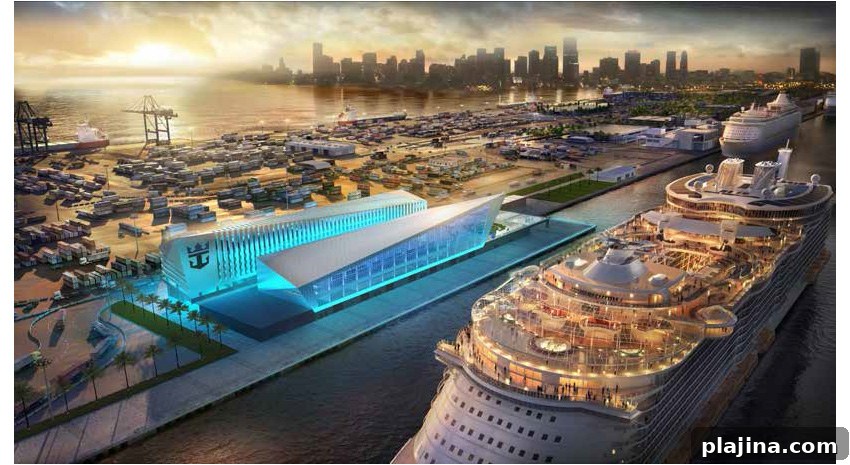
As cruise ships grow larger and more luxurious, ports around the world are upgrading to keep pace. In Florida—home to the three busiest cruise ports globally—Miami, the busiest of all, is preparing to open a new terminal in 2018 built by Royal Caribbean to serve ultra-large ships. Nearby Port Everglades in Fort Lauderdale is lengthening Slip 2 to accommodate resort-sized vessels and remains the only U.S. cruise port offering passengers Global Entry security clearance. Port Canaveral, the third busiest, has added a $7 million amphitheater to enhance the guest experience.
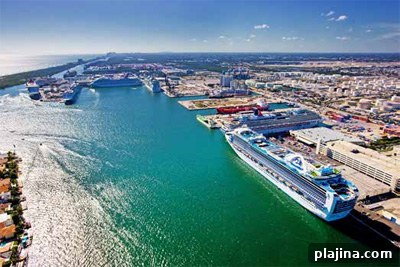
Fort Lauderdale’s Port Everglades © BROWARD COUNTY’S PORT EVERGLADES
Across the Caribbean, San Juan, Puerto Rico, has lengthened several piers and added an $8 million duty-free facility to handle increased traffic. Carnival Cruise Line is investing in a $70 million port complex at Tortuga Island north of Haiti. MSC Cruises plans to open Ocean Caye, an 85-acre private destination in The Bahamas, while Norwegian Cruise Line operates Harvest Caye in Belize, complete with a marina, lagoon and floating piers.
On the U.S. Gulf Coast, Houston has suspended cruise operations, but Mobile, Alabama, has returned after a five-year break with a new climate-controlled customs hall featuring eight processing stations. The Port of New Orleans consolidated two older facilities into a single, larger terminal to better serve mega-ship passengers, expanding lobby and baggage handling areas. Galveston, the nation’s fourth-busiest cruise port, expanded Terminal 2 and added valet parking to streamline vehicle drop-off and pick-up.
Port investments are widespread elsewhere as well. Montréal completed an extensive renovation of its 50-year-old cruise terminal in time for the city’s milestone celebrations, expecting record arrivals. Seattle, benefiting from growing Alaska cruise demand, has expanded its Bell Street Cruise Terminal under the management of Norwegian Cruise Line. In Europe, Carnival is committing $33 million to build and operate a second private terminal at Barcelona, already the continent’s largest cruise hub.
New ports are also appearing. London will open its first dedicated cruise facility in the Royal Borough of Greenwich on the Thames next year. The London City Cruise Port will restrict visiting ships to about 1,600 passengers—a smaller scale than many ocean liners—but the project has prompted local concerns about environmental impacts and increased tourist pressure. Similar tensions persist in Venice, the world’s tenth-busiest cruise port; UNESCO has warned it may list Venice as endangered unless very large cruise ships are restricted.
On a more sustainable note, a few ports are adopting shore power so berthed ships can shut down auxiliary engines and connect to the local electrical grid. The Port of Red Hook in Brooklyn is among the early adopters, reducing emissions and offering a quieter, cleaner experience while ships are in port.
While any harbor can function in bad weather, cruise passengers tend to be selective about embarkation and disembarkation points. To attract those travelers, ports worldwide are not only expanding to accommodate bigger ships but also enhancing passenger amenities, security processing, and shore-side services to deliver smoother, more comfortable cruise experiences.