
Deep within Royal Caribbean’s sprawling Miami headquarters, in an area employees call The Cave, Jay Schneider, Royal Caribbean International’s chief product innovation officer, does much of his best thinking. “One issue that the industry deals with is elevators,” he explained. “Waiting in line and then being confused about where to go is frustrating for guests.”
The solution was not more elevators but smarter ones. Schneider and his team enhanced existing lifts with destination-based technology: instead of choosing a floor inside the car, guests tap their destination on a screen at the entrance to the elevator bank. The system assigns them to a specific elevator that will take them directly where they want to go. After testing the concept with employees and then in a guest-facing mockup aboard Symphony of the Seas, the team discovered it was a hit. “Once guests were comfortable with the paradigm shift, they loved it,” Schneider said. “It’s like having a private elevator!”
Technology is also elevating the cabin experience. Virgin Voyages links GPS sensors to each suite’s lights, drapes and climate controls to create the right mood for the time of day; in-room tablets make it simple to fine-tune each element and build a personalized atmosphere. Aboard Scenic Eclipse, Scenic’s independent air circulation HVAC systems ensure only fresh outside air enters each cabin while interior air is expelled immediately.
If you enjoy Apple’s Siri or Amazon’s Alexa, you’ll feel at home with MSC Cruises’ Zoe, a voice-activated digital assistant available in cabins that understands seven languages and can answer more than 800 questions. Key cards are increasingly being replaced by wearable technology that simplifies embarkation and disembarkation, unlocks staterooms and serves as a cashless payment method for onboard purchases.
Onboard entertainment has seen impressive technological upgrades, delivering more immersive experiences. On the Disney Wish, which launched in June 2022, Worlds of Marvel blends dining and theater with holographic characters and cinematic effects to keep guests engaged. Celebrity Beyond and other Edge-class ships stage live shows in The Theater featuring a 20-foot-tall, 4K LED screen that curves 110 feet around the stage and works with advanced floor projection; an integrated air fountain lets artist Daniel Wurtzel’s ethereal sculptures appear to float through the space.
Back in Miami, Schneider is developing a new onboard messaging and automation system that shifts a cabin’s climate control into eco mode when a passenger leaves the ship and restores comfort when they return. “When guests return, their room is cool, but the AC hasn’t been running the entire time, which is better for the environment,” he said. “That’s tech at its best — a better experience for guests and a win for the environment.”
BELOWDECKS
Advances in propulsion, energy recovery, wastewater treatment and other technologies are helping cruise ships reduce their environmental footprint. Viking Ocean’s Neptune, for example, is equipped with a small hydrogen fuel system, making it the first ship in the cruise industry to test hydrogen power for onboard operations. Virgin Voyages has installed Climeon’s HeatPower system on its vessels to recapture waste heat from the engines and convert it into clean electricity, reducing fuel consumption. When it debuts this summer, Silversea’s Silver Nova will be the first low-emission luxury cruise ship to use hybrid technology and fuel cells, enabling emission-free operation while in port.
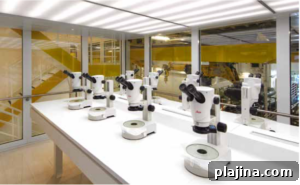
PHOTO: © VIKING
Expedition vessels, effectively floating SUVs designed to access polar regions and other remote destinations, pair environmental technologies with tools that bring guests closer to pristine locales. Anchors that can damage seafloor habitats are often replaced by computer-driven dynamic positioning systems that use propulsion and GPS to hold a ship in place. Scenic Eclipse employs a specialized ballast water treatment system using UV and filtration to prevent the uptake or discharge of invasive species; like Ponant’s Le Commandant Charcot, it also converts seawater into fresh drinking water. Viking Octantis, launched in June 2022, doubles as a working research vessel equipped to study waterborne microplastics, monitor water quality and conduct detailed seafloor surveys.