
Located in the heart of Europe, Brussels is an easy and efficient city for business. English is widely spoken, the layout is straightforward to navigate, and a wide range of cultural and culinary options makes meeting clients pleasant and productive.
Belgium’s capital is home to about 1 million people, and more than 60 million Europeans live within 186 miles — less than two hours by high-speed train. One of 19 municipal communes, Bruxelles-Ville (the City of Brussels, population around 150,000) blends historic and contemporary influences, French and Flemish culture, fine art and comics, chocolate and beer. The city meshes old-world charm with modern energy, and it has become a must-see European destination.
As headquarters for NATO and the seat of the European Union, Brussels hosts numerous multinational companies such as Toyota, Bridgestone, and Levi Strauss & Co. It is also home to more than 50 intergovernmental agencies and a large international press and diplomatic community. The population is diverse: roughly one in three residents has foreign nationality, creating a cosmopolitan atmosphere conducive to international business.
The compact city is easy to explore on foot or by public transport. Fly into Brussels International Airport (BRU) and take the Airport Line (Bus 12) to the city center in about 20 minutes. A taxi ride of eight miles typically costs around $60, while the public transport system — STIB — combines metro, buses and trams under the same ticketing system. Tickets are available at GO vending machines; single fares and day passes provide affordable options for visitors.
The metro network also introduces visitors to Brussels’ art scene: many stations display permanent works by prominent Belgian artists, turning daily commutes into small gallery experiences. Artists represented in these displays include Delvaux, Folon and Hergé.
European institutions are concentrated to the east around Rond-Point Schuman and Place du Luxembourg, while the financial district and the Belgian parliament are located in and around the old city center. Business meetings and negotiations often happen over power lunches at restaurants and cafés that cater to weekday clientele.
Accommodation options are plentiful, with nearly 20,000 hotel rooms across the city. Many hotels offer on-site dining and private meeting rooms, making them convenient choices for business travelers. Dining options range from casual waffle stands to Michelin-starred establishments — Brussels has more than 1,500 restaurants, ensuring you can find cuisine to suit any taste or budget.
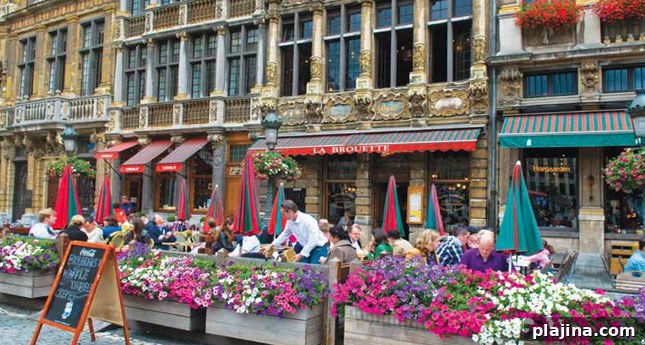
The historic Grand-Place, a UNESCO World Heritage site reached through a maze of narrow alleys, is the city’s centerpiece. The square is lined with ornate Baroque guild halls and the Gothic Hôtel de Ville (Town Hall), creating an impressive backdrop for a business lunch or a relaxed stroll.
Surrounded by the aromas of chocolate, waffles and frites, you can dine al fresco or enjoy a Belgian beer at one of the many terrace cafés, such as the popular Le Trappiste. For a quick but authentic meal, try Aux Armes de Bruxelles in the Grand-Place area: order un complet for steamed mussels, fries and a beer served promptly. Nearby options with classic Brussels charm include Taverne du Passage and La Roue d’Or.
On Place de Brouckère stands the historic 5-star Hotel Metropole, with ornate French Renaissance décor. It offers options for early-morning meetings and a notable restaurant, L’Alban Chambon, known for refined French cuisine. Close to the square and the financial district, the exclusive Hotel Amigo combines historic details with modern comfort; its Bocconi Ristorante offers high-quality Italian dishes. The Royal Windsor Hotel Grand Place provides a stately setting for meetings and serves American-style breakfasts under a dramatic stained-glass ceiling, while Chutney’s Restaurant offers a refined tea service.
For dining with a view, the rooftop restaurant at the Musical Instrument Museum offers panoramic cityscapes from the Grand-Sablon area, which is also known for petite bistros and antiques shops. The city’s rich cultural life extends to the Théâtre Royal de la Monnaie and nearby venues: The Dominican, housed in a former 15th-century convent and once home to painter Jacques-Louis David, makes an elegant hotel with a lounge bar suited to post-performance conversations and evening meetings.
In the European quarter you’ll find classic Italian restaurants such as Dal Padrino and Barbanera, where terrace seating and regional specialties like scampi or filetto suit relaxed business meals outside the main tourist hubs.
Street art plays an active role in Brussels’ public spaces: artists have used façades, alleys, sidewalks and metro stations to create striking works that enrich the urban landscape. The Comic Strip Walk highlights the city’s comic tradition with more than 40 painted façades featuring beloved characters like Tintin and Lucky Luke.
If time permits, explore the city’s art offerings at more than 80 galleries and museums, including the Royal Museums of Fine Arts, the Magritte Museum, the Musical Instrument Museum, Musée Hergé and the Belgian Center for Comic Strip Art. These institutions reflect Brussels’ strong cultural identity and its global reputation as a capital of comics and visual arts.