
CRUISE PASSENGERS WILL FIND more choices in ports and itineraries across North America in 2020, from paddlewheelers on the Mississippi River to ocean-going ships along the U.S. East and West Coasts and Canada’s Maritime Provinces. Alaska remains a major draw, with steady passenger growth across vessels large and small. Cruising the Great Lakes, once a niche market, is expanding to meet travelers’ growing curiosity about these five inland seas.
“Cruise ships have plied our waters for years,” said David Lorenz, chair of Cruise the Great Lakes, a partnership of cruise lines and tourism bureaus formed in 2018 to promote the region. “The market has grown organically in recent years despite the lack of a consistent regional brand or marketing program.” With nearly 100,000 passenger port visits reported last year, the Cruise the Great Lakes initiative aims to position the region for sustained cruising growth in the years ahead.
From spring through fall, Great Lakes cruises cross these vast inland waterways and include “sea days” with no land in sight. Ships dock close to city centers, making it easy for passengers to explore on their own or join excursions often included in the fare. Chicago and Toronto are frequent embarkation and disembarkation points, with calls at Detroit and Mackinac Island, Michigan; Cleveland, Ohio; and Manitoulin Island, Ontario. Vessels are small enough to transit locks, including the busy Soo Locks between Lake Superior and Lake Huron and the eight locks of the Welland Canal that bypass Niagara Falls.
“There’s a bright future ahead for the Great Lakes,” said Luis de Sousa Marques, hotel director at Victory Cruise Lines. Victory Cruise Lines’ two 202-passenger ships, Victory I and Victory II, were acquired by American Queen Steamboat Co., remodeled and relaunched on the Great Lakes in 2019. Previously popular with groups, the ships are now being marketed more to individual travelers.
Pearl Seas Cruises offers two itineraries between Milwaukee and Toronto aboard the fully stabilized, 210-passenger Pearl Mist, which features large outside staterooms and private balconies. Blount Small Ship Adventures sails two 83-passenger vessels, allows guests to bring their own beverages and remains the only overnight cruise operator on the Erie Canal on its Chicago–New York City itinerary.
Joining the Great Lakes in 2020 is Hapag-Lloyd Cruises’ 230-passenger expedition ship Hanseatic Inspiration, which launched in October and will make two 14-day voyages that include a rare crossing of Lake Superior.
Alaska, one of the world’s most popular cruise destinations, was on track to set a record with roughly 1.3 million cruise passengers in 2019. More than 20 cruise lines operated 40 ships in the state, spanning expedition vessels to large luxury liners with capacities from under a dozen to more than 4,000 passengers. Cruises along the Inside Passage and around Southeast Alaska call at Juneau and historic settlements such as Sitka, Skagway and Ketchikan, offering ties to the state’s gold rush, pioneer and Native American history. A quota on vessels in Glacier Bay has encouraged exploration of other scenic areas, and combining a cruise with a land tour remains a popular option.
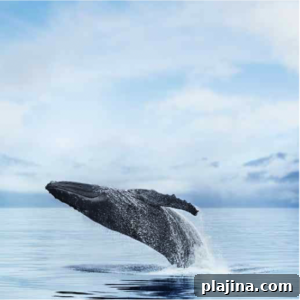
A whale breaching near a Princess Cruises ship in Alaska PHOTO: © PRINCESS CRUISES
Princess Cruises carries the most passengers in Alaska with eight ships offering 11 itineraries, including a rare roundtrip from Los Angeles in 2020. Its 25 cruise-and-tour options use the line’s wilderness lodges and rail cars to transport guests into the interior to destinations such as Denali National Park.
Holland America Line, a major carrier and one of Alaska’s largest private employers, also provides land tours. Celebrity Cruises will operate three ships in Alaska in 2020 and will offer pre- and post-cruise tours to Denali and the Canadian Rockies.
Norwegian Cruise Line will sail four ships in Alaska in 2020, including Norwegian Sun and Norwegian Joy, both recently renovated. The line is partnering with Icy Strait Point, an Alaskan-owned destination, to build a second pier slated for completion in 2020, which will provide enhanced access to brown bear viewing platforms and an extensive zip-line attraction.
Other large-ship operators scheduled to cruise Alaska in 2020 include Royal Caribbean International, Viking Ocean Cruises, Carnival Cruise Line, Disney Cruise Line, Oceania Cruises and Regent Seven Seas.
UnCruise Adventures stretches Alaska’s season with departures from April through September in 2020. Its six small ships, from boutique yachts to expedition vessels, will operate seven itineraries that often include active pursuits such as kayaking and hiking. American Cruise Lines will sail Inside Passage itineraries on the 175-passenger American Constellation and plans to add an 11-day Alaskan Explorer round-trip from Juneau in 2020. Hapag-Lloyd Cruises will also deploy MS Bremen to Alaska next summer.
Alaskan Dream Cruises, which evolved from a native Alaskan boat-building and tour company, plans to operate five small vessels in 2020 carrying between 10 and 76 passengers; its latest addition, the Kruzof Explorer, was formerly a Bering Sea crab-fishing boat.
North American river cruising continues to focus on the Mississippi and its tributaries, with access to antebellum plantations, Civil War sites and historic river cities, and on the Columbia and Snake rivers, where wine tasting, pioneer history and Pacific Northwest scenery are highlights.
American Queen Steamboat Co. will introduce the American Countess in 2020 to join its American Duchess and American Queen paddlewheelers on the Mississippi. The company’s American Empress operates in the Pacific Northwest, while UnCruise Adventures’ 90-passenger SS Legacy offers adventure and wine-and-culinary cruises on the Columbia and Snake rivers in 2020.
American Cruise Lines’ modern riverboats American Harmony and American Song, introduced in 2018 and 2019, sail the Mississippi, Snake and Columbia rivers. American Jazz is set to launch in 2020, with two additional modern vessels planned; these will supplement the line’s four Victorian-style paddlewheelers.
In the fall, ships large and small head to New England and Eastern Canada to showcase autumn foliage. U.S. ports vary by itinerary and ship size and can include Boston; Newport, Rhode Island; New York City; and Portland and Bar Harbor, Maine. Canadian itineraries often cruise the St. Lawrence River and Seaway with calls in Montréal, Québec City, Halifax, Saint John and Charlottetown.
Princess Cruises extends one Northeast itinerary in 2020 to include Greenland on a 16-day cruise from New York City. Its 13-day Canada and Colonial America itinerary sails between Québec City and Fort Lauderdale, Florida. Several cruises add land tours to visits such as Niagara Falls, Philadelphia, Colonial Williamsburg, Monticello in Virginia and Gettysburg in Pennsylvania.
Other major lines visiting New England, Eastern Canada and the U.S. Eastern Seaboard in the fall include Carnival Cruise Line, Cunard Line, Disney Cruise Line, Holland America, Oceania Cruises, Regent Seven Seas, Celebrity Cruises, Royal Caribbean International and Viking Ocean Cruises.
Among small-ship operators in the region, The Ritz-Carlton Yacht Collection debuts five inaugural voyages in 2020. Victory Cruise Lines and Pearl Seas Cruises continue to offer Great Lakes cruises alongside regional itineraries. Hapag-Lloyd Cruises’ Hanseatic Inspiration features expedition voyages, including a 16-day cruise and a longer 20-day itinerary that stops in Greenland. American Cruise Lines fields five coastal vessels with itineraries in New England and along the southeastern U.S. coast.
On the U.S. West Coast, Celebrity Cruises’ Celebrity Eclipse will sail between San Diego and Vancouver in 2020. Carnival Cruise Line, the top carrier on the West Coast, carries roughly 600,000 passengers annually and continues regular departures to Catalina Island and Ensenada from its upgraded Long Beach Cruise Terminal.