
Arriving by air on direct flights from Bangkok has been possible since 2018, but the best way to experience Chiang Mai province in Thailand is to fly into Chiang Mai city first, then take a minivan to Pai and save the direct flight back to Bangkok for your return.
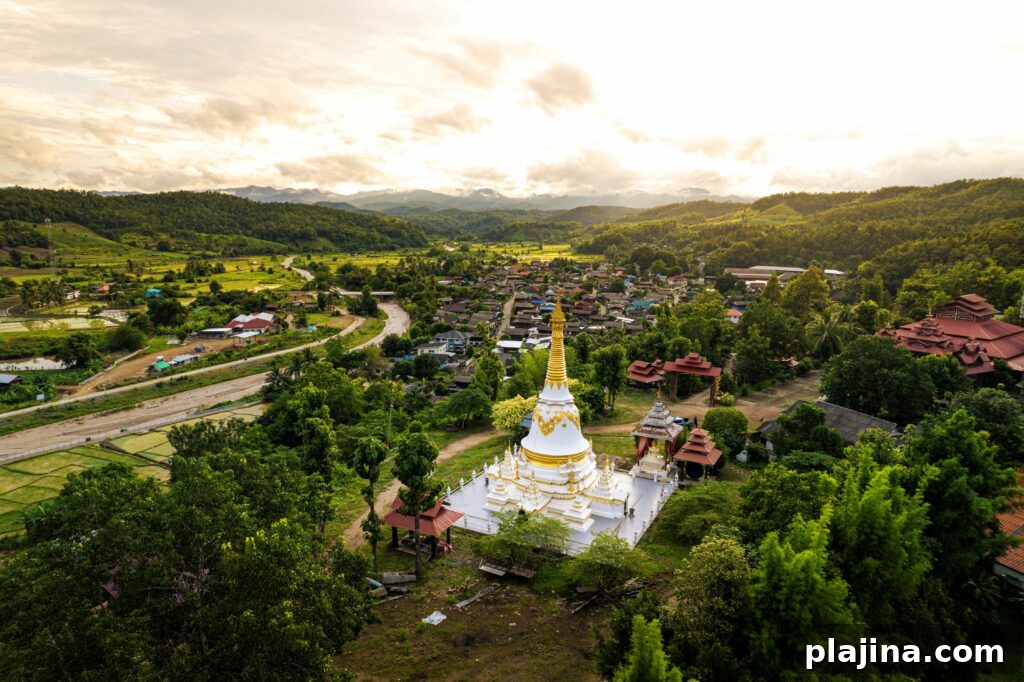
© Tourism Authority of Thailand
The minivan ride from Chiang Mai International Airport to Pai town takes about three hours. If you arrive in the afternoon, head to Pai Canyon to begin your exploration. Arriving shortly before sunset is ideal: the canyon’s narrow ridges and deep crevices—shaped by erosion—catch the fading light as the sun sinks behind the distant hills, turning the sky vivid shades of orange and pink.
Afterwards return to Pai town, about three miles away, and wander Pai Walking Street, which runs every evening from 6:00 p.m. along Chaisongkran and Rungsiyanon roads. The night market features a wide variety of food stalls, from classic pad thai to burgers and pizza, but be sure to try khao soi, the northern Thai coconut-curry noodle dish that’s a regional specialty. Walking Street is also a good place to shop for souvenirs, crafts, and locally made clothing, and to catch live dance and cultural performances.
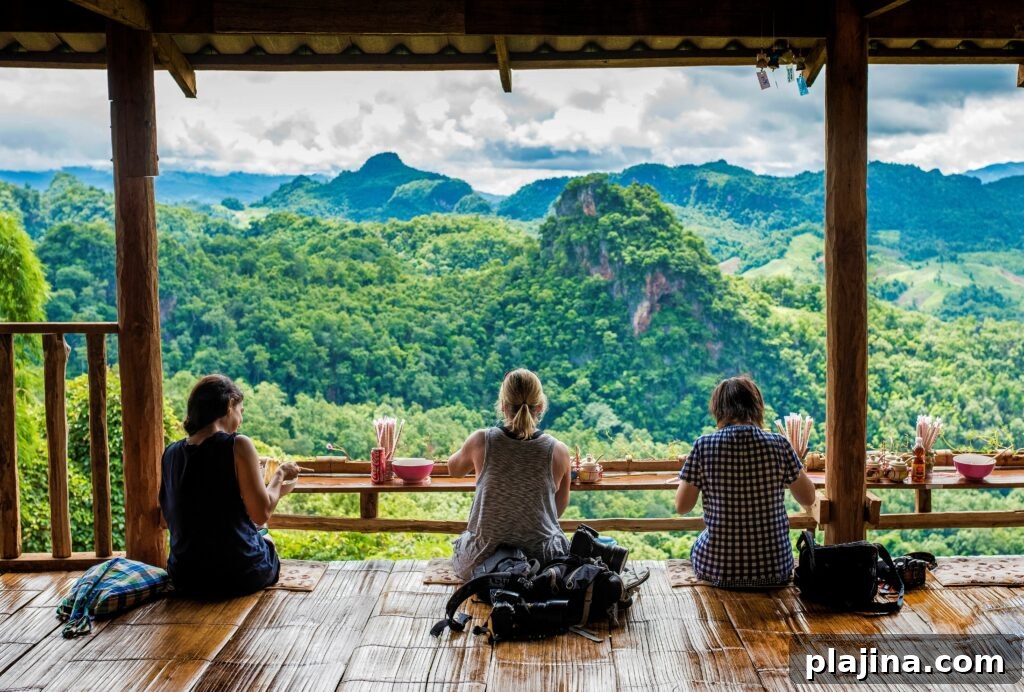
© Tourism Authority of Thailand
Nearby attractions a short distance from Pai include the Memorial Bridge, built by the Japanese during World War II; the white Big Buddha atop Wat Phrathat Mae Yen’s hill, which offers sweeping views of the valley; Mo Paeng Waterfall, where swimming is possible; and Ban Santichon, a small Chinese Yunnanese settlement northwest of town. For relaxation, visit the Tha Pai Hot Springs and soak your feet in warm mineral water.
Many visitors linger in Pai because of its calm atmosphere, but when you travel onward toward Mae Hong Son, make two worthwhile stops along the route. First explore Nam Lot Cave where local guides illuminate the caverns with oil lamps, leading you through the Big Column Cave and the Dolls Cave before boarding bamboo rafts to reach the third chamber, known as Coffin Cave.
Next, stop at Ban Jabo—about a 30-minute drive from Nam Lot—for lunch with spectacular views. This small Lahu hill-tribe village sits on a ridge with expansive scenery and is famous for its early-morning sea of mist. Basic homestays and simple campgrounds with tent rentals are available if you want to spend the night.
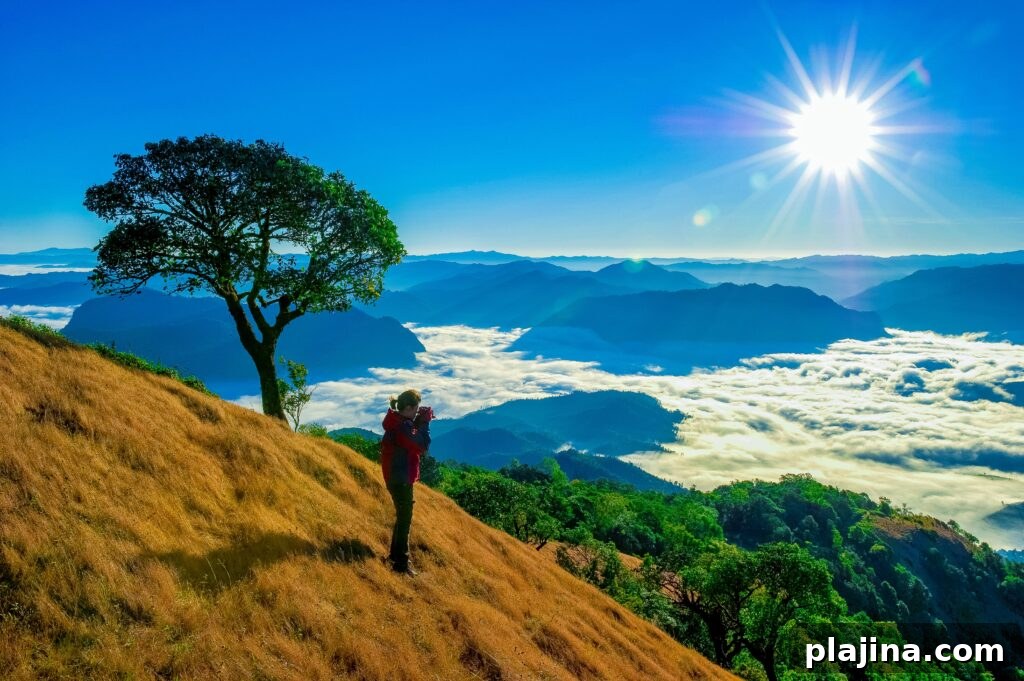
© Tourism Authority of Thailand
When you arrive in Mae Hong Son province, visit Wat Phrathat Doi Kong Mu, perched above the city and airport. Its two Burmese-style chedis are the province’s oldest landmark, and the site offers excellent panoramic views. A small coffee shop near the parking area is a pleasant place to watch the sunset, while dawn visits reward you with a mist-covered town below. Other notable temples include Wat Phra Non, which houses a reclining Burmese-style Buddha, and Wat Hua Wiang near the central market, where monks collect alms each morning and where a striking bronze Buddha replica of Phra Mahamuni from Mandalay is on display.
Finish an evening in Mae Hong Son by strolling along the town’s Walking Street beside a small lake. Wat Chong Kham’s lit chedi reflects on the water and creates one of the most atmospheric night markets in the region.
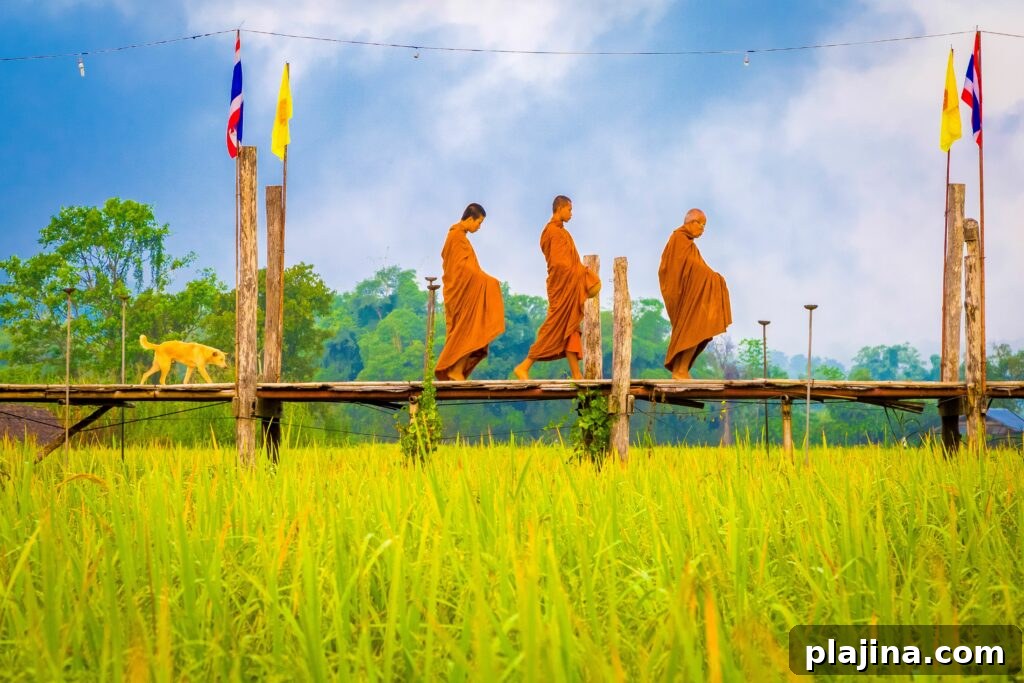
© Tourism Authority of Thailand
The next morning, drive about five miles to the Su Tong Pae bamboo bridge. Stretching roughly 1,640 feet over rice fields and the Mae Sa Nga River, it is the country’s longest bamboo bridge of its kind. Locals constructed it to link Ban Kung May Sak with Wat Tham Pu Sa Ma on a nearby hill. Around 6:00 a.m. daily, villagers cross the bridge to offer alms to the monks.
For a soothing treat, visit Phu Klon Country Club Health Mud Spa for mud facials, full-body masks, and a soak in a mineral hot-water pool surrounded by palms. The spa sits along Route 4001, the road leading to Ban Rak Thai, a highland village with Yunnanese-style houses and oolong tea terraces around a small lake—an ideal two- to three-day retreat for those looking to slow down and enjoy the northern highlands.