
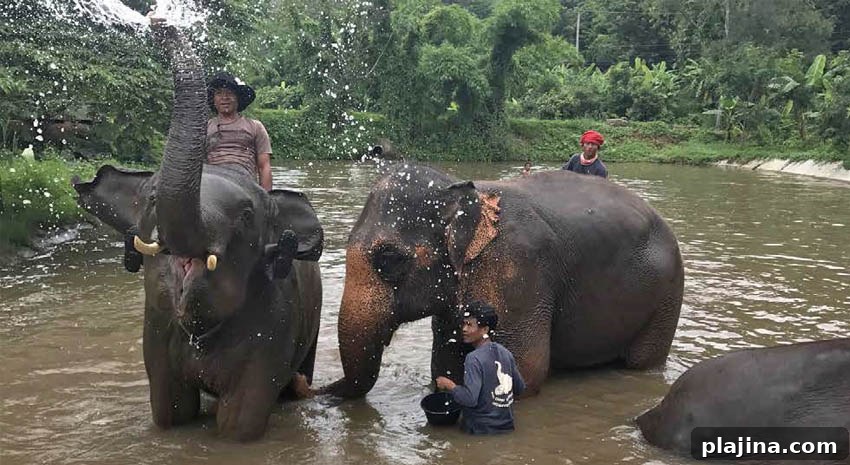
ELEPHANT TOURISM IN THAILAND can be a sensitive topic. While some venues use these magnificent animals primarily for entertainment, there are reputable sanctuaries where visitors can feed and bathe elephants and learn about their individual stories and the conservation work that supports them.
With careful research, travelers can identify ethical sanctuaries in northern Thailand, particularly around Chiang Mai. Whether or not you visit an elephant refuge, Chiang Mai itself is a cultural center with rich experiences and exceptional cuisine in every neighborhood.
One of the region’s most respected facilities is Elephant Nature Park; reservations are essential since space fills quickly. I spent a morning at Baan Chang Elephant Park, also within easy reach of the city. Before booking, consult the Tourism Authority of Thailand or other reliable sources to confirm a sanctuary’s reputation and policies.
When choosing a sanctuary, prioritize places that never train elephants to perform tricks or separate calves from their mothers. During my visit a newborn calf remained with its mother, and the pair were kept together to allow proper bonding. Avoid venues that permit riding with mounted chairs on an elephant’s back. Those chairs can damage the small vertebral bones and cause significant pain. If riding is offered and you feel it’s appropriate, bareback neck rides are less harmful than seated contraptions, but the best practice is to choose sanctuaries focused on the animals’ welfare over tourism revenue.
Ethical sanctuaries typically rescue elephants from illegal logging, abusive camps, or poaching threats and provide thorough medical care and rehabilitation. At these parks visitors commonly help feed the elephants, assist with bathing, and learn about the unique relationship between mahouts and their elephants. Educational programs explain rescue operations, veterinary treatment, and ongoing conservation efforts.
On my half-day program I changed into a traditional mahout outfit, learned about the elephants’ diets, and fed bamboo and bananas. Staff explained the medical care and rescue work carried out at the park, and I met babies born just weeks earlier. We took a gentle jungle walk with the elephants, observed them bathing, and enjoyed a traditional pad Thai lunch before departing. The experience deepened my respect for these animals and highlighted the strong bond between elephant and mahout.
Choosing to visit an elephant sanctuary is a personal decision that should be informed by research. Animal tourism can have many pitfalls, but selecting a reputable, welfare-driven sanctuary offers the opportunity to support conservation and gain a meaningful understanding of the species and the efforts made to protect them.