
The Cheung Chau Bun Festival has experienced its share of changes, yet it remains a vibrant tradition into the 21st century.
The festival’s origins are tied to a sudden, widely remembered end to a devastating plague on Cheung Chau in the late Qing Dynasty. Islanders built an altar at Pak Tai Temple and paraded statues of Pak Tai and other deities through the village, beseeching them to drive away the disease. After the afflicted began to recover, the islanders continued the ritual annually, and the event evolved into the Bun Festival observed today.
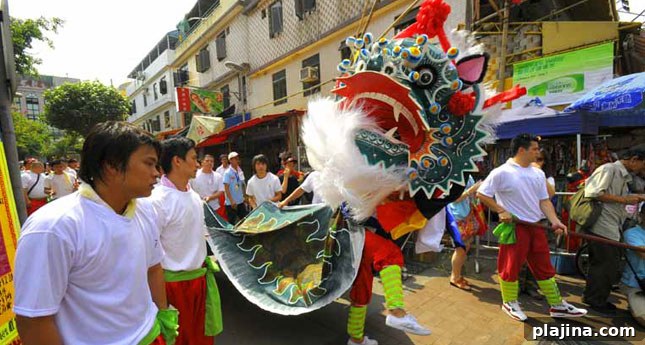
Held from the fifth to the ninth day of the fourth lunar month (May 2–7 this year), the festival mixes religious rites and lively street celebrations. Taoist ceremonies and traditional music set a solemn tone, while a colorful parade features ornate floats, lion dances, drum performances and children in spectacular costumes appearing to float above the crowd on stilts.
One of the festival’s most distinctive sights — the stilt dancers — connects directly to its origins. In earlier forms of the festival, hundreds of revelers would rush at midnight toward towering bamboo structures covered in lotus-paste buns, trying to grab as many buns as possible. That frantic scramble was once a central spectacle, though the deeper reasons for the rush are not fully documented.
An accident during one of those earlier climbs halted the large-scale bun scramble for many years. When the tradition was revived in the early 21st century, safety and heritage were both priorities. The bamboo towers were replaced with lightning-protected steel-frame staging designed by professional architects, and the climb is now restricted to a small group of pre-qualified climbers. Despite these changes, the competitive spirit remains: climbers still aim to collect the most buns.
Today, the buns themselves are ranked in categories with different point values, so gathering higher-scoring buns is believed to bring greater luck. Whether described as “hot buns,” “high buns,” or simply symbols of good fortune, these treats continue to play a central role in the festival’s rituals and competitions.
Over time the Cheung Chau Bun Festival has blended devotion, spectacle and community memory. Its rituals honor a moment when a community confronted disease and found collective relief, and its modern iteration balances safety with the pageantry and competition that draw locals and visitors alike. The combination of religious observance, elaborate performances and the iconic bun-related contests keeps the festival a distinctive and enduring part of Hong Kong’s cultural landscape.