
Dusty and crowded, heavy with heat and clogged with slow-moving traffic, Chennai — formerly Madras — is far from a picture-postcard resort. Yet despite its gritty surface, the city proved to be a rewarding destination. Once associated with the checked cotton known as madras, the renamed Chennai has emerged as one of the world’s fastest-growing urban centers. Textile production remains important, but Chennai is now a hub for software, financial services and hardware manufacturing. It is home to “Kollywood,” a major segment of India’s film industry, and, with a large automotive and parts cluster, has earned the nickname “India’s Detroit.”
Chennai displays two overlapping heritages: the ancient Indian and the colonial. Remarkable stone temples built by the Pallava Dynasty, which ruled parts of the region from the third to ninth centuries, stand alongside colonial-era landmarks. The Portuguese arrived in 1523, followed by the Dutch, but British influence reshaped the coastline when the East India Company acquired land and built Fort St. George, which still anchors the city center.
The easiest way to get around is by tuk tuk — the three-wheeled motor vehicles that dart through traffic and charge only a few dollars per ride. Following that route, Fort St. George is a natural starting point. Many historic buildings now serve as government offices, but the Old Exchange Building houses a small, dusty museum of military memorabilia worth a look. A short walk away is St. Mary’s Church, the oldest surviving British church in the region. It was the site of the 17th-century marriage of governor Elihu Yale, later the patron whose name graces Yale University; the church contains memorial plaques and tombs that recall lives lost to conflict and to the climate.
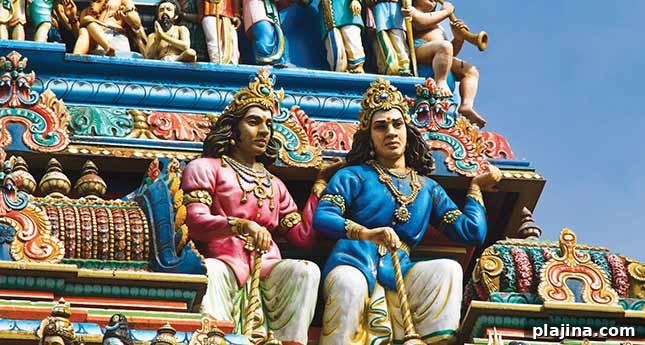
Not far from these colonial relics stands the colorful Kapaleeshwarar Temple, a Dravidian shrine dedicated to Shiva’s consort Parvati. Its gopuram and walls are covered with painted stucco figures of deities, animals and mythic scenes. Nearby, San Thome Basilica, built over the traditional tomb of the apostle Thomas, is a white, multi-spired cathedral whose interior displays biographies and relics that attract the faithful and curious alike.
Near the city center the red-brick High Court rises in dramatic fashion. Often called one of the world’s largest judicial buildings, it exemplifies Indo-Saracenic architecture — a 19th-century fusion of Islamic, Indian and Gothic revival elements. The Pantheon complex, sprawling across about 16 acres, contains several museums and galleries where art and natural-history exhibits share ornate settings that mix Romanesque and Mughal influences.
Chennai’s most famous public space is Marina Beach, which stretches nearly eight miles along the Bay of Bengal. Locals take pride in its length and in the lively scene along its broad sands. The sea is rough and generally unsafe for swimming, but the shoreline teems with activity: volleyball games, political rallies, street-food stalls, and simple amusements such as hand-cranked Ferris wheels and toy cars for children.
Street snacks are tempting, but the city also offers excellent restaurants. Annalakshmi is a well-known vegetarian spot where generous platters arrive filled with spiced potatoes, leafy greens, carrot salad and crisp, bitter-gourd fritters that are surprisingly pleasant. Kudumbam serves authentic Kerala specialties — whole fish and rich meat curries — in a refined, family-run setting. Vasco’s at the Chennai Hilton operates an all-day buffet with multiple live kitchens preparing omelets, curries and fresh fruit. The Amethyst Café, set in peaceful gardens, is a pleasant place for tea and browsing a boutique that sells embroidered textiles and handmade footwear.
A short drive south brings you to the Pallava-era temples at Mamallapuram (Mahabalipuram). On the way, giant movie-star billboards tower above wandering cattle and road signs that blend humor with warnings. At Mamallapuram, the Shore Temple stands set back from the surf behind protective banks; its carved reliefs, including representations of the river goddess Ganga, remain compelling despite centuries of salt and wind. Nearby, the Five Rathas group presents five distinct rock-cut temples, each carved in a different style.
For an unusual stay by the shore, the INDeco Mahabalipuram boutique hotel occupies six beachfront acres steps from the Shore Temple. Its open-air lobby doubles as a museum of colonial-era artifacts collected by its founder, and its white-dome guest suites offer a distinctive, eco-conscious lodging experience.
Back in Chennai, Dakshina-Chitra — a cultural heritage village — displays traditional homes relocated from across the region. Walking through reconstructed Tamil and Karnataka houses, visitors watch artisans demonstrate sari weaving, metalwork and pottery; guests can try spinning clay or grinding rice flour to understand everyday crafts firsthand.
In neighborhoods throughout the city, local life unfolds in clear view: women stringing fragrant garlands for temple offerings, launderers pressing clothes with charcoal irons, groups of children playing makeshift cricket on vacant lots. Tailors will alter garments on the spot; I watched a teenager attach sleeves by machine in under 15 minutes. These everyday scenes give a vivid sense of Chennai’s rhythm and resourcefulness.
After the heat and hustle of the streets, the modern comforts of the Chennai Hilton were a welcome respite. From the rooftop infinity lap pool I could swim a few lengths while looking out over the layered, noisy, fascinating city — a place where ancient temples, colonial monuments and contemporary industry coexist in close, often surprising proximity.