As major carriers retreat from many shorter routes to reduce costs, low-cost airlines are stepping in to fill the gaps. Business travelers who are used to the perks of frequent-flyer elite status now face a choice: remain loyal to legacy carriers and accept higher fares, fewer nonstop options and less convenient schedules, or switch to no-frills carriers and save money while sacrificing some amenities.
Kristie England, general manager of Universal Travel in Houston, says she recommends budget carriers when they meet a client’s needs. “Budget airlines are a good value for cost-conscious travelers,” she explains. “Many operate efficiently, offer flexible change and cancellation policies, and serve airports that larger carriers have abandoned.”
Those advantages attract business travelers to European low-cost carriers such as Flybe, Ryanair and easyJet. “Low cost doesn’t have to mean poor service; it’s about how you treat customers,” says Paul Simmons, chief commercial officer at Flybe. “Airlines across Europe are improving their product to remain attractive to travelers.”
A Flybe plane takes off. © Flybe
Flybe reports that half of its passengers are business travelers. To serve them, the carrier has interline agreements with American Airlines, Delta, Etihad and United, and codeshare partnerships with carriers including Cathay Pacific. Tickets are available through travel agents, and fare tiers range from a basic “Just Fly” option to “Get More” and “All In” packages that add perks such as lounge access, fast-track security and in-flight food and beverage credits.
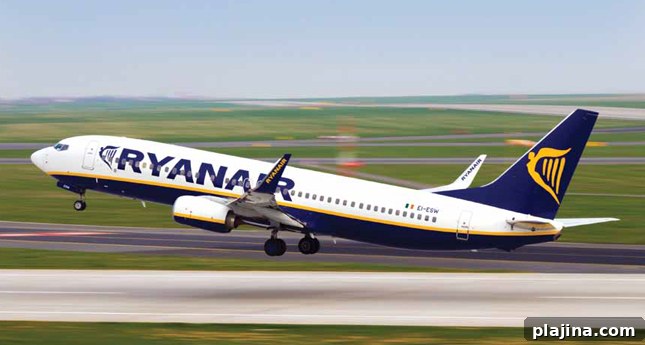
Ryanair, once famous for attention-grabbing cost-cutting stunts, now operates Europe’s largest route network, linking 189 destinations in 30 countries and actively courting corporate travelers. The airline introduced Ryanair Business Plus, a bundle of services starting at €69.99 that can be added to any fare. The package offers ticket-change flexibility, a 40-pound checked bag allowance, free airport check-in, priority boarding, premium seats and fast-track security at selected airports. To accommodate U.S. customers, Ryanair also launched a dollar-priced website.
“The modern business traveler doesn’t value gimmicks; they want convenient, reliable service,” says Robin Kiely, Ryanair spokesperson. With low fares, short ground turnaround times, strong punctuality and few cancellations, Ryanair reports that 27 percent of its passengers are business travelers.
Many low-cost carriers also provide high-frequency schedules between major cities and serve airports that save travelers time—London City instead of Gatwick, for example—allowing business to be completed in a single day without an overnight stay.
easyJet © Pcruciatti | Dreamstime.com
easyJet says about one in five of its 65 million annual passengers is flying for business. The airline serves 741 routes across Europe, the Middle East, North Africa and Russia. According to Anthony Drury, easyJet’s director, head of business, about 62 percent of business travelers who try easyJet return to fly with it again. He attributes this loyalty to fares up to 40 percent lower than legacy carriers, flights to major airports on top European routes, punctuality and FLEXI fares that allow unlimited date changes, include checked luggage, advance seat selection, airport bag drop, fast-track security and faster boarding.
The à la carte model appeals to many budget-conscious business travelers. Pianist Juan María Solare of Bremen, Germany, says low-cost fares made his performance schedule possible: “I can fly to London, Seville, Graz or Madrid for concerts and recordings because I can keep flight costs under €100, sometimes €60. I don’t need extra services on a one-hour flight as long as it gets me safely to my destination.”
San Diego-based Timothy Trudeau, CEO of Syntax Creative, travels extensively on Southwest Airlines. He values Southwest’s pricing and Rapid Rewards program and says he doesn’t fly for pampering—he prefers to reserve luxury for hotels. “I take a window seat, use in-flight WiFi and get work done,” he says. Trudeau praises Southwest as a straightforward airline with reliable customer service and flexible change policies.
Southwest Airlines Boeing 737 © Dreamsnjb | Dreamstime.com
However, not every low-cost model fits business travelers. When Frontier Airlines shifted to an ultra-low-cost carrier model in 2014 with stripped-down fares and à la carte services—even discontinuing TSA PreCheck participation—some corporate customers pushed back and sought alternatives.
Spirit Airlines positions itself primarily for leisure travelers and price-sensitive customers. “We don’t target the corporate business traveler,” says Paul Berry, Spirit spokesperson. Spirit’s base fares cover a seat and a personal item; everything else, including carry-on and checked bags, incurs additional fees. Even after adding extras, Spirit claims its total price is often lower—about 35 to 40 percent—than competitors on comparable routes. For $25, passengers can upgrade to a seat with extra legroom, and paying for a carry-on guarantees overhead bin space. Spirit notes that many small-business owners who pay their own fares choose the airline for its low prices.
Across regions, a growing variety of budget carriers gives business travelers more choices. In Europe, Ryanair, easyJet and Flybe are large players, while niche and hybrid carriers such as airberlin, Condor, Vueling, Transavia, Germanwings and WIZZ Air serve targeted markets. AirAsia dominates segments of the Far East, and Flydubai operates extensive routes across the Middle East, Gulf, Africa and Europe.
Boarding an AirAsia airplane at Don Muang International Airport, Bangkok © Mirko Vitali | Dreamstime.com
England gives an example of a client who flies to mainland China on a legacy carrier for long-haul travel but uses Hong Kong Express for regional itineraries. “The service is good, the flights are reliable, and they fly the routes he needs,” she says.
Still, value depends on each traveler’s priorities. Low fares often come with nonrefundable, nonchangeable tickets—Southwest being an exception—and many carriers accept online bookings only, which limits direct customer support. Passengers who don’t buy higher-tier fares should expect additional charges for seat selection, carry-on or checked luggage, meals and any available in-flight entertainment.
Budget carriers often use secondary airports that can add time and cost for transfers to city centers. Interline agreements are less common among low-cost airlines, so checked luggage typically cannot be routed through when combining carriers. Point-to-point schedules also may not align with legacy carrier connections, which can complicate itineraries.
“Research which carriers serve your destination,” advises England. “There are dozens of options many travelers haven’t heard of. If the route, schedule and price fit, a low-cost carrier can be a smart choice.”
As Ryanair’s Kiely puts it, “Low-cost carriers are the future and will continue to expand. On short flights, convenience and price often matter more than luxury.”