
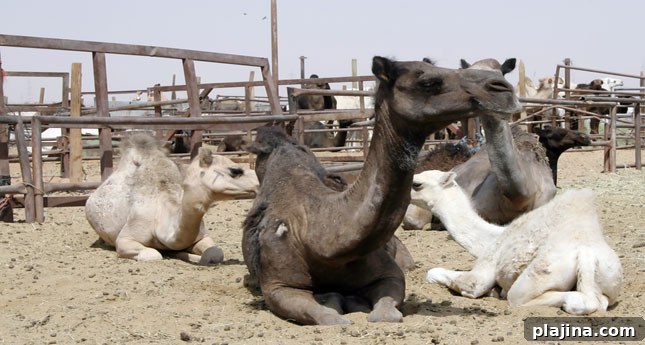
If you’re looking to buy a camel, this is the place to start. About a 20-minute drive northeast of Riyadh lies a vast, dusty encampment where Toyota pickup trucks load and unload camels of every size, color, and shape. Prospective buyers move among pens, examining animals and negotiating with sellers who know their stock intimately.
Arabic has an unusually rich vocabulary for camels: a single word can describe an animal’s condition, gait, temperament, color, or even its preferred way of drinking water. That depth of terminology reflects generations of experience with these animals. At this market—one of the largest in the Middle East—you’ll be competing with traders and buyers who have spent their lives around camels, so finding a true bargain can be difficult.
The market is more than a trading post; it’s a living cultural scene. Camels arrive and depart on pickup beds, handlers tend to their charges, and buyers inspect every detail: the set of the legs, the shape of the head, and the quality of the coat. Sellers are often equally precise, using specialized vocabulary to describe lineage, health, and behavior. Even small distinctions can affect price and desirability.
Whether you seek a work animal, a breeding mate, or a show camel, come prepared. Learn a few key terms, study local customs of negotiation, and be ready for a hands-on process. Camels are valued for many traits—endurance, speed, appearance, and temperament—and the market reflects all those priorities. Patience and respect for the experience of local traders will help any prospective buyer navigate this traditional, bustling marketplace.
Visiting the market offers more than the chance to purchase an animal; it provides a window into regional life where camels remain central to identity and economy. Even if you leave without a purchase, the experience of observing the craftsmanship, language, and rituals of trade is a memorable introduction to a long-standing tradition.