
FROM THE LUSH FOOTHILLS of the Andes to the cacti-dotted deserts and the vineyards that line La Ruta del Vino, Salta Province in northwest Argentina is, quite simply, stunning. The provincial capital’s nickname, Salta la Linda, means “Salta the Beautiful,” and visitors often apply the same praise to the charming town of Cafayate.
About 120 miles south of Salta along Route 68, Cafayate sits in the Calchaquíes Valley surrounded by rugged mountains. Vineyards roll across the valley floor while occasional giant cacti punctuate the landscape. Grand bodegas invite tastings in town and along Route 40 to the east and west. Cafayate’s restaurants cluster around the main plaza, where tour buses stop in front of the daffodil-colored Catedral Nuestra Señora del Rosario.
Most travelers arrive for the wine. Cafayate is Argentina’s second-largest wine region after Mendoza and claims the distinction of being one of the world’s highest-altitude wine regions, with vineyards from about 5,500 up to nearly 10,000 feet above sea level. A dry climate, wide swings between daytime and nighttime temperatures, and intense sunlight that thickens grape skins combine to produce bold, concentrated wines.
The region is best known for Torrontés, a distinctive white grape that thrives here. Torrontés in Cafayate is typically bottled as a crisp, dry white with floral aromatics and bright acidity, though some producers also make sweeter styles reminiscent of Riesling. Malbec is the most popular red, and many wineries also produce Cabernet Sauvignon and red blends using Tannat and other varieties.
If you drive from Salta on Route 68, you’ll see signs for La Ruta del Vino early in the drive, but the tasting rooms don’t appear until you reach the scenic Quebrada de las Conchas. Focus on the dramatic red rock formations there—stops like El Anfiteatro (The Amphitheater), Garganta del Diablo (The Devil’s Throat) and El Sapo (The Toad) provide memorable views and photo opportunities.
Route 68 meets Route 40 a few miles west of Cafayate in the heart of the wine country. Begin at Plaza Cafayate to get oriented and stretch your legs. Driving in town can feel chaotic at first because of one-way streets and local driving habits; look for blue rectangles with white arrows painted on corner buildings that indicate traffic direction.
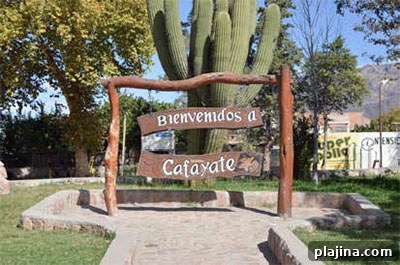
Cafayate sign © TERESA BITLER
The plaza is a great place to sample regional snacks: empanadas filled with beef, quinoa or humitas (a savory corn and cheese mix), or a scoop of Malbec or Torrontés ice cream at a local heladeria. Tour the cathedral, then browse markets and shops for brightly colored llama-wool ponchos, gemstone jewelry and traditional yerba mate gourds.
Language can be a barrier—outside hotels and restaurants that cater to tourists, many of Cafayate’s roughly 15,000 residents have limited English. A paper and pencil, photos on your phone or translation apps will help bridge the gap when asking about prices or negotiating purchases.
Before visiting wineries, stop at the Museo de la Vid y el Vino, two blocks east of the plaza on Route 40. The museum explains what makes Cafayate’s terroir unique and traces the region’s winemaking history. Exhibits are in Spanish and English, and the modest admission fee makes it a worthwhile introduction.
Pick up a local wine-route map at the museum or print one before you go to plan your tastings. Many wineries accept visitors without appointments, though some require reservations. One standout that does require booking is Piattelli Vineyards. Modern and polished, Piattelli resembles a Napa estate set in desert foothills; reserve lunch with your tasting to enjoy views from the patio and a menu that highlights regional ingredients alongside the winery’s Cafayate and Mendoza vintages.
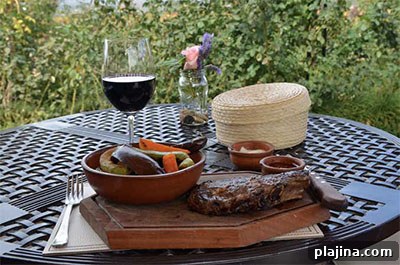
Rib eye steak at Piattelli Vineyards © TERESA BITLER
By contrast, Bodega El Porvenir represents a traditional, family-run winery with hourly tours and tastings. Try their premium red blend, El Porvenir, and consider lunch at the farmhouse, Finca el Retiro. Options include dining in the farmhouse, enjoying a picnic among the vines, or taking an on-site cooking class followed by a tasting of the empanadas you prepare.
Finca Quara is another classic estate and arguably one of the most photogenic. Set within landscaped gardens, its Spanish Colonial architecture frames private tastings of Malbec, Torrontés, Cabernet Sauvignon and other varietals. Visit in March for harvest celebrations featuring grape stomping, music and regional cuisine.
Several bodegas are within walking distance of the plaza. Bodega Nanni offers organic wines, including a sweet Torrontés and a Cabernet rosé; buying a bottle to enjoy in the courtyard or to take home is a popular choice. Bodega Domingo Hermanos provides exceptional value: tastings there are inexpensive and include generous pours with locally made cheese—an easy, relaxed stop that ends with a photo opportunity in front of the mural that spells “Cafayate.”
Just off the plaza, the American-owned Bad Brothers Wine Experience is a must for English-speaking visitors. Housed in a colonial home, the venue pours its high-altitude Bad Brothers label and the extreme-altitude Sunal wines. Staff at Bad Brothers typically speak English, so it’s a good place to ask questions and learn more about the region’s terroir.
Break up winery visits with outdoor excursions into Quebrada de las Conchas—local guides offer hiking, biking, horseback riding and 4×4 tours from the plaza. You can also arrange a trip to the Quilmes Ruins, the largest pre-Columbian settlement in Argentina, or book a tee time at the 18-hole Bob Cupp–designed course at La Estancia de Cafayate.
For a romantic splurge, Grace Cafayate offers the only spa in town and features couple’s massage rooms for side-by-side treatments followed by time in a private Jacuzzi and sauna. Many guests savor local wines and dulce de leche sweets after a spa session as a relaxing way to cap their visit.
Cafayate Info to Go
Cafayate lies roughly midway between two international airports. Teniente General Benjamín Matienzo International Airport in San Miguel de Tucumán is slightly closer but smaller and includes sections of unpaved road en route to Cafayate. The more convenient option for most travelers is Martín Miguel de Güemes International Airport in Salta, which offers more flights, rental car options and a fully paved, scenic drive through the Quebrada de las Conchas.
Where to Stay in Cafayate
GRACE CAFAYATE An upscale property with a spa, wine bar, indoor and outdoor pools, and an open-kitchen restaurant. National Route 40, Km. 4340 $$
PATIOS DE CAFAYATE WINE HOTEL Part of the Bodega El Esteco estate, this former colonial home offers authentic décor across oversized rooms and complimentary sparkling wine in the gardens each afternoon. Intersection of national routes 40 and 68 $$
VILLA VICUÑA A small boutique hotel a short walk from the plaza, offering a courtyard breakfast and easy access to bodegas, restaurants and markets. Calle Belgrano 76 $$
Restaurants in Cafayate
BAD BROTHERS WINE EXPERIENCE Taste Bad Brothers and Sunal wines while sharing small plates such as tannat-braised osso buco and quinoa tabbouleh with smoked salmon. Camila Quitanan del Niño 63 $$
PIATTELLI VINEYARDS Open for lunch only, the restaurant serves grilled meats and regional dishes with sweeping vineyard views from its patio. Ruta Provincial 2, Km. 3 $$
LA ROSA The restaurant at Patios de Cafayate Wine Hotel offers refined, multi-course menus paired with El Esteco wines and is considered one of the town’s finest dining options. Patios de Cafayate Wine Hotel, intersection of national routes 40 and 68 $$$