
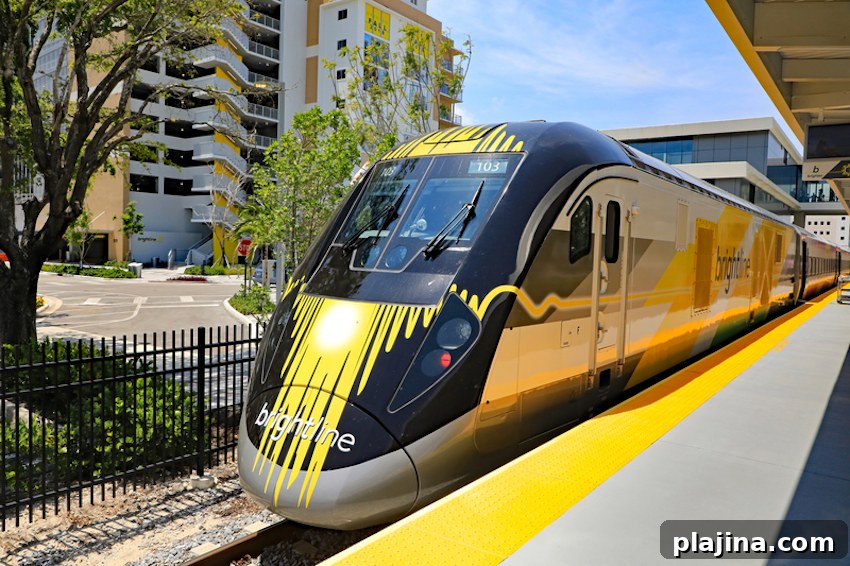
While many countries have embraced fast, efficient high-speed rail, the United States has lagged behind — but Brightline Trains aims to change that. With recent backing from The Virgin Group, the company has rebranded as Virgin Trains USA and is positioning itself to bring modern intercity rail service to parts of the country that rely heavily on cars.
The initial focus for Virgin Trains USA is Florida, where the company plans to connect Miami, Fort Lauderdale and West Palm Beach with frequent, higher-speed rail service. After establishing this Southern Florida corridor, the company intends to expand northward to include destinations such as Orlando and Tampa. Long-term plans also target major intercity corridors elsewhere, including proposals to connect high-demand routes like Los Angeles to Las Vegas.
Rail travel in the United States currently represents a small portion of daily commuting. Census data from 2012–2016 show that roughly 5 percent of American workers use public transit to get to work, while the vast majority commute by car. That dependence on automobiles has shaped development and travel patterns for decades, but private investment and renewed interest in rail infrastructure offer a path toward more sustainable, reliable alternatives.
Virgin Trains USA and its supporters argue that modern intercity rail can provide faster, more predictable travel between urban centers, reduce congestion, and offer an attractive alternative to short-haul flights and long car trips. By focusing first on corridors with strong demand and clear travel time advantages, the company hopes to demonstrate rail’s potential in the American market and build public support for broader expansion.
Beyond leisure and commuter travel, improved rail connections can also support regional economies by making it easier for people to access jobs, education and services without adding to roadway congestion. Investments in rail stations, connections to local transit, and quality passenger amenities are part of what proponents say will make these services competitive with driving and flying.
Challenges remain: ensuring sufficient funding, navigating regulatory and permitting processes, coordinating with local governments, and integrating rail projects into existing transportation networks. Still, private ventures like Virgin Trains USA reflect growing interest from investors and entrepreneurs who view rail as a viable component of America’s future transport mix.
As plans advance, travelers and communities will watch how initial projects perform and whether expanded service can shift travel habits. If successful, these new corridors could provide a template for further rail investment across the country, offering faster, greener, and more convenient options for intercity travel.