
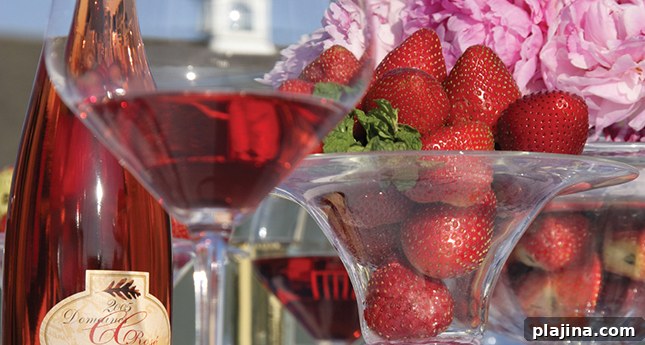
In this month of romance and roses, let’s turn attention to rosé wines. Many regions produce this pink-hued style, but it’s uncommon to find rosés made exclusively from Bordeaux’s noble varieties. One notable exception is Long Island, about 75 miles east of New York City. There, reds are primarily based on Merlot, Cabernet Sauvignon and Cabernet Franc — the same principal grapes found in Bordeaux — and winemakers naturally craft rosés from those varieties. The results are varied and compelling.
Wölffer Estate is a good place to start. Winemaker Roman Roth produced the winery’s first rosé in 1992 and has continued refining it ever since. Pale in color with bright acidity, this wine offers delicate strawberry notes and a subtle floral perfume, making it an ideal aperitif to enjoy before a meal.
Bouké Rosé takes a bolder approach. Deep salmon in hue and full-bodied on the palate, it delivers pronounced fruit and structure that allow it to stand up to a range of entrees. Winemaker Gilles Martin crafts it primarily from Cabernet Sauvignon, with about 26 percent Merlot contributing softness and roundness.
Bedell Cellars’ Domaines C. C. Rosé is a fruit-forward blend: roughly 80 percent Merlot rounded by Cabernet Franc and Cabernet Sauvignon. Coral pink in color and richly aromatic, it emphasizes ripe fruit flavors while maintaining a balanced, elegant profile.
Roman Roth also oversees the rosé program at Roanoke Vineyards. De Rosa Rosé, dominated by Merlot, is a pale salmon wine marked by fresh fruitiness and lively acidity, reflecting Roth’s deft, consistent style.
Harbes’ Red Horse Rosé is produced entirely from Merlot and shows a deeper shade—almost a light red. Dry and fruity, it evokes ripe strawberries with a crisp lemon-laced finish that keeps it fresh and food-friendly.
Shinn Estate’s rosé blends 75 percent Merlot with 25 percent Cabernet Franc. It presents a deeper color and an inviting aromatic profile that hints at ripe watermelon, combining juicy fruit flavors with a dry, clean finish.
Croteaux Vineyards specializes exclusively in rosé and offers several distinct bottlings, each made from 100 percent Merlot. Among them, Merlot 3 Rosé stands out: extremely pale in color yet surprisingly full-bodied, it balances ripe fruit flavors with a firm, assertive palate presence.
Across the region, Long Island rosés typically retail in the $16 to $19 range. That price makes them an affordable option for year-round drinking, whether enjoyed as a lively aperitif, paired with seasonal salads and seafood, or matched with heartier fare that benefits from a rosé’s bright fruit and refreshing acidity.