
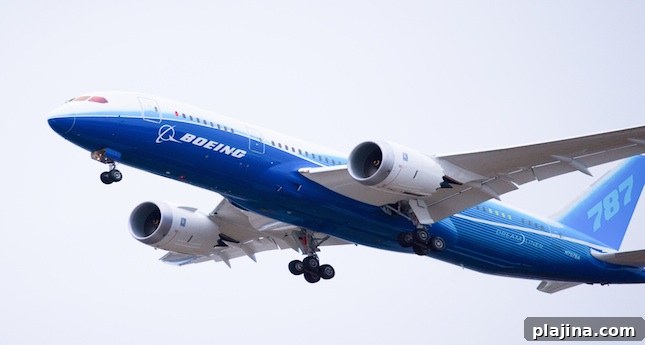
Boeing has published its updated 20-year Current Market Outlook report, forecasting substantial growth in demand for new aircraft over the next two decades. The report estimates that nearly 40,000 new airplanes will be required worldwide by 2035, representing an estimated market value of $5.9 trillion. This projected expansion reflects the broader growth of the global aviation industry.
Regional demand is expected to be concentrated in Asia, which Boeing says will account for about 38 percent of deliveries. Airlines in the United States and Europe together are projected to receive roughly 40 percent of the new airplanes, while carriers in the Middle East, Africa, and Latin America will make up the remaining 22 percent of demand.
In terms of aircraft types, the analysis indicates a strong preference for single-aisle airplanes. Boeing predicts more than 28,000 orders will be for single-aisle models, compared with about 9,100 for wide-body airplanes. This split reflects ongoing market trends favoring point-to-point routes and greater frequency on high-demand city pairs.
These findings align with other industry forecasts projecting rapid passenger growth. For example, IATA projects passenger numbers to rise substantially by 2035, increasing pressure across the aviation ecosystem. That raises practical questions for airports and aviation authorities: can terminal facilities, ground operations, and security systems scale effectively to accommodate the anticipated influx of travelers?
Airports will need to plan for larger passenger volumes through investments in infrastructure, modernization of screening and security processes, and strategies that improve throughput without compromising safety. Operators may pursue a mix of terminal expansions, automation, biometric technologies, and optimized staffing models to manage peak flows and reduce congestion. Likewise, coordination among airlines, airport authorities, and regulators will be essential to ensure that capacity upgrades are timely and aligned with projected demand.
For airlines, the forecast has implications for fleet planning and route development. A continued tilt toward single-aisle aircraft suggests carriers will prioritize flexibility and frequency, while wide-body demand will be driven by long-haul and high-capacity routes. Aircraft manufacturers and lessors will respond by aligning production schedules and leasing portfolios to meet evolving airline strategies.
Overall, Boeing’s outlook underscores a period of sustained growth for global aviation, accompanied by operational and infrastructure challenges. Preparing for nearly 40,000 new airplanes and a substantial rise in passengers will require coordinated investment across airports, airlines, manufacturers, and regulatory bodies to maintain safety, efficiency, and passenger experience as the industry expands.