
Between the blaring car horns and the steady flow of pedestrians along Seoul’s sidewalks, it’s easy to forget why Korea is called the “Land of the Morning Calm.” But as I climbed Mount Namsan to reach the Banyan Tree Club & Spa Seoul, I was reminded that Korea’s landscape balances sacred mountains with dense urban life.
Perched above the neon and noise near Dongguk University subway station, Mount Namsan provides an ideal setting for a peaceful urban retreat. The Banyan Tree Club & Spa Seoul, the chain’s only property in Korea, caters to busy locals and luxury travelers alike. Its four-story Club building houses a full-service spa, a fitness center, private dining, and a traditional Korean sauna and bathing area.
Although Banyan Tree is often associated with Southeast Asian influences, Korean elements were woven throughout my visit. At check-in for my spa appointment I was offered traditional jujube tea, and the spa attendant carefully explained each massage style so I could choose among treatments from Balinese to Swedish for my one-hour session.
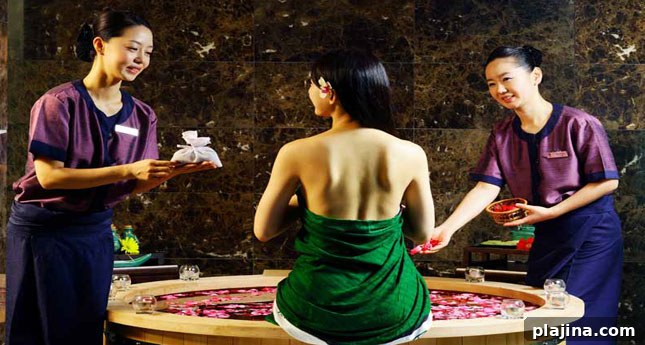
A candlelit corridor scented with lemongrass led to my private treatment room, which featured a changing area, cedar bathtub and a quiet relaxation space. Each treatment begins with a green tea and honey foot scrub, using tea leaves from Korea’s celebrated Boseong fields. Green tea, prized for its restorative qualities, is a central ingredient in several offerings, including the signature Banyan Romance package that combines a green tea bath, body scrub, herbal steam and sports massage.
Because the January wind had left my muscles tight, I chose a lomi-lomi massage. This oil-based technique uses pressure from thumbs, palms and elbows to stretch and release muscle tension. Despite her slight frame, the therapist delivered firm, flowing strokes and targeted pressure work—at times using her knees—to ease persistent knots in my lower back.
When the massage ended, warm damp towels wiped away the excess oil, a blend scented with black pepper, ylang ylang and geranium. The therapist shared practical tips for easing lower back discomfort at home. A gentle chime signaled the close of the session, and I lingered over ginger tea, coconut cookies and fresh yogurt while enjoying the view of the mountainside and the city below.
For visitors who haven’t experienced a jjimjilbang—the traditional Korean bathhouse—a visit to the sauna and bath area beneath the spa is essential. The gender-segregated facilities include three pools (warm, cold and hot), wet and dry saunas, rain showers, a resting area, a snack bar and a television room.
Public bathhouses in Korea emerged in the early 20th century when home showers were uncommon, and they became hubs of neighborhood life. With rising prosperity in the 1990s, nostalgia for the communal bathhouse grew alongside investment that transformed many facilities into full entertainment centers, complete with professional body scrubbers, theaters and other leisure amenities.
The Banyan Tree Club & Spa Seoul is the brand’s first combined urban resort and membership club, offering both a luxurious escape for travelers and a daily sanctuary for Seoul residents. While the on-site jjimjilbang preserves familiar public bathhouse features—body scrubbers, wooden stools for showers and buckets—the club’s exclusivity creates a quieter, more private atmosphere.
Visiting in the afternoon, I had the bathing area almost to myself. The soothing sound of flowing water accompanied my slow immersion into a tiled pool, where warmth gradually replaced the winter chill. An ice-dispensing alcove provided crushed ice for invigorating cold treatments—alternating between hot and cold stimulates circulation and delivers a refreshing sensation.
In classic Korean style, the facility’s highlight is the “Experience Shower,” a high-tech setup with nine shower heads, colored LED lights and jazz music piped through speakers. After a brief struggle at the control panel I activated the features and stepped into a multisensory cascade of light, sound and water.
When I exited the shower, I found a stack of plush white towels within reach—a welcome convenience, since many public bathhouses typically supply only hand towels. Wrapped in a towel, I moved to the Resting Room, a dim cedar space lined with soft lounge chairs and pillows. Intending only a short rest, I soon drifted into a deep nap.
After waking, an ajummah—an experienced scrub attendant—guided me to a curtained area for a body scrub. Using coarse mitts, she worked vigorously to remove dead skin; unused to such forceful exfoliation, I found the treatment surprisingly thorough. I rinsed under the rain showers with herbal Amini bath products, then donned a cotton robe and exited the bathing area.
The vanity area was well appointed with blow dryers and skincare products. Before leaving, I noticed a small lounge near the entrance furnished with leather armchairs and newspapers. Not yet ready to return to the cold, I settled in with The International New York Times and extended my stay by another half hour, savoring the lingering warmth and calm.
Banyan Tree Club & Spa Seoul
5-5, Jangchung-dong
2(i)-ga, Jung-gu
Seoul, South Korea
tel 82 2 2250 8080
banyantree.com