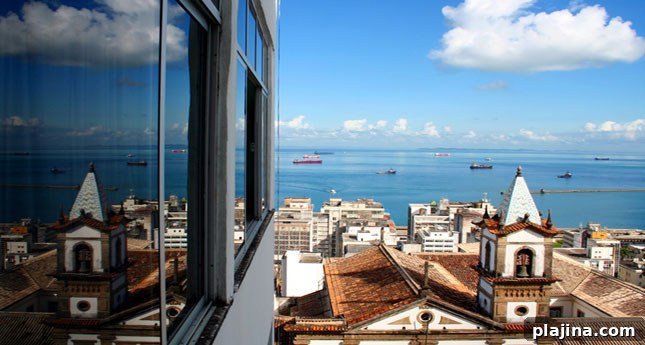
This region in northeastern Brazil takes its name and much of its character from the natural harbor Baía de Todos os Santos (Bay of All Saints). Known simply as Bahia, it is the fourth-most populous of Brazil’s 26 states. The people, cuisine, music and traditional clothing from this area are commonly referred to as Bahian.
At the heart of Bahia is Salvador, the state capital and a cultural melting pot that has shaped modern Brazilian identity. Salvador is recognized as the birthplace of samba, and it is where the acrobatic martial art of capoeira developed. The state is also closely associated with the Afro-Brazilian spiritual practices of Candomblé, which continue to influence local life and culture.
Folkloric traditions remain a visible and vibrant part of daily life in Bahia. In Salvador’s historic neighborhoods, you can often see Baianas—women dressed in layered skirts, distinctive turbans and strings of beads. Street bands fill the air with percussion rhythms, and capoeira practitioners display skillful, dance-like movements in public squares.
For a polished presentation of these traditions, attend a Bahian folkloric performance. In Salvador’s Teatro Miguel Santana, the Balé Folclórico da Bahia stages shows that bring the region’s music, dance and ritual to life.