
Anyone familiar with European spa culture likely knows the Kur tradition — the practice of taking the waters — that is so common in Germany. In recent years, however, Ayurveda, India’s ancient holistic system of health, has been gaining popularity at German resorts and historic spa towns. Treatments with exotic names now appear on menus from Baden-Baden to Berlin as more guests seek time-honored approaches to balance and recovery.
I decided to explore this trend firsthand and traveled to the small spa town of Bad Wildstein, near the historic Moselle towns of Traben and Trarbach, to try an authentic Panchakarma detox program at the elegant Parkschlösschen Bad Wildstein. The Ayurvedic retreat operates in a beautifully preserved Art Nouveau castle designed around 1900 by Berlin architect Bruno Möhring. The spa team includes physicians and practitioners trained in traditional Indian medicine.
On arrival, I was welcomed by a warm, attentive staff and shown to a spacious room decorated in calming tones. A renovation in 2002 prioritized natural, non-toxic materials—wood furniture, silk wallpapers, marble and slate surfaces, and wool carpets—to align with Ayurvedic principles of balanced living. Electrical systems and plumbing were carefully insulated and buffered, and the property continues to draw from the original springs that supply the Veda Thermal Baths.
Panchakarma, often described as the cornerstone of Ayurveda, aims to detoxify and gently restore equilibrium to body, mind and spirit through diet, exercise and individualized therapies. For my initial consultation I met Kumaran Rajsekhar, the resident vaidya (Ayurvedic physician). He spent about an hour assessing me: checking my pulse and tongue, and asking detailed questions about sleep patterns, preferences and daily habits. These observations help determine a person’s dosha—Vata, Pitta or Kapha—which guides dietary and treatment choices.
After the exam, Vaidya Rajsekhar prescribed a four-day program and recommended foods suited to my dosha, emphasizing that eating should nourish both body and spirit. He also set two firm rules for the detox: no caffeine and no alcohol. That last restriction was hard to accept—especially given the region’s world-class Riesling vineyards—but I committed to the regimen and took a restorative walk through the resort’s parkland before dinner. The grounds feature specimens from around the globe, including an impressive redwood from California.
Meals at the Parkschlösschen are crafted by Chef Eckhard Fischer, who is both an Ayurvedic therapist and a chef known for refined vegetarian cuisine based on seasonal, organic ingredients. The food was consistently excellent; each meal felt carefully prepared to support the treatments. A small glass of hot ginger water is served before lunch and dinner—a traditional Ayurvedic practice that I found less tempting than a local wine, but effective. Hot water is also delivered to each room every morning and evening, in keeping with Ayurvedic guidance to avoid cold beverages; it can be sipped plain or with a mild herbal infusion.
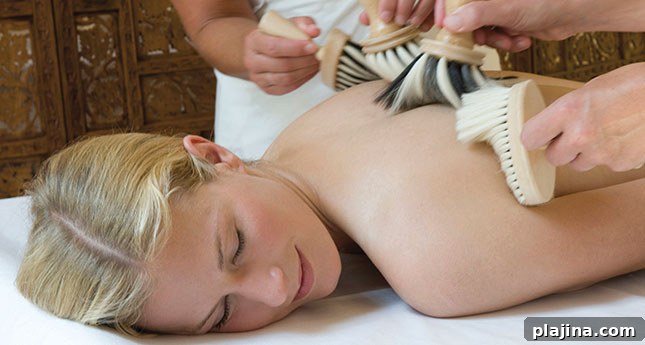
The following morning I wrapped in a warm robe and headed to the spa. My first treatment was Udvartana, an invigorating exfoliation and circulation massage performed by two therapists working in tandem. The session began with head and foot massage while I sat upright, followed by a full-body treatment on the table. I learned that Ayurvedic massage addresses areas where tension often hides, including the breasts and buttocks. The treatment was deeply relaxing and I drifted into a short nap toward the end. Afterward I experienced Svedana, a steam therapy infused with medicinal herbs, and then spent time in a private relaxation room with a shower and daybed.
Day two brought Vishesh, a firm deep-muscle massage, again delivered by a pair of therapists. It was followed by Nabi Basti, a distinctive treatment focused on the navel area. A warm, pliable dough ring is placed around the navel and warm oil is continuously replenished into the cavity over about half an hour. Initially the ritual felt unusual, but gradually a profound sense of well-being and calmness settled in.
That serenity lasted well into the evening and accompanied me on a tranquil afternoon walk the next day. Parkschlösschen offers many activities—cooking classes, lectures, tennis and Nordic walking among them—yet I chose a forest path that leads to ancient standing stones, a reminder that generations before us appreciated the healing qualities of these thermal waters.
The morning I left I took a taxi to the train station and traveled on to Wiesbaden. There, as soon as I arrived, I found a café, ordered a pot of tea and treated myself to a slice of apple cake—small pleasures that felt like the perfect complement to the calm renewed by the Panchakarma experience.
Parkschlösschen Bad Wildstein
Wildbadstrasse 201 D-56841
Traben-Trarbach, Germany
tel 49 6541 7050