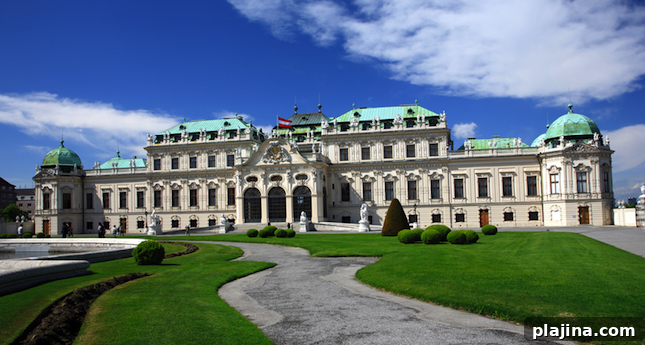
Four of Vienna’s leading museums are preparing major new exhibitions for early 2014. At the Belvedere, Wien – Berlin examines the contrasting and shared currents between the Secession movements in Vienna and Berlin. The show highlights the psychological intensity of Viennese expressionism alongside the vigorous passion of German artists, featuring works by Albert Paris Gütersloh, Otto Dix, Max Liebermann and Josef Hoffmann.
At the Albertina, Birth of a World-Class Collection traces the development of the gallery’s holdings from the era of Maria Theresa through the Congress of Vienna. The exhibition focuses on the foundation laid by Archduchess Maria Christina and Duke Albert of Saxony-Teschen, who assembled significant works while living in Vienna, Dresden, Rome, Paris and Brussels. Among the notable pieces on display is Albrecht Dürer’s Field Rabbit (1502).
Also opening are Schiele Rediscovered: An Artist and His Collector at the Leopold Museum in the MuseumQuartier, which brings together paintings, drawings, photographs, letters and other handwritten documents to explore the relationship between Egon Schiele and his patron; and Experiment Metropolis – 1873: Vienna and the World Exhibition at the Wien Museum, an investigation of Vienna’s dynamic period of expansion during the Gründerzeit after the city walls were taken down.
These exhibitions offer rich perspectives on Vienna’s artistic heritage and the city’s role in shaping modern art and culture. Each museum brings a distinct viewpoint: the Belvedere with an international comparison of Secessionist tendencies; the Albertina with a historical survey of a major collection’s origins; the Leopold Museum with a focused study of an artist and his collector; and the Wien Museum with a social and urban history of Vienna’s transformation.
Visiting these shows provides an opportunity to see masterworks and archival materials together, illuminating both individual artists and broader movements. Curators have combined paintings, sketches, period photographs and documents to create layered narratives that reveal artistic networks, patronage patterns and the cultural context of late 19th- and early 20th-century Vienna.
For anyone interested in art history, architecture or urban development, early 2014 in Vienna promises noteworthy exhibitions that connect local history with wider European trends. The programs span genres and disciplines, from close studies of individual creators to sweeping accounts of institutional and municipal change.
You may also like:
Vienna: Coffee, Cake And Culture
Vienna: Double Vision