
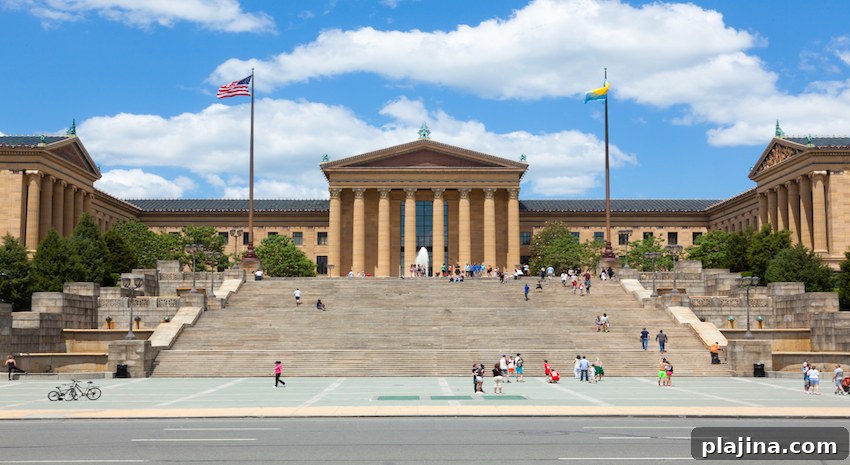
“American Watercolor in the Age of Homer and Sargent,” on view at the Philadelphia Museum of Art through May 14, brings together more than 170 works that capture the rise of watercolor as a leading American art form. The exhibition features important examples by William T. Richards, Thomas Moran, Edwin Austin Abbey, Thomas Eakins and George Inness. Once regarded mainly as a genteel pastime, watercolor gained professional recognition after the American Watercolor Society was founded in New York in 1866, and by the 1920s it had become a widely respected medium among serious artists.
Curated by Kathleen A. Foster, the show highlights both well-known and lesser-known contributors to the medium. Among the discoveries are watercolors by Henrietta Benson Homer, who taught her son Winslow Homer to work in the medium; works by Flora Bond Palmer, better known as a designer of Currier & Ives lithographs; and delicate nature studies by Fidelia Bridges. The exhibition also offers intimate glimpses into artistic practice with a display of historic personal watercolor kits owned by artists such as Winslow Homer, Thomas Eakins and John Singer Sargent, alongside sketchbooks that include pages from the collection of Boston patron Isabella Stewart Gardner.
Together, the paintings, studies and artists’ tools trace the transformation of watercolor from a private hobby into a professional, expressive medium. The selection demonstrates the technical range and versatility of watercolor—capturing luminous landscapes, detailed natural studies and vivid urban scenes—and emphasizes how American painters used the medium to explore light, atmosphere and immediacy in new ways. Visitors can see how both academic painters and independent innovators embraced watercolor to experiment with composition, color and economy of mark-making.
By presenting a broad cross-section of artists and formats, the exhibition underscores watercolor’s central role in American visual culture during the late 19th and early 20th centuries. The show mixes finished works with preparatory sketches and personal objects, offering a layered narrative about artistic training, travel, and the everyday tools that supported creative practice. Viewers gain insight into how watercolor functioned as a portable, direct means of recording impressions in the field as well as a medium for carefully wrought studio pieces.
“American Watercolor in the Age of Homer and Sargent” not only celebrates individual masterpieces but also tells a larger story about the changing status of the medium and its practitioners. The exhibition reveals how a group of artists—ranging from celebrated names to quieter figures—helped redefine watercolor’s possibilities and solidify its place in American art history.