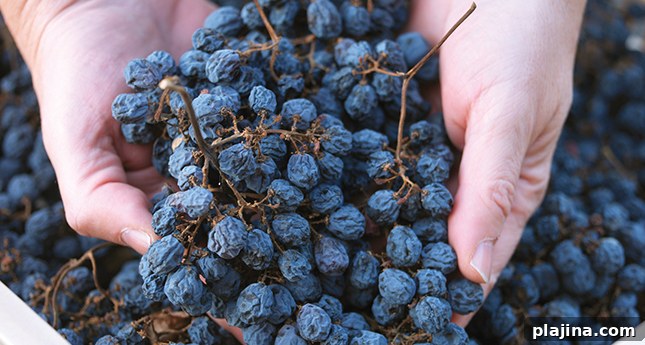
About 60 years ago in the Veronese region of northeastern Italy, an old red wine took on a striking new identity. The sweet Valpolicella della Recioto, a wine with roots reaching back to Roman times, evolved into the modern dry Amarone della Valpolicella—known simply as Amarone. Made from native grapes—primarily Corvina with smaller amounts of Rondinella and Molinara—Amarone is produced using a contemporary form of an ancient technique that gives the wine its unique and powerful character.
Unlike most wines, whose grapes are fermented soon after harvest, Amarone grapes undergo a prolonged drying process. The appassimento method dries the fruit for three to four months under controlled conditions, concentrating sugars, acids and flavor compounds. Only after this dehydration do the shriveled grapes begin a long, slow fermentation. Where Recioto stops fermentation early to preserve residual sugar and remain a dessert wine, Amarone ferments to dryness. The result is a ripe, full-bodied wine with intense aromas of dried fruits and berries, nuances of spice, hints of anise or leather, and an alcohol level often around 15 percent. Amarone is a wine that rewards patience; it benefits from several years of aging to reveal its full complexity.
Currently many retailers are stocking the 2005 and 2006 vintages. The 2005s tend to be deep and concentrated, still firm and in need of time to soften. The 2006s are generally a touch lighter and more fruit-forward, often reaching enjoyable drinking windows sooner. Prices for Amarone typically range from $55 to $90, depending on producer and vineyard selection.
At a recent tasting, several 2006 Amarones stood out. Masi’s Costasera showed a smooth texture and pronounced aromas of sweet dried berries. Brigaldara delivered solid structure, while Tommasi offered balance and finesse. Zenato presented a richer, more assertive style, and Tedeschi’s 2006 was particularly notable for an intensely aromatic profile reminiscent of a bowl of dried fruits.
The 2005s proved especially impressive. Tedeschi’s Amarone from the Monte Olmi vineyard exemplifies the style: lush fruit, authoritative presence and a long, satisfying finish. Venturini’s Special Selection Campo Masua—produced only in exceptional years—shows a full-bodied, austere profile dominated by dried-fruit aromas and a prolonged, flavorful finish. Tenuta Sant’Antonio’s 2005, made from the single-vineyard Campo del Gigli, remains young and tannic but already displays depth and attractive fruit. Begali’s single-vineyard Monte Ca Branca 2005 is promising and well-crafted. Also worthy of mention are excellent 2005 examples from Nicolis, Allegrini, Musella and Speri.
Amarone’s combination of traditional technique and careful modern winemaking creates wines that are strikingly concentrated yet nuanced, built for both immediate enjoyment and extended cellaring. Whether sampled from a recent vintage or aged for years, a well-made Amarone reveals layered flavors of dried fruit, spice and savory notes that reflect the terroir and the distinctive appassimento process.