For a brief period at the start of the pandemic, many celebrities posted “We’re all in the same boat.” For a moment it felt true: the global emergency grounded nearly everyone. But it quickly became clear that, for the privileged few, the “boat” was often a luxury yacht.
Mass transport—once the great equalizer that made the world accessible—proved especially vulnerable when social restrictions were imposed. Alternative ways of getting around, not always exclusive or costly, proved more resilient. They point toward a future of travel that is more varied, adaptable and often slower-paced.
Consider yachts. Are they out of reach for most people? Not necessarily. Many charter yachts can accommodate up to a dozen overnight guests, which makes a week’s charter less expensive per person than it first appears. Some companies operate across the Mediterranean, the Indian Ocean, the Caribbean, Australasia and Alaska, offering both sailing yachts and motor yachts, typically with a full crew.
PHOTO: © HASAN CAN BALCIOGLU | DREAMSTIME.COM
More modest options exist too. Traditional wooden gulets in Turkey offer a comfortable, scenic way to cruise the Aegean and Turkish coastline. Small groups can charter a gulet for a week at rates that work out lower per person than many other holiday choices, with itineraries that include island-hopping and secluded bays.
Traveling by boat slows the world down. Canal boats in England move at around 4–6 mph and require regular stops to go through locks, turning the journey into part of the experience. Companies that rent canal boats operate in regions such as Norfolk, the Midlands and Yorkshire, and a canal boat for six people can be hired at surprisingly affordable weekly rates. Even well-known figures have been seen navigating Britain’s inland waterways.
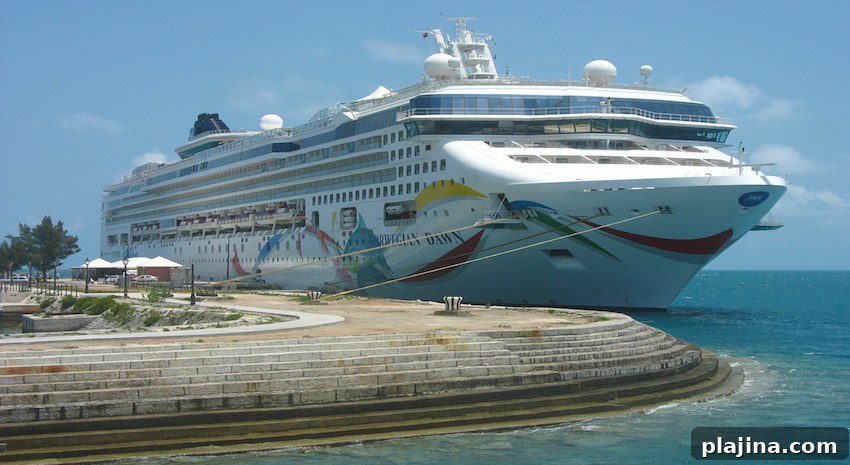
The pandemic struck the cruise industry especially hard, and many modern cruise liners have been laid up. Yet ferries continued to serve as vital links for coastal communities and regional travel. Cross-channel routes between Britain and France have remained busy despite competition from rail tunnels, and ferries crisscross the Baltic Sea connecting Sweden, Finland, Estonia and Latvia.
In Alaska, with large cruise ships absent for long periods, the Alaska Marine Highway ferries kept coastal towns connected and continued to offer passages down the Inside Passage to Bellingham, Washington. These ferries provide cabins, cafeteria-style dining and passenger amenities that make them practical for both residents and travelers.
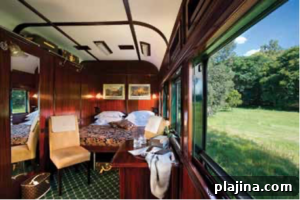
PHOTO: © ROVOS RAIL TOURS
Boats opened coastlines to early explorers, but railways shaped inland travel. Although aviation has absorbed much of that traffic, luxury trains still capture the imagination with elegant cabins and fine dining. Renowned journeys include long-distance services that evoke the golden age of rail travel, with routes across Australia, the Trans-Siberian, southern Africa, Europe and North America.
More affordable night trains also operate on several routes, offering practical overnight travel without the premium price of heritage services. Budget sleeper options can be an efficient way to cover long distances while saving on accommodation.
High-speed rail increasingly challenges air travel for intercity trips. Japan pioneered bullet trains, and countries such as Spain, South Korea and Turkey now run extensive high-speed networks. China has expanded rapidly and now accounts for the largest share of high-speed rail lines worldwide, while cities such as Shanghai offer very fast connections between airport and downtown using maglev technology. By contrast, some countries, including the United States, have struggled to deliver comparable high-speed systems.
Roads remain the most extensive transport network on land, reaching places other modes cannot. Buses are often the most economical option for intercity travel. In North America a large national carrier serves thousands of destinations, while in countries such as Turkey hundreds of bus companies link towns and cities across vast distances. Major bus stations can rival airports in facilities, often including shops and services for travelers between connections.
For freedom from timetables and the ability to set your own route, nothing beats a car. Rental cars give travelers independence when arriving in foreign countries, though adapting to local driving norms takes attention. A number of countries drive on the left, and learning to handle different gear layouts or road signage can require an adjustment period. Modern GPS navigation helps overcome much of the unfamiliarity, but it’s essential to learn and follow local traffic laws.
If you want your accommodation to travel with you, an RV or campervan removes the need to seek lodging and dining separately. RVs are a natural fit in countries with wide open spaces; Australia, New Zealand, Norway, Iceland, France, Canada and South Africa are all popular for motorhome travel, enabling leisurely exploration at your own pace.
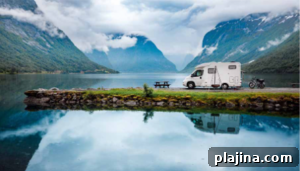
PHOTO: © ANDREY ARMYAGOV | DREAMSTIME.COM
During the pandemic, international travel often felt out of reach. A series of lockdowns kept me close to home in Hampshire, southern England, where my world shrank to the network of footpaths around my house. Walking those ancient routes reminded me that the simplest form of travel—on two feet—remains one of the most rewarding ways to experience the landscape.