
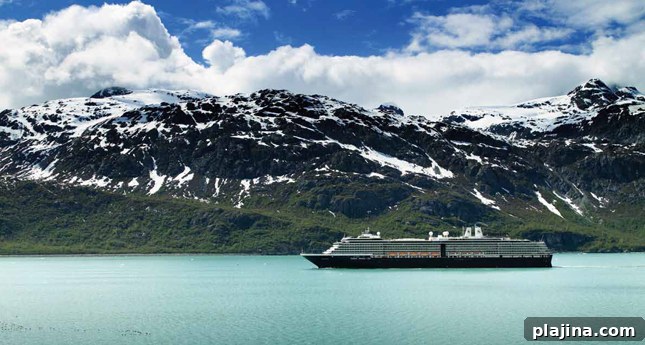
While the Caribbean and the Mediterranean rank among the world’s most popular cruise destinations, Alaska dominates North American cruising. With dramatic geological and wildlife attractions — from colossal tidewater glaciers to abundant whale populations — Alaska attracts nearly a million cruise passengers each summer, mostly sailing from Seattle and Vancouver. The cruise season is brief, generally May through September, but the long daylight hours of the midnight sun make excursions bright and rewarding, and there are plenty of reasons to explore Alaska by sea.
Cruise options in Alaska vary widely. Large ships function as floating luxury hotels with extensive amenities, while smaller vessels offer a more intimate, yacht-like experience. Major mainstream lines call on well-known Alaskan ports, while boutique and expedition operators visit remote villages and protected fjords. One of the primary choices for travelers is whether to cruise on a large ship or a smaller, more specialized vessel.
Two industry leaders, Princess Cruises and Holland America Line, play major roles in Alaska. Both lines operate frequent sailings from Seattle and Vancouver and together carry hundreds of thousands of passengers each season. Princess, the largest operator in Alaskan waters, fields ships such as the 2,670-passenger Sapphire Princess, which after upgrades offers many large-ship amenities: adults-only sun decks, poolside viewing screens, sports bars, casinos and casual eateries. Onboard naturalists and guest lecturers provide context about Alaskan culture and wildlife, and regional touches — including Alaskan beers and buffets featuring grilled salmon and crab during Glacier Bay visits — enhance the experience.
Princess runs weekly seven-day Inside Passage itineraries throughout the season, typically roundtrips from Seattle that include Glacier Bay and stops in Juneau, Skagway and Ketchikan, with Victoria, British Columbia, often included. The Golden Princess operates similar routes in 10-day cruises to and from San Francisco.
Holland America Line, known for slightly more traditional elegance, also uses Seattle as a home port. The ms Westerdam, for instance, operates seven-day roundtrips that call on Glacier Bay, Ketchikan, Victoria and the historically influenced port of Sitka. Glacier Bay — a UNESCO World Heritage site and Biosphere Reserve — is the emblematic highlight of many coastal cruises: an immense cathedral of ancient ice where massive glaciers calve into the sea. That spectacle alone often justifies the voyage for many passengers.
Some large ships choose alternative glacier experiences. Holland America’s ms Amsterdam, for example, visits Puget Sound, Juneau, Ketchikan, Sitka and Victoria on a seven-day Seattle roundtrip but highlights Tracy Arm, a 30-mile glacial fjord featuring dramatic twin glaciers and frequent ice-scattered waters.
Many travelers expand their cruise with an integrated land tour to see interior Alaska. Both Princess and Holland America operate affiliated tour lines and hotels that make cruisetours straightforward options. Typical land extensions include rail trips to Denali National Park in dome cars, bus journeys along historic routes, and excursions into Canada’s Yukon Territory. Cruisetours can provide opportunities to view Denali (Mt. McKinley), spend nights in Anchorage, and explore the Yukon by river — all popular ways to deepen an Alaskan itinerary.
Other mainstream lines also visit Alaska: Carnival, Norwegian, Royal Caribbean, Disney (a family favorite), and Celebrity operate larger ships on seasonal routes. Premium small-ship lines such as Oceania and Silversea bring elevated luxury and smaller guest counts while following similar port patterns. For example, Silversea’s all-suite Silver Shadow runs seven-day Inside Passage cruises with stops at Ketchikan, Juneau, Skagway, Sitka and glacier visits such as Hubbard Glacier on alternating Vancouver–Seward sailings.
For travelers seeking a more immersive nature- and culture-focused experience, truly small-ship cruises carry fewer than 100 guests and offer different access and rhythms. These vessels can navigate narrow inlets and tie up at small villages that larger ships cannot reach. Onboard life emphasizes natural history, active excursions and local culture rather than resort-style amenities, elaborate dining theaters, casinos or broad shopping options.
Expedition operators such as Un-Cruise Adventures provide active itineraries with abundant opportunities for kayaking, stand-up paddleboarding and inflatable skiff excursions. Their Alaska fleet typically ranges from about 22 to 84 guests, and many itineraries feature extended stays in Glacier Bay, accompanied by park rangers and naturalists. Passengers can paddle among bergs, hike shoreline trails and learn about native cultures at small ports such as Wrangell, home to the Chief Shakes Tribal House, or Kasaan, a historic Haida village. Optional land packages to Denali, Fairbanks and Anchorage add hiking, gold-panning and fly-fishing to the voyage.
Lindblad Expeditions, sailing in partnership with National Geographic, emphasizes wildlife, cultural interpretation and educational enrichment. Smaller vessels such as the National Geographic Sea Bird and Sea Lion carry expert naturalists, undersea specialists, wellness staff and photo instructors. Extended itineraries visit Glacier Bay, Misty Fjords, Petersburg, Juneau’s Mendenhall Glacier and other culturally and ecologically significant sites, often with focused interpretive programming and opportunities to explore remote coastal landscapes.
Each style of cruise offers a different perspective on Alaska. For many visitors, a practical approach is to experience Alaska’s highlights aboard a large ship first, then return on a smaller vessel to explore corners and cultural encounters missed on the big-ship itinerary. Whether large or small, every cruise delivers its own slice of Alaska: large ships deliver a broad array of attractions and comforts, while small ships offer intimate encounters with nature and local communities.