Is it worth it? The airplane is the same, the route is the same, and ultimately everyone reaches the same destination. Yet some passengers pay substantially more for their seats. On international routes, a business-class ticket can cost several times more than economy, and first class can be an order of magnitude pricier. For budget travelers, upgrading may seem unnecessary for a flight that lasts only a few hours. But for frequent flyers, business travelers, celebrities and others, the advantages of a premium ticket often justify the expense.
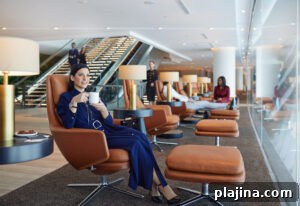
PHOTO: © ETIHAD
The perks begin long before boarding. For example, Etihad Airways’ recently opened terminal at Zayed International Airport in Abu Dhabi gives premium passengers a comfortable, hotel-like lobby where staff handle check-in and immigration formalities while guests relax. From there, passengers move quickly through security to the first-class lounges, which typically include full dining facilities and private areas.
Globally, separate terminals or exclusive check-in zones for premium passengers are becoming more common. At Incheon Airport, Korean Air’s Premium Check-in entrance offers a discreet path to dedicated processing, after which passengers proceed through passport control and security before accessing airside premium lounges. SkyTeam partners also enjoy similar privileges at select airports.
These ground services are only the prelude to the main attraction: the in-flight experience. Airlines continually compete to introduce standout cabin products and enhanced comfort.
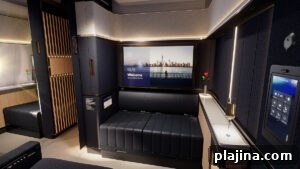
PHOTO: © LUFTHANSA
Lufthansa is investing heavily in a €2.5 billion upgrade program called Allegris, redesigning travel classes across its fleet. Initially introduced on the Airbus A350 and later rolling out to Boeing 787s and eventually the Boeing 777-9, Allegris emphasizes personal choice and privacy. New First Class Plus suites can convert into double beds for couples, and feature wardrobes, wireless charging and large 4K entertainment screens. The updated Business Class offers multiple seating options to suit different needs, from privacy to expanded workspace.
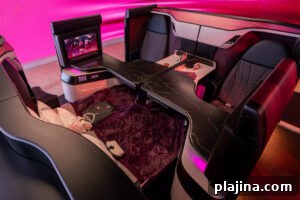
PHOTO: © QATAR AIRWAYS
Qatar Airways is preparing its cabins for the new Boeing 777-9 with the QSuite Next Gen for business class. These suites are highly flexible: middle suites can be separated into individual compartments or combined into a Quad for up to four people traveling together, while movable panels let window suites become companion suites for two. The design includes secure storage and adjustable mood lighting, underlining the emphasis on privacy and adaptability.
Other major carriers ordering the 777-9 are also planning fresh premium-class offerings. Singapore Airlines and Cathay Pacific have signaled new first- and business-class concepts for incoming aircraft, including trademark filings by Cathay Pacific for Aria and Halo suites, though detailed designs are still forthcoming.
Delays to the 777-9 program led many airlines to upgrade existing aircraft in the interim. British Airways, for instance, is refreshing its Airbus A380 cabins—airframes that returned to service after pandemic storage—with a new first-class product planned as an interim enhancement until newer aircraft arrive.
Qantas introduced a new cabin for its Airbus A350-1000s in preparation for Project Sunrise, the airline’s planned ultra-long-haul non-stop services to North America and Europe. Designed for flights that may last up to 20 hours, the cabin emphasizes comfort with subdued colors, thoughtful layouts and materials meant to promote rest.
Air India is also modernizing its fleet with new first- and business-class cabins on incoming Airbus A350s and retrofit plans for Boeing 777s. These upgrades, expected through 2025, form part of a broader transformation aimed at restoring the carrier’s competitive standing internationally.

PHOTO: © AIR FRANCE
Air France has teased a major refresh of its La Première first-class product, expected to offer some of the most spacious suites in the sky with up to five windows and floor-to-ceiling curtains for total privacy. The airline is also improving the ground experience at Paris-Charles de Gaulle with a dedicated premium check-in lobby, separate security lanes and an airside First Class Lounge complemented by private prebookable suites.
Finnair, which does not operate a first class, has focused on an elevated business-class experience. Its recent two-year refurbishment introduced a 1-2-1 cabin layout with middle seats that lower dividers for couples. Instead of conventional reclining seats, Finnair employs a leg-rest mechanism that produces a fully flat bed, and the airline continues to promote small signature touches—such as serving blueberry juice as a welcome drink—that distinguish its service.
Detail and presentation extend to amenity kits, which many premium carriers treat as keepsakes as well as practical items. Oman Air offers branded cotton pajamas, slippers and amenity bags featuring fragrances from Amouage, a luxury perfumery in Muscat. Lufthansa provides first-class pajamas and often collaborates on amenity kits with premium designers and brands, creating collectible editions.

© AMERICAN AIRLINES
American Airlines’ first-class offering varies by route and aircraft. Its Flagship First product appears on long-haul international Boeing 777-300ERs and includes branded pajamas and curated amenity kits featuring items from notable designers and regional brands.
For many premium passengers, the pampering concludes upon arrival with the realities of passport control and baggage claim—although priority baggage handling usually speeds the process. To close the loop on a seamless journey, arrivals lounges are becoming more prevalent.
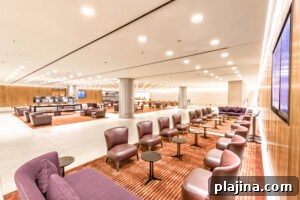
PHOTO: © QATAR AIRWAYS,
One standout example is Qatar Airways’ First and Business Class Arrivals Lounge at Doha’s Hamad International Airport. Located adjacent to the immigration hall, the lounge operates its own immigration and eGate facilities and offers food and beverages, showers, relaxation rooms and business facilities. Premium passengers arriving on Qatar Airways or oneworld partners can use these services to freshen up and speed their onward travel.
Ultimately, the objective of premium services is to reduce the stress of long-haul travel and help passengers arrive refreshed and ready. For some travelers the experience is a luxury; for others, a necessary investment in comfort, productivity and well-being. Whether the upgrade is worth it depends on individual priorities, but for many, the extra comfort and convenience are indeed priceless.