
The benefits of business and leisure travel include discovering new places, meeting different people, enjoying fresh experiences and accomplishing goals away from home.
The downside is that frequent travel can leave even the most resilient traveler tired, off their usual diet and fitness routines, jet-lagged or ill.
Fortunately, travelers who want to stay healthy on the road no longer have to wait until they reach a hotel to access wellness amenities. Airports and airlines increasingly partner with wellness-focused businesses to offer services ranging from spas and gyms to healthier dining options, sleep solutions and on-site yoga instruction, recognizing that many passengers want health-focused experiences throughout their journey.

Airport yoga © PAVEL SHLYKOV – DREAMSTIME.COM
Some of these services respond to growing consumer spending in wellness tourism, which industry groups projected to be a substantial market in recent years. Other offerings—like airport walking paths and in-flight yoga videos—are designed to help passengers remain calm and healthy during what can be the most stressful parts of travel.
It’s increasingly easy to skip airport bars and fast-food outlets in favor of healthier choices. Vegan, vegetarian and plant-based eateries have appeared in terminals, and many airports provide online guides to help passengers locate restaurants that meet special dietary needs.
Across the United States, several airports have marked walking routes with mileage counters to encourage people to skip moving walkways and walk through terminals. For example, marked routes at Las Vegas’s McCarran International offer paths from about half a mile to 1.5 miles, while the Fitness Trail at Phoenix Sky Harbor provides scenic views and an incentive to stay active between flights.

Roam Fitness © ROAM FITNESS
Compact post-security gyms that offer cardio equipment, free weights, loaner gear and showers have started to appear in terminals, and more locations are planned. Travelers can also buy day passes for fitness centers at many airport hotels, enabling workouts without leaving the airport area.
For passengers who want to work while staying active, bike desks and co-working spaces with standing desks and power hubs are available in several airports worldwide. These setups let travelers pedal while charging devices or use ergonomic workstations between flights.
Yoga rooms—often with loaner mats—are now available at several airports, and some airlines include dedicated yoga or meditation spaces in their premium lounges. Themed airline lounges may offer separate areas for stretching and for quiet reflection or meditation.
Airport spas provide services from quick hand, foot and back massages to oxygen treatments and other rejuvenating therapies. Many airports also host therapy-animal visits—dogs and occasionally other animals—to help passengers reduce stress and lift spirits in busy terminals.
For those needing rest or privacy, short-stay rooms and micro-suites are increasingly common. Companies offering private nap or rest suites allow travelers to book cozy spaces for a few hours between flights.
Airlines contribute to in-flight wellness by offering healthier meal options, improved cabin lighting, guided yoga and meditation programming, aromatherapy and partnerships with ground-based wellness brands. Independent reports and airline rankings that evaluate meal quality and nutritional information can help passengers choose better in-flight dining options.
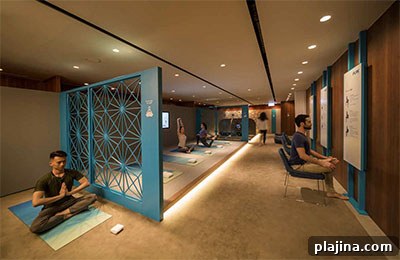
The Sanctuary in Cathay Pacific’s Business Lounge at The Pier at Hong Kong International Airport © CATHAY PACIFIC
Sitting for many hours can be uncomfortable and unhealthy, so some carriers include guided stretches, yoga and meditation in their in-flight entertainment libraries. Other airlines collaborate with wellness experts to develop “self-care” tips and onboard programs intended to minimize inflammation, support circulation and improve passenger comfort.
Scented amenities are another wellness tool. Several airlines have introduced signature fragrances used in lounges, boarding areas and cabins to create a calming and consistent sensory experience for travelers.

Qantas Airways meal of tomato and mushroom puff pastry tart with corn salsa © QANTAS AIRWAYS
As long-haul flights become more common, airlines have developed wellness-focused strategies for extended journeys. Some carriers collaborate with research centers and wellness brands to refine cabin lighting, temperature, meal timing and menus to reduce jet lag and support passenger well-being on ultra-long routes.
Innovations in aircraft design have also been proposed to enhance passenger comfort, including ideas for modular areas in lower decks that could provide additional space for sleep or relaxation on long-haul flights. While such concepts are in development stages, they signal growing attention to traveler health and comfort in aviation planning.