
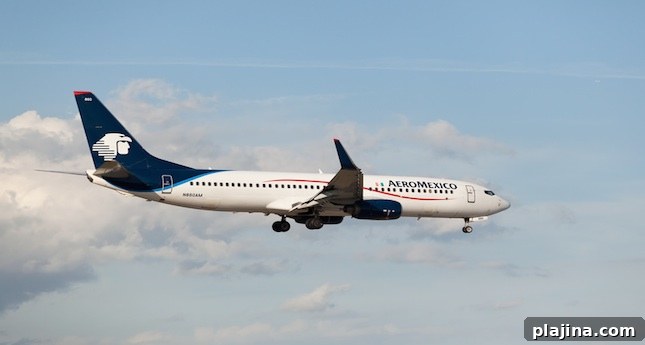
The long-awaited joint venture between Aeromexico and Delta Air Lines has received conditional approval. This agreement opens new possibilities for travel across one of the world’s largest cross-border air markets, while requiring compromises from both carriers. After the U.S.–Mexico air transport agreement was approved in May, Delta and Aeromexico were authorized to proceed with their planned alliance, subject to specific conditions designed to preserve competition and ease airport congestion.
To move forward, the two airlines must surrender a limited number of landing slots at Mexico City International Airport, a critical hub that has struggled with rising congestion in recent years. Relinquishing these slots is intended to help restore balance at the airport and create opportunities for other carriers, while allowing the joint venture to grow within a more sustainable framework.
Under the approved terms, Delta and Aeromexico will coordinate schedules and work together to set reasonable fares on routes between the United States and Mexico. This coordination aims to improve connectivity and offer travelers more convenient connections and consistent service, while regulators monitor the arrangement to ensure it does not harm competition.
The agreement also addresses competition from other major airlines and potential partnerships with regional or low-cost carriers. Regulators emphasized that any further collaborations should not reduce consumer choice or lead to higher fares. As a result, the joint venture must operate in a way that maintains a competitive environment across key U.S.–Mexico routes.
For travelers, the alliance promises improved flight options and streamlined connections between the two countries. Coordinated schedules can reduce layover times and provide better-aligned timetables for both business and leisure travelers. At the same time, the requirement to give up Mexico City slots and the oversight on pricing mean the benefits will come alongside safeguards intended to protect passengers and competing airlines.
In sum, the conditional approval of the Aeromexico–Delta joint venture marks a significant step in U.S.–Mexico aviation ties. It balances the potential for enhanced service and greater connectivity against the need to preserve competition and manage airport capacity. As the carriers implement the agreement, travelers and industry observers will be watching how the venture affects route networks, pricing, and the overall travel experience between the two nations.