
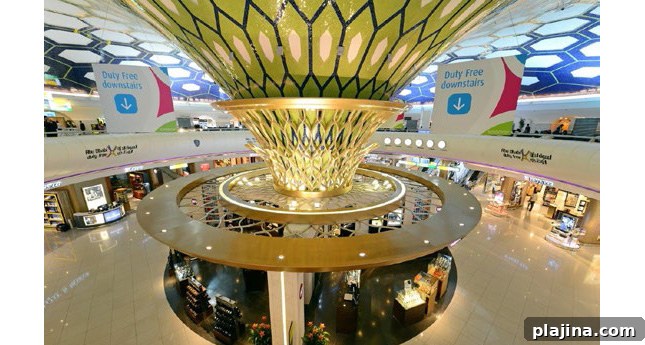
Abu Dhabi Airports marks its 10th anniversary this year. Established in 2006 to operate Abu Dhabi International Airport and Al Ain International Airport, the group later added Al Bateen Executive Airport, Sir Bani Yas Airport and Delma Island Airport to its portfolio. While each facility plays a role in the emirate’s aviation network, Abu Dhabi International Airport remains the flagship, driving substantial passenger growth and infrastructure investment.
In 2015 the airport handled more than 23 million passengers, reflecting a 17.2 percent year-over-year increase and ranking it among the fastest-growing airports worldwide. Traffic between the United States and Abu Dhabi surged by 39.4 percent in the same period, a jump likely supported by expanded services from Etihad Airways. U.S. travelers benefit from a rare on-site advantage: an award-winning U.S. Customs and Border Protection preclearance facility. This one-of-a-kind facility for the Middle East, Asia and Africa enables passengers bound for the United States to complete immigration, customs and security procedures in Abu Dhabi, eliminating long waits upon arrival in the U.S. The facility adheres to full U.S. security standards and marked its one-millionth passenger in March.
An artist’s rendering of the Midfield Terminal Building © ABU DHABI AIRPORTS
The airport’s headline project is the Midfield Terminal Building, under development since 2011 and slated for completion in December 2017. Designed to accommodate sustained passenger growth, the terminal will serve as the nation’s primary gateway and the main hub for Etihad Airways. When finished, the Midfield Terminal will be visible from nearly a mile away and deliver capacity for 30 million passengers annually and up to 8,500 passengers per hour.
Key features include 65 aircraft gates, more than 322,000 square feet of dedicated airline lounge space and a comparable amount of retail and dining area. The project also paves the way for modernized airport operations: upgraded technology such as real-time baggage tracking, multi-airline kiosks and enhanced check-in zones will be phased in across the airport to improve passenger flow and operational efficiency.
Sustainability has been a central consideration throughout the Midfield Terminal project. Abu Dhabi International Airport became the first in the Asia Pacific region to earn Airport Carbon Accreditation in 2011, and the new terminal has already received a 3 Pearl Design Rating in recognition of its green-building credentials. During construction, the airport prioritizes recycled and locally sourced materials to reduce fossil fuel consumption and diverts roughly 75 percent of construction waste from landfills. Once operational, the terminal is expected to lower energy consumption through efficient lighting systems, cut water use by approximately 45 percent and recycle about 45 percent of on-site waste.
Together, these developments underline Abu Dhabi Airports’ commitment to growth, passenger experience and environmental responsibility as the emirate prepares to meet rising demand and strengthen its position as an international aviation hub.