
With its prime position at the head of Dublin Bay on the Irish Sea, framed by the Wicklow Mountains and bisected by the River Liffey, Dublin’s appeal to visitors is clear. In 2018 more than 6.3 million people visited the city, a remarkable number given Ireland’s population of just over 4.9 million and the Dublin metropolitan area’s roughly 1.3 million residents.
Dublin’s role as a business hub has deep roots. Since the 1950s, when Ireland actively pursued “industrialisation by invitation,” the country has built a welcoming environment for foreign investment. As a result, many of the world’s leading multinationals across technology, finance, pharmaceuticals and biotech have established major operations here, including Google, Microsoft, Johnson & Johnson, Pfizer, JP Morgan and Deloitte. IDA Ireland, the national inward investment agency, notes that a third of multinationals present in the country have been operating here for more than two decades—an indication of Ireland’s enduring business attractiveness.
Andrew Vogelaar, head of the growth markets division at IDA Ireland, reports that around 1,300 overseas companies operate in Ireland and roughly half of those are based in Dublin. Multinational corporations account for a large share of national exports, driving approximately two-thirds of Ireland’s annual export activity—about €140 billion in goods and €160 billion in services.
“We’re a small, open economy that’s very much export-driven,” said Vogelaar.
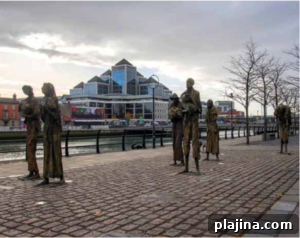
PHOTO: © NICOLA PULHAM – DREAMSTIME.COM
Doing business in Ireland is straightforward. The World Bank’s Doing Business 2020 report places Ireland among the top 25 economies for ease of doing business, and Dublin ranked second in the “European Cities of the Future” category in fDi Magazine’s 2018–2019 rankings. The IMD World Competitiveness Center lists Ireland as the EU’s second-most competitive economy and seventh in the world.
Talent is a strong competitive advantage. Ireland’s National Skills Strategy and Action Plan for Education aims to position Irish education and training among the best in Europe by 2026. Already, 56.3 percent of 30- to 34-year-olds have a third-level qualification, well above the EU average of 40.7 percent. A European Commission study has identified Irish graduates as among the most employable globally.
That skilled workforce is not solely local: Dublin attracts international talent, and the city’s labor market is consistently ranked highly for productivity, availability of skilled workers and financial expertise. “Highly skilled workers are attracted to Dublin for its many career opportunities, but especially for the great lifestyle that this compact, friendly city offers,” notes the Dublin City Council. Vogelaar also highlights Dublin’s increasingly multicultural workforce—Facebook, for example, has hired employees from over 100 nationalities in its Irish operation.
Ireland is investing in long-term infrastructure through its National Development Plan (2018–2027), which allocates €116 billion to public projects focused on priorities such as enterprise, skills and innovation, housing and sustainable urban development, national roads, public transport and climate action. At the end of Q1 2019, more than 5 million square feet of office space was under construction in Dublin, with nearly 3.8 million square feet in the city center.
Dublin is also moving toward a smarter urban future. County authorities have partnered with technology providers, researchers and residents to address city challenges and improve public life. In 2018, Dublin City Council and Trinity College’s CONNECT research center launched Smart Docklands to strengthen ties between professionals, startups and students.
On Brexit, public sentiment in Ireland remains strongly pro-European. IDA Ireland reports high levels of public support for EU membership and awareness of its benefits. Vogelaar acknowledges Brexit-related uncertainty around business confidence and potential supply-chain disruption, but reaffirmed Ireland’s commitment to the EU.
Overall, Dublin’s outlook is positive and the city continues to welcome international businesses. As the Irish phrase goes, céad míle fáilte—a hundred thousand welcomes.
Checking in with Dr. Roisin Lyons and Furkan Karayal
Dr. Roisin Lyons, assistant professor of entrepreneurship and innovation at Dublin City University Business School, and Furkan Karayal, founder and CEO of Diverse In, helped organize StartupWeek Dublin to highlight the city’s entrepreneurial and innovative strengths.
What makes Dublin conducive to startups and attractive to entrepreneurs?
Roisin Lyons: Dublin benefits from a concentration of highly educated talent fed by five universities and multiple institutes, which supports collaboration and innovation. The local community is welcoming and engaged, offering mentorship, information sessions and year-round support that peak during events like StartupWeek. In addition, a strong corporate infrastructure, numerous co-working spaces and civic support from organizations like Dublin City Council create a robust ecosystem for startups.
Which industries are attracted to doing business in Dublin and what’s emerging?
Furkan Karayal: Technology remains the leading sector, buoyed by the existing talent pool and the presence of major tech firms’ European headquarters. Medtech is among the fastest-growing industries in Ireland, and the Brexit context has encouraged financial services and other multinational firms to consider Dublin as a strategic base to retain access to the EU market.
Describe the women entrepreneur scene in Dublin. What types of companies are they starting and what support exists?
Furkan Karayal: Many female entrepreneurs are active in social enterprises, professional services, communications and creative industries. They access support through state grants, accelerator programs and mentorship initiatives. While progress continues, public visibility of successful women entrepreneurs is growing and society is increasingly supportive of their leadership.
Diversions
Dublin offers abundant cultural and recreational options. Walking tours—ranging from general city highlights to themed history, literary or music tours—are an excellent way to get to know the city. Trinity College houses the Book of Kells, an exquisitely preserved manuscript from the ninth century, and the adjacent Long Room of the Trinity College Library holds some of the nation’s oldest volumes. Marsh’s Library, opened in 1707, preserves more than 25,000 books from the 16th to 18th centuries.
The city’s historic churches and cathedrals—St. Patrick’s and Christ Church—are architectural highlights, with St. Patrick’s standing for about 800 years and Christ Church approaching a millennium. St. Michan’s Church, founded in 1095, is the city’s oldest, and it is known for its connection to Bram Stoker.
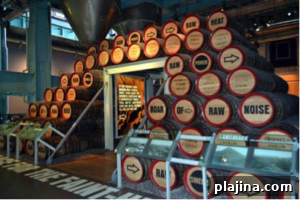
PHOTO: © STEVEN CUKROV – DREAMSTIME.COM
For a quintessential Dublin experience visit the Guinness Storehouse at St. James’ Gate, where visitors learn about the beer’s history and finish with a pint at the Gravity Bar, offering panoramic views of the city. Dublin’s pubs also provide lively atmospheres and excellent pours.
This is only a snapshot of what Dublin and its surrounding areas offer—ample history, day-trip opportunities and reasons to plan a return visit.
Coming and Going
U.S. citizens should travel with a passport valid for the duration of their stay; however, it is recommended that passports be valid for six months beyond the arrival date. No visa is required for stays up to 90 days.
Official Language
English and Irish (Gaeilge)
Lodging
CARTON HOUSE
About 20 minutes outside the city center, this historic 1739 mansion sits on 1,100 acres of private parkland and offers two golf courses, a spa, professional training pitches and other amenities.
Carton Demesne, Maynooth, Co. Kildare
$$$$
THE CLARENCE HOTEL
A boutique rock ’n’ roll hotel owned by members of U2, offering 50 rooms in a central Temple Bar location—ideal for both business and leisure.
6-8 Wellington Quay, Temple Bar
$$$$
THE SHELBOURNE, AUTOGRAPH COLLECTION
A five-star luxury hotel that has been central to Dublin’s social and cultural life for nearly two centuries.
27 St. Stephen’s Green
$$$
Just the Facts
Time zone: GMT
Phone code: Country code: 353, City code: 1
Currency: Euro
Key industries: Over the next decade, sectors expected to see the most growth in Dublin include technology, health and social care, professional services, arts and recreation, and logistics and storage.
Dining
FIRE RESTAURANT AND LOUNGE
Known for its high-quality steaks and modern Irish cuisine made from award-winning meats and seasonal produce.
The Mansion House, Dawson Street
$$$$
THE GREENHOUSE
Led by chef Mickael Viljanen, this Michelin two-star restaurant focuses on refined, ingredient-driven dining for memorable culinary experiences.
Joshua House, 21 Dawson St.
$$$$$
SOLE SEAFOOD & GRILL
A refined seafood restaurant serving some of Ireland’s freshest seafood in an elegant setting, notable for its seafood tower.
18-19 S. William St.
$$$$