
More than a century ago, ocean liners such as the original Queen Mary and the ill-fated Titanic included spaces for passengers to exercise. Those early fitness rooms, often windowless and lacking any porthole views, were outfitted with iron weights and the wooden exercise machines of the era. Travelers in full Edwardian dress—suits, ties, dresses and hats—used rowing machines and static bicycles as part of their onboard routine.
For much of the 20th century, cruise ship fitness centers remained modest spaces dominated by weight racks and basic cardio equipment. In the 21st century, however, as more passengers prioritize health and wellness while traveling, cruise lines have upgraded their facilities to match the appeal and functionality of upscale land-based gyms and boutique fitness studios.
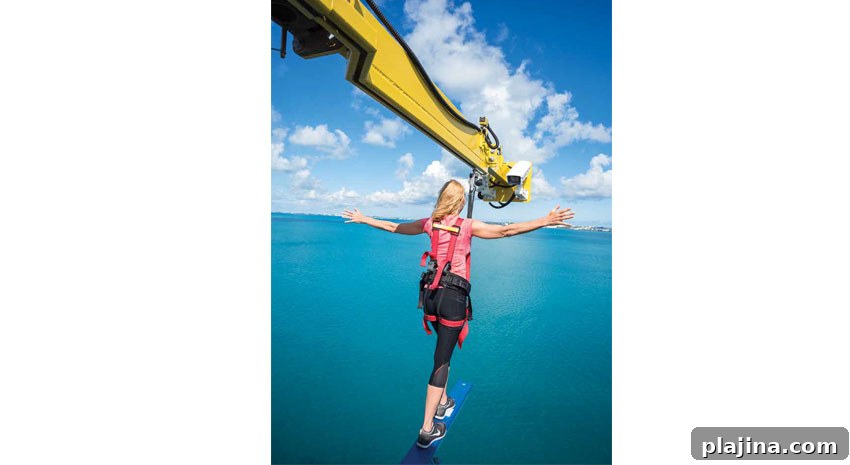
On today’s largest cruise ships, passengers find vastly expanded options and more room to move. Norwegian Cruise Line’s 2,934-passenger Norwegian Escape relocated many activity features to the top deck, where guests can tackle the largest rope course at sea with more than three stories of challenges, ride “sky rails” that act like short zip lines, and test their balance on “the plank,” a narrow beam extending over the ship’s side. Norwegian’s bigger ships also include rock-climbing walls and 24-hour gyms stocked with modern cardio and strength equipment, along with functional training areas and punching bags.
Royal Caribbean has similarly pushed the envelope with SeaPlex, a versatile indoor sports complex featured on its 4,180-passenger ships such as Anthem of the Seas, Ovation of the Seas and Quantum of the Seas. SeaPlex offers a full-size basketball court, a roller-skating rink, bumper cars and even circus-school programming, creating a multiuse space for a wide range of active pursuits.
Smaller and mid-sized premium lines have upgraded their own offerings as well. Crystal Cruises has introduced wraparound promenades that create a “walk on water” experience and support weighted vest walking workouts. Viking Ocean Cruises includes dedicated running tracks that are shaded, wide and engineered so a few laps equal a mile. Oceania Cruises provides more than two dozen instructor-led fitness classes, from sunrise yoga and Pilates to guided walking tours and Kinesis wall training. Windstar Cruises built a glass-enclosed top-deck fitness center with over 20 workout stations and a fluid rower that uses water for resistance.
Even boutique and river cruise operators are expanding wellness options by staging specialized fitness voyages. Amadeus River Cruises’ 168-passenger MS Amadeus Silver III offers itineraries with gym visits ashore and onboard exercise classes led by guest instructors. Small-ship adventure lines like UnCruise Adventures schedule active excursions with a focus on fitness: its 84-passenger Safari Endeavour has sailed itineraries in which onboard and on-beach strength training and yoga are overseen by dedicated fitness teams.
As traveler interest in health and experiential travel grows, cruise lines continue to adapt, offering a wider variety of spaces and programming—from top-deck obstacle courses and indoor sports complexes to shaded running tracks and specialty fitness cruises—so passengers can maintain fitness routines, try new activities, and enjoy energizing experiences at sea.