
By the time you finish reading this article, a new building may already be opening in Singapore or the concept for a new attraction may be underway. With extensive construction and land reclamation—Singapore has expanded its land area by more than 25 percent since independence in 1965—the city-state often feels as if its largest industry is itself.
Tourism remains one of Singapore’s most important economic sectors. The government and private investors have poured resources into integrated resorts, luxury hotels, world-class shopping and fine dining to draw visitors from across Asia and beyond. These investments position Singapore as both a regional hub and a global destination.
Visitor arrivals reflected that success: by November 2010 Singapore recorded a 16 percent year-over-year increase, approaching one million tourists in a single month and marking a 12th consecutive month of record arrivals. Most visitors come from neighboring countries such as Indonesia, China and Malaysia, while Europe and North America also contribute significant numbers.
To keep attracting travelers, Singapore continually reinvents itself. In 2010 the famed Orchard Road shopping district saw its first new construction in about 15 years with three new buildings opening, reinforcing the area’s reputation as a premier retail destination.
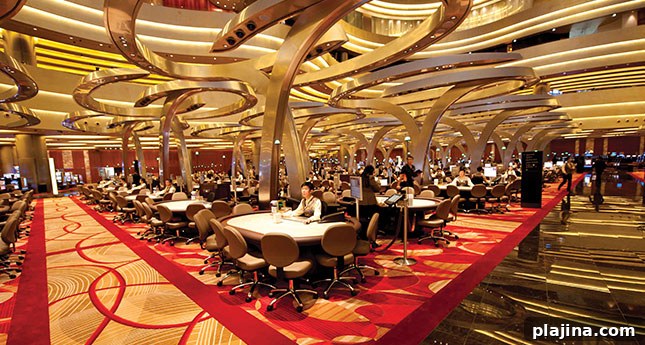
One of the most striking recent additions is Marina Bay Sands, a gravity-defying complex developed by Las Vegas Sands Corporation. Its Sands SkyPark crowns three towers at 55 stories with a landscaped deck, an infinity pool and dining and nightlife options. Designed as a destination in its own right, Marina Bay Sands houses a luxury hotel, 1.3 million square feet of convention and exhibition space, two theaters, 800,000 square feet of retail space and more than 50 dining venues. The resort’s casino is large and modern, though locals are restricted from entry without paying a $100 levy—a government measure intended to reduce gambling-related social problems.
Also launched in 2010, Resorts World Sentosa on Sentosa Island is a sprawling integrated resort developed at an estimated cost of $7 billion. It comprises six hotels, the world’s largest oceanarium, a high-end spa and extensive meeting facilities capable of hosting up to 12,000 people. Beyond attracting tourists, the resort is a major economic driver: Resorts World Sentosa is expected to create tens of thousands of jobs directly and indirectly.
Singapore’s efficiency and infrastructure also make it a comfortable place to visit. With around 100 MRT subway stations, public transit is almost always within walking distance. Buses arrive frequently, and an electronic road-pricing system discourages car ownership and manages traffic effectively. Streets are clean, residents are generally friendly, and despite ongoing construction the city remains highly accessible.
Given the pace of development, each visit to Singapore is likely to offer new experiences and attractions.
Diversions
Locals often greet one another less formally than in other places; a common phrase is “Have you malan?” meaning “Have you eaten?” Food and shopping are central to Singaporean life, and visitors are encouraged to join in. For authentic local flavors, stop by Maxwell Road Hawker Centre (Maxwell and South Bridge roads), where more than 100 stalls serve a wide range of dishes, including the renowned Tian Tian Chicken Rice. For a traditional breakfast, try kaya toast and soft-boiled eggs at Ya Kun, with outlets across the city.
Orchard Road is Singapore’s premier shopping boulevard, lined with modern malls, luxury boutiques and electronics retailers. Clarke Quay offers riverside promenades, vibrant nightlife and scenic views of the skyline. For late-night or round-the-clock shopping, the 24-hour Mustafa Centre (145 Syed Alwi Road) remains a favorite for bargain hunters.
Singapore’s neighborhoods reflect its multicultural heritage and are excellent for exploring local culture. Joo Chiat preserves Peranakan shophouses and historic charm. Haji Lane and Arab Street appeal to independent fashion and design shoppers. Little India and Chinatown highlight the city’s ethnic communities and provide plentiful souvenir and specialty shopping. Dempsey Hill, once British army barracks, now hosts unique shops, cafés and dining options.
Museums and heritage centers across Singapore provide guided tours included with admission. The Asian Civilisations Museum explores the cultural influences that shaped modern Singapore, while the Peranakan Museum offers insights into Peranakan traditions and history. More than 20 museums and heritage venues present a broad picture of the city’s past and present.
Just The Facts
Time Zone: GMT +8
Phone Code: 65
Currency: Singapore dollar
Entry/Exit Requirements: U.S. citizens need a passport with at least six months validity to enter Singapore. Visas are required for stays longer than 90 days.
Official Languages: English, Malay, Mandarin Chinese and Tamil are recognized as official languages.
Key Industries: Manufacturing (electronics, biomedical products, chemicals, engine parts), oil refining and tourism
Info To Go
From Singapore Changi Airport (SIN), the city center is about a 30-minute trip. A taxi typically costs around $25. The MRT serves Terminals 2 and 3, and public bus No. 36 stops at Terminals 1, 2 and 3. For official visitor information consult Singapore’s tourism resources.
Checking in with Giovanni Viterale
General Manager of The Fullerton Heritage
The Fullerton Heritage is a master plan to convert the Marina Bay waterfront into an entertainment destination. How far along is the project?
The Fullerton Heritage is a central element of the Marina Bay waterfront and a popular precinct for both travelers and residents. It comprises The Fullerton Hotel Singapore, One Fullerton, The Fullerton Waterboat House, Clifford Pier, Customs House and The Fullerton Bay Hotel Singapore. The precinct is nearly complete, with a floating entertainment pod being built at Clifford Square as a final feature. An outdoor art installation including Jeppe Hein’s socially modified benches was scheduled for completion in 2011.
What can guests expect at The Fullerton Bay Hotel?
The Fullerton Bay Hotel Singapore is an intimate 100-room property built on the water and nestled between two heritage buildings, Clifford Pier and Customs House. Opened in July 2010, the hotel’s design reflects the area’s historic character and marks a significant milestone in the Fullerton Heritage development.
The Fullerton Hotel is a Singapore landmark. How do the two hotels differ?
The Fullerton Hotel and The Fullerton Bay Hotel complement each other. The Fullerton Hotel emphasizes the area’s heritage and its historic significance, while The Fullerton Bay Hotel blends heritage elements with contemporary architecture and design. In 2010 the Fullerton Heritage Gallery opened at The Fullerton Hotel to showcase the precinct’s history and future through photographs, maps and philatelic artifacts dating back to 1932. Notable items include two red pillar post boxes from 1873 and the foundation stone laid by Singapore’s first president, Yusof bin Ishak.
Share a little about the history of the area.
Clifford Pier was the arrival point for many early immigrants before becoming a ferry terminal; it was conserved in 2006 and relaunched in 2008. Customs House served as the former customs police headquarters and was among Singapore’s earliest modern public buildings; it is now a venue for dining and events. The Fullerton Bay Hotel’s design seeks to evoke the historic character of the waterfront.