
It rose from the desert: a Bedouin settlement that became the capital of the United Arab Emirates and the largest of its seven monarchies. Abu Dhabi is now a thriving modern city with sculpted skyscrapers, a major hub for international business, the home base of Etihad Airways, and a growing cultural center. Its dramatic transformation was made possible by two key forces: the discovery of oil beneath the sand and a leader who used that wealth wisely.
The Bani Yas tribe first settled the island where Abu Dhabi city now stands on the Arabian Gulf in the mid-1700s. The tribe’s ruling family, Al Nahyan, established leadership there. For generations, life revolved around camel herding, fishing and pearling. When pearling declined and leadership weakened in the mid-1900s, the emirate’s fortunes faltered.
That changed after oil was discovered in 1958 and exports began within a few years. In 1966, Sheikh Zayed bin Sultan Al Nahyan, the youngest of his predecessor’s sons, assumed leadership and guided the emirate into a new era.
Sheikh Zayed united the seven sheikhdoms on Dec. 2, 1971, to create the United Arab Emirates and served as its first president until his death in 2004. He directed oil revenues toward raising citizens’ living standards while actively diversifying Abu Dhabi’s economy into finance, culture, tourism and other sectors. His son, Khalifa bin Zayed Al Nahyan, continued that vision, maintaining steady growth and development. Today the emirate’s population is about 2.1 million, and nearly 80 percent are expatriates—many skilled professionals drawn by a tolerant, low-crime, tax-free environment.
In March of the current year, Abu Dhabi opened the Abu Dhabi Convention Bureau to attract international business events and meetings. The bureau offers support to event planners, corporations and associations, reflecting the emirate’s ambition to become a leading global destination for conferences and conventions.
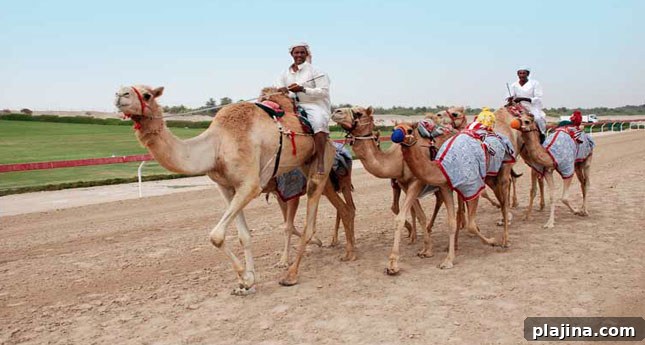
Abu Dhabi already has extensive hotel capacity, world-class recreational facilities including beaches and golf courses, and an active calendar of major sporting and cultural events—from Formula 1 racing to visiting ballet and opera companies. Traditional activities such as camel racing and beauty contests remain part of the local culture, offering visitors a distinctive experience.
The emirate of Abu Dhabi covers more than 80 percent of the UAE. It borders Oman and Saudi Arabia, includes roughly 250 miles of coastline on the Arabian Gulf, and contains around 200 islands and long stretches of beaches. Much of the territory is desert and sparsely inhabited.
The city of Abu Dhabi sits on a T-shaped island connected to the mainland by three bridges. It features striking contemporary architecture, well-kept parks and gardens, a five-mile waterfront along the Corniche, and expanding suburbs on the mainland. It is a city that blends ambitious modern planning with an orientation toward the future.
CHECKING IN WITH TALAL AL KAISSI
Representative, U.A.E. Embassy Trade & Commercial Office, Washington, D.C.
WHAT KINDS OF INTERNATIONAL BUSINESSES ARE CURRENTLY IN ABU DHABI?
Abu Dhabi’s development follows a deliberate economic diversification strategy focused on cultural tourism, aviation, manufacturing, media, health care, petrochemicals, financial services and renewable energy. International businesses operating in these sectors are actively encouraged and welcomed.
WHAT DOES ABU DHABI OFFER THE AMERICAN INVESTOR?
Opportunities vary by sector and location. Free zones and industrial clusters offer incentives, reduced trade barriers and streamlined regulations. State-owned entities such as Mubadala have invested in advanced technologies in aviation and microchip manufacturing, and education institutions like the Masdar Institute and overseas university branches offer training and postgraduate programs. Tawazun supports defense-sector development and programs that enable co-investment between U.A.E. and international companies.
HOW HAS ABU DHABI BEEN AFFECTED BY THE RECESSION IN THE WESTERN WORLD?
Like other economies, Abu Dhabi experienced effects such as slowed real estate values and project delays, but these impacts were generally temporary.
WHAT IS ABU DHABI’S OUTLOOK FOR THE NEXT FEW YEARS?
Outlook remains positive. Abu Dhabi’s GDP is solid, and efforts continue to increase non-oil exports and build manufacturing capabilities. The long-term view anticipates sustained economic growth.
Sheikh Zayed Grand Mosque © Slava296 | Dreamstime.com
Things to Do in Abu Dhabi
Among the emirate’s modern landmarks, the Sheikh Zayed Grand Mosque stands out. Gleaming and pure white, it spans the length of three football fields, has 82 domes, 1,000 columns and four minarets, and is the UAE’s largest mosque. Construction began in 1996 and was completed in 2005, using materials from more than 20 countries. The main prayer hall accommodates 10,000 worshippers on the world’s largest single-piece carpet, with room for 22,000 more in the courtyard. Sheikh Zayed requested the mosque be positioned near the entrance to the city as a visible introduction to Islam; he is buried there.
Abu Dhabi is also building a major cultural district on Saadiyat Island where several high-profile museums are planned. Louvre Abu Dhabi, designed by Jean Nouvel, is intended as a museum island under a vast dome. The Zayed National Museum, inspired by falconry and designed by Foster + Partners, will honor the emirate’s founder. Frank Gehry’s design for the Guggenheim Abu Dhabi aims to create one of the largest Guggenheim museums in the world, and a performing arts center by Zaha Hadid will expand the cultural offerings. Scaled models and exhibits about these projects are on display at Manarat Al Saadiyat arts center.
The Abu Dhabi Falcon Hospital, founded in 1999, has become the world’s foremost falcon medical institution. It treats thousands of birds annually and highlights the cultural importance of falconry in the UAE. Visitors see traditional garb and falcons treated with great care—often likened to family members—and can learn about unique practices such as falcon passports and in-cabin travel policies. Tours commonly include a close encounter with a falcon on a gloved hand.
For those with more time, Sir Bani Yas Island offers wildlife and outdoor activities. About 155 miles from the city, the island—home to a wildlife sanctuary and the Desert Islands Resort & Spa—invites guests to kayak, dive, mountain bike, hike, practice archery and ride horses, along with guided game drives through protected areas.
Emirates Palace © Daniël Leppens | Dreamstime.com
In the city, the Emirates Palace hotel exemplifies luxury hospitality. Opened in 2005 and managed by Kempinski, it serves as a venue for visiting dignitaries and features opulent public spaces with marble floors and lofty domes. As in other Abu Dhabi hotels, restaurants and licensed bars are popular social hubs.
Abu Dhabi: Just the Facts
Time Zone: GMT +4
Phone Code: Country code: 971, City code: 2
Currency: U.A.E. dirham
Entry/Exit Requirements: A passport valid for at least six months is required. U.S. travelers can obtain a free entry visa on arrival for short visits; stays longer than 30 days require a pre-arranged visa.
Official Language: Arabic; English is widely spoken and commonly appears on signage.
Key Industries: Oil and gas, financial services, construction
Abu Dhabi Info to Go
Flights arrive at Abu Dhabi International Airport (AUH). The airport serves many international carriers, with Etihad Airways as the national carrier. The airport is about 23 miles from downtown Abu Dhabi. Public bus connections are the most economical option; taxis and limousines provide faster, more comfortable transfers.
Where to Stay in Abu Dhabi
Desert Islands Resort & Spa by Anantara Set on an island in the Arabian Gulf, the resort offers guestrooms with garden or sea views and a range of outdoor activities. Al Ruwais, Sir Bani Yas Island — luxury
Jumeirah at Etihad Towers A modern landmark with 63 stories, multiple dining venues and sleek guestrooms. West Corniche, Abu Dhabi City — upscale
The St. Regis Saadiyat Island Resort A beachfront resort on Saadiyat Island with terraces and easy access to downtown and the airport — luxury
Restaurants in Abu Dhabi
Amwaj Specializes in Arabic small plates such as fattoush and cheese fatayer, alongside larger grilled dishes. Desert Islands Resort, Sir Bani Yas Island — moderate
Li Beirut Known for its refined Levantine cuisine and specialty dishes including seafood and lamb classics. Jumeirah at Etihad Towers, West Corniche — fine dining
Mezlai Showcases traditional Emirati cuisine, with local specialties and distinctive items like a camel-milk cappuccino. Emirates Palace Hotel, West Corniche — high-end