
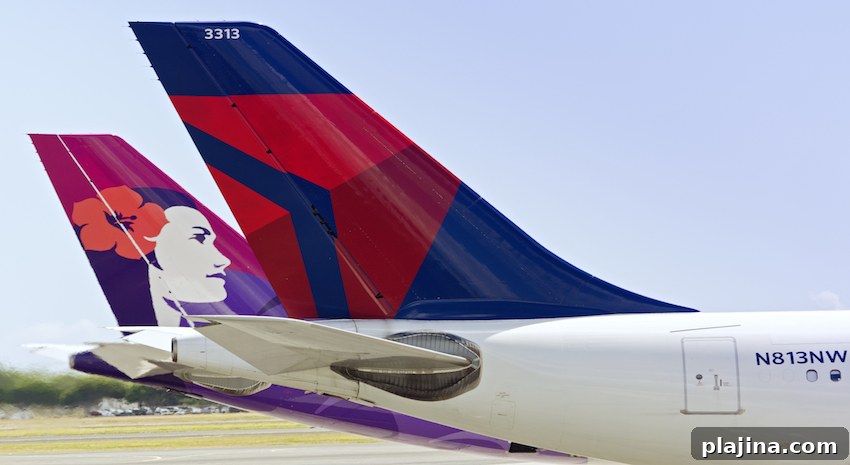
Hawaiian Airlines announced the addition of three new aircraft to its fleet: the purchase of one Airbus A330-200 and the lease of two A321neos. These additions will enable the airline to accelerate retirement of its Boeing 767 fleet, targeting complete phase-out by the end of 2018, while supporting measured, sustainable growth on both short- and long-haul routes.
Earlier plans called for introducing 16 new A321neo aircraft beginning in 2017. Letters of intent recently signed for deliveries in early 2018 increase that commitment, bringing Hawaiian’s total A321neo count to 18 by 2020. This mix of purchases and leases provides flexibility to match capacity with demand across the network.
“The addition of these three aircraft provides for low- to mid-single-digit capacity growth over the remainder of the decade,” said Peter Ingram, executive vice president and chief commercial officer of Hawaiian Airlines. “At the same time, the accelerated retirement of the Boeing 767s from our fleet will simplify our operation and allow us to be more efficient.”
The single-aisle A321neo will complement Hawaiian’s existing fleet of Airbus A330-200 wide-body aircraft, which serve long-haul routes between Hawai‘i and the U.S. West Coast. By the fourth quarter of 2017, the total number of A330-200s in Hawaiian’s fleet will reach 24. For inter-island services, Hawaiian continues to operate a fleet that includes Boeing 717-200 narrow-body aircraft and ATR-42 turboprops, which are well-suited to shorter routes between islands.
By modernizing its fleet with more fuel-efficient A321neos and A330-200s, Hawaiian aims to improve operating efficiency, reduce per-seat fuel consumption, and enhance the passenger experience. Replacing older wide-body 767s with newer models helps the airline lower maintenance complexity and streamline pilot and crew training requirements by reducing the number of aircraft types in service.
These fleet moves reflect a strategy focused on right-sizing capacity, improving unit economics, and aligning aircraft types to route profiles. Single-aisle A321neos provide efficient, lower-capacity options on thinner long-haul and dense regional routes, while the A330-200s continue to serve higher-capacity long-haul links. Together, the changes support Hawaiian’s network planning and position the airline for steady, sustainable growth in the years ahead.