
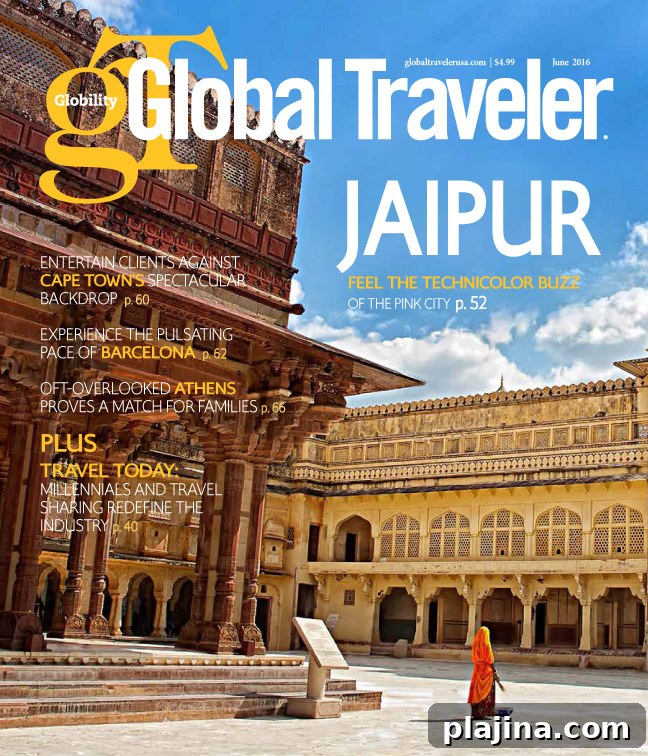
DECORATED GATEWAY OF AMBER FORT, JAIPUR, INDIA © ELENATUR | DREAMSTIME.COM
The Amber Fort in Jaipur stands as one of India’s most striking examples of hilltop palace architecture, blending Rajput and Mughal influences into a cohesive whole. Perched above Maota Lake, the complex greets visitors with a richly ornamented gateway and a succession of courtyards, halls and private chambers that showcase exquisite stonework, frescoes and mirror mosaics.
Approaching the fort, you immediately notice the scale and craftsmanship of the entrance structures. Massive gates and carved walls set the tone for the artistry within. From the main ramparts, panoramic views of Jaipur spread out below, making the fort not only an architectural treasure but also a strategic vantage point that once served defensive purposes.
Inside, the fort’s layout guides visitors through a progression of spaces that alternate between public and private. The Diwan-e-Aam, or Hall of Public Audience, features an open, columned façade where rulers once addressed the populace. Nearby, the Diwan-e-Khas, or Hall of Private Audience, is more ornate, reserved for meetings with dignitaries and decorated with refined detailing that reflects the wealth and taste of the ruling family.
One of the most famous rooms is the Sheesh Mahal, or Mirror Palace, whose walls and ceilings are inlaid with thousands of tiny mirrors and colored glass pieces. When candlelight or sunlight touches these surfaces, the room seems to glitter, creating an intimate and almost otherworldly ambiance. Other chambers contain frescoed walls and intricate inlay work, with themes ranging from floral patterns to scenes of courtly life.
The fort’s gardens and courtyards provide quiet pockets of shade and greenery amid the stone architecture. Traditional water channels and pools not only enhance the aesthetic but historically helped cool the complex during hot months. These tranquil areas offer a contrast to the more formal halls and galleries, inviting a slower pace of exploration.
Artisans responsible for Amber Fort’s decorative schemes employed a variety of techniques: stone carving, painted murals, inlay with semi-precious materials, and mirror work. Many motifs are symbolic, drawn from local flora and royal iconography, while others celebrate everyday scenes and devotional subjects. The result is a layered visual narrative that speaks to both the public role and private lives of Jaipur’s former rulers.
Restoration efforts over the years have aimed to preserve original details while stabilizing the structure for continued visitation. Conservation projects focus on repairing frescoes, consolidating weakened stone, and maintaining waterworks that are integral to the site’s historic character. These efforts help ensure that the fort remains accessible and comprehensible to contemporary visitors while respecting its material authenticity.
Visiting Amber Fort is not only an encounter with impressive architecture but also a chance to experience Jaipur’s broader historical and cultural context. The fort links to the surrounding city through roads, gardens and sightlines that have shaped urban life for centuries. For many travelers, a visit provides meaningful insight into regional craftsmanship, courtly traditions and the landscape that influenced the fort’s design.
Whether you are drawn to monumental gateways, delicate interior ornamentation, or sweeping landscape views, Amber Fort offers a layered experience. Its combination of practical design and decorative richness makes it an essential stop for anyone exploring Jaipur and northern India’s architectural heritage.