
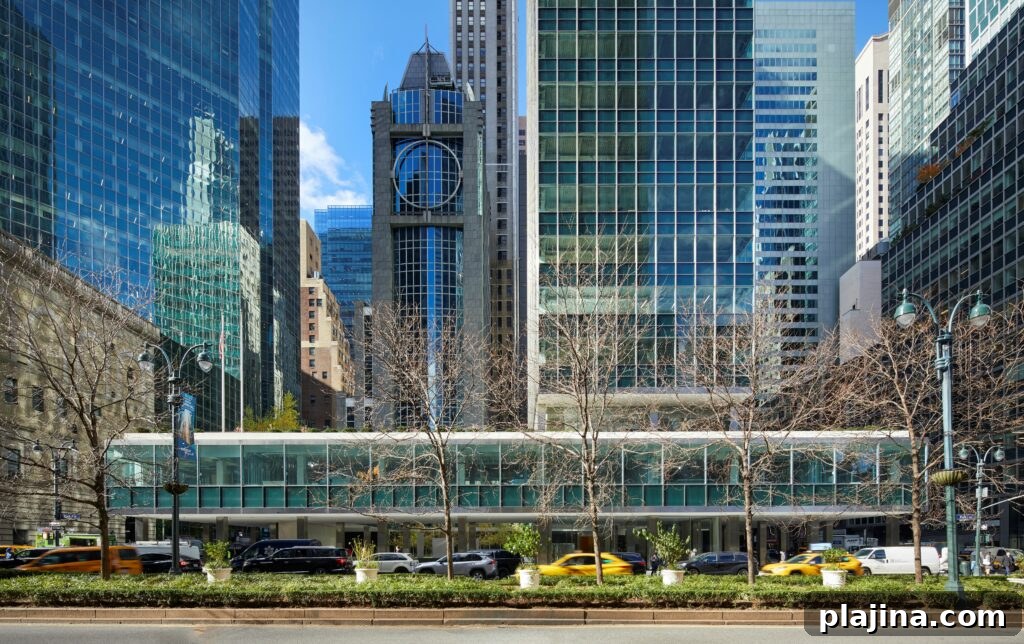
Constructed between 1950 and 1952 on New York City’s Park Avenue, the 22-story Lever House was designed by Gordon Bunshaft and Natalie de Blois of Skidmore, Owings & Merrill in the International Style, a hallmark of mid-20th-century modernism. Originally built as the headquarters for Lever Brothers, a Unilever subsidiary, the building introduced a sleek, glass-and-steel aesthetic that contrasted sharply with the masonry and brick facades that dominated the city skyline at the time.
Lever House’s blue-green glass and stainless-steel façade reflected neighboring structures by day and enlivened the avenue at night with warmly lit offices visible to pedestrians below. Its Park Avenue location added prestige, and the building quickly became a model for architects and developers in other American cities. Six years after Lever House opened, Mies van der Rohe’s Seagram Building rose across the street, sparking public debate over which structure best represented modern elegance.
© Lucas Blair Simpson – SOM
In 1982 the New York City Landmarks Preservation Commission designated Lever House the city’s first Modernist landmark. Decades of winter weather and the limits of midcentury materials, however, took a toll: by the 1990s the façade had lost much of its original luster, and only about one percent of the original glass remained intact.
In 2002, the building’s new owners, Brookfield Properties and WatermanClark, asked the original firm to return and restore Lever House to its midcentury appearance. Working with the Landmarks Preservation Commission, Skidmore, Owings & Merrill used modern materials and methods to recreate the original design while meeting contemporary building standards. The comprehensive restoration, which included structural, façade and interior work, reached completion in 2023 at a reported cost of $100 million.
© Lucas Blair Simpson – SOM
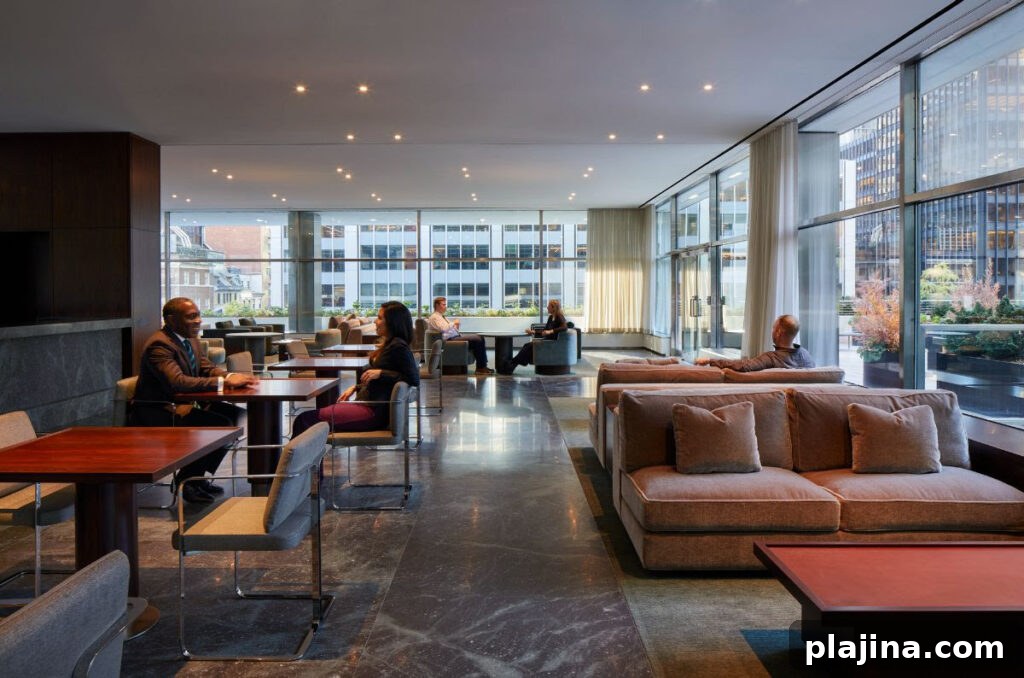
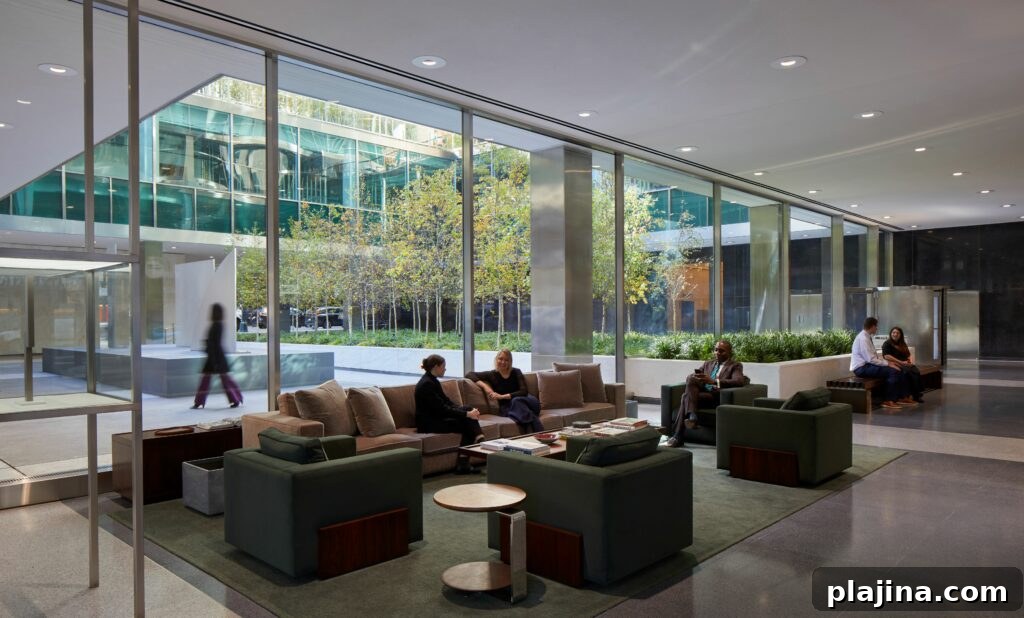
The renovation updated the public plaza and outdoor spaces, restored the lobby with period-appropriate furniture designs, and replaced mechanical systems to improve energy efficiency. The project also revitalized the tower’s third floor and roughly 15,000 square feet of terraces, transforming them into The Lever Club—an indoor-outdoor hospitality suite with interiors by Marmol Radziner and food and beverage services managed by Sant Ambroeus Hospitality Group. The restored building is once again positioned as Park Avenue’s premier boutique office address.
The lobby remains open to the public, and visitors can stroll through landscaped outdoor areas and dine at Casa Lever, a Milanese-style restaurant on the building’s ground floor that reopened following the renovations. Casa Lever’s dining rooms feature two colorful Damien Hirst paintings, blond wood paneling and Australian oak seating, creating a muted, tasteful atmosphere. The restaurant serves breakfast, lunch and dinner.
© Lucas Blair Simpson – SOM
Adjacent to the restaurant, Casa Lever Garden offers an outdoor oasis serving drinks, snacks and light meals. The venue attracts corporate clients, visitors and well-dressed tourists seeking to experience an intact example of midcentury modern architecture while enjoying an elevated Manhattan dining experience.